Leicestershire farm achieves record-breaking songbird recovery
A pioneering research site in the Midlands has demonstrated that integrating nature-friendly practices with commercial farming can successfully reverse the long-term decline of farmland bird populations. By implementing a combination of habitat restoration, winter feeding, and predator management, the project has seen songbird numbers soar to their highest levels since monitoring began over three decades ago.
The story in 20 seconds
20Location: Allerton Project, Loddington, Leicestershire.
Project size: 320 hectares.
Monitoring period: 1992 to 2026.
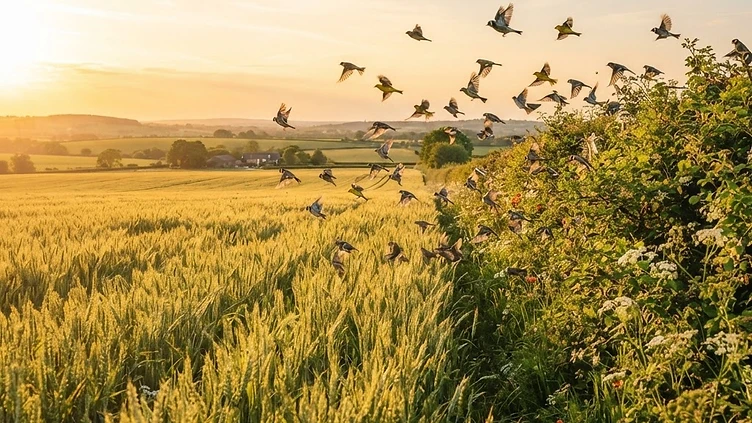
A Chorus of Success in the Midlands
In the rolling countryside of Loddington, Leicestershire, a quiet revolution has been taking place across 320 hectares of working farmland. For over three decades, the has served as a beacon of hope for Britain’s struggling wildlife, proving that the industrious hum of a commercial farm can exist in perfect harmony with a thriving natural world. As we look back on the progress made since 1992, the landscape tells a story of revival, where the once-fading melodies of s have been replaced by a triumphant and record-breaking symphony.
Since the began in the early nineties, researchers and John Szczur have walked the same fields, witnessing the ebb and flow of the local environment. Their unwavering commitment to tracking these changes has provided us with a clear picture of what is possible when agriculture and conservation find common ground. The findings from 1992 to 2026 are nothing short of remarkable, revealing a 145% increase in songbird abundance that stands as a powerful testament to long-term dedication and science-led land management.
The Three-Legged Stool Strategy
At the heart of this transformation lies a clever methodology that the team refers to as the stool approach. This strategy rests on three vital pillars: habitat restoration, intentional winter feeding, and careful predator management. By thoughtfully integrating these practices into the daily routine of a commercial enterprise, the project has successfully reversed the long-term decline that has plagued farmland bird populations for generations. It is a practical, scalable solution that demonstrates how small, deliberate shifts in farming technique can yield monumental results for the local ecosystem.
While the context paints a more sombre picture, with the UK farmland bird index showing a 63% decline since 1970, the Leicestershire site offers a contrasting vision of the future. The project has proven that food production and biodiversity do not need to be mutually exclusive goals. By nurturing the land, the Allerton Project has shown that we can protect our heritage and support our food security simultaneously, creating a model that now informs environmental policy and farming practices right across the nation.
Skylarks and Reed Buntings Return
Perhaps the most heartening aspect of this study is the resurgence of specific species that had once become elusive. Take, for instance, the humble , which has reached its highest recorded levels in 2026. Their soaring songs are a sign of a healthy, productive landscape, indicating that the fields are teeming with the life required to sustain them. Similarly, the reed bunting has seen a dramatic recovery, rising from a modest three territories in the early nineties to an impressive thirteen by 2021. These successes are not mere accidents; they are the direct outcome of decades of patient work, habitat care, and an abiding respect for the natural rhythms of the Midlands countryside.
This evidence suggests that with the right approach, nature is resilient and capable of bouncing back. The consistency of the survey work conducted by Stoate and Szczur has allowed for a level of accuracy that is rare, ensuring that every increase in bird numbers is well-documented and scientifically . It is a rare privilege to witness such long-term success, and the lessons learned in Loddington are now rippling outwards, influencing how farmers and policymakers view the potential of our rural landscapes.
A Blueprint for Future Generations
As we look ahead, the project serves as a cornerstone for modern agricultural strategy. It highlights the potential for commercial farms to act as guardians of biodiversity, transforming from sites of extraction into havens of regeneration. The 145% increase in bird populations is not just a statistic; it is a promise that environmental decline is not inevitable. By applying these nature-friendly practices, we can foster a landscape where skylarks rise, reed buntings flourish, and the rural economy continues to provide for the nation.
Ultimately, the Allerton Project is about more than just bird counts. It is about a change in mindset, moving towards a future where human activity and the natural world are seen as partners rather than competitors. The work in Leicestershire confirms that when we invest in our environment, we are investing in a future that is both prosperous and sustainable. As these findings inform new national policies, we can feel a sense of optimism that the songbird recovery seen in the Midlands might soon be reflected in fields and meadows across the entire country, ensuring that the legacy of this thirty-year experiment serves the environment for decades to come.
Originally reported by
All rights in the original reporting remain with the publishers below.
Originally reported by ‘This is a robust recipe’: the experimental farm bucking the decline in UK birds. Our feature is written independently from verified facts — please support the original reporting:
Read the original storyRelated Wins

 Health
MIDLANDS HEALTH INNOVATION: NEW CHILD SAFETY SYSTEM EMPOWERS CLINICIANS
A pioneering paediatric safety initiative, spearheaded by experts in the West Midlands, is transforming how hospitals across England monitor and respond to the health of deteriorating children. By integrating clinical intuition with standardised vital sign tracking, this national system ensures that young patients receive faster, more consistent care when they need it most.
Midlands · 7 hours ago

 Environment
Rare beetle that oozes substance from its knees when attacked rediscovered in Wales
Conservationists have confirmed the successful breeding of the rare short-necked oil beetle in Pembrokeshire, marking a significant milestone for biodiversity as larvae were discovered at the Castlemartin Range after years of only finding dead specimens.
Wales · 13 hours ago

 Environment
Bloomin marvellous! Alderley Edge strikes gold again!
Alderley Edge in Bloom volunteers have achieved a prestigious gold award at the annual North West in Bloom competition, reflecting their commitment to community beautification and environmental excellence.
North of England · 1 day ago
The Sunshine Digest
One bright email each week — verified good news only, unsubscribe in a click.