Welsh Shoreline Yields Rare Jurassic Sea Dragon in Hunter's Tale of Recovery
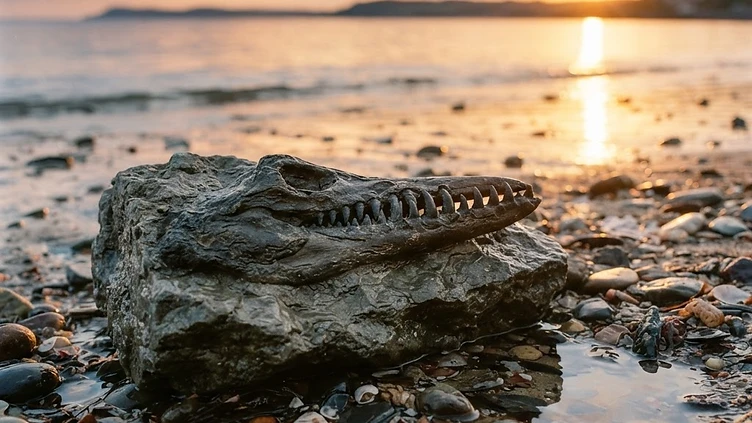
A civil engineer from Cardiff has discovered the first fossil of a rare Rhomaleosaur pliosaur ever found in Wales, a find now housed in the National Museum. The discovery marks a personal milestone for the finder, who turned to fossil hunting as a meditative path to healing after surviving a catastrophic avalanche.
The story in 20 seconds
20Matthew Myerscough discovered the fossilised jaw of a Rhomaleosaur, a type of large marine reptile or 'sea dragon.'
The specimen is approximately 201 million years old, dating back to the Early Jurassic period.
The find was located at Lavernock Point, a coastal site in the Vale of Glamorgan, South Wales.
From The Snows Of Snowdon To The Jurassic Coast
In the rolling landscapes of South Wales, the tide often tells a story as ancient as the earth itself. For , a civil engineer and dedicated fossil hunter based in Cardiff, the shoreline near recently offered up a treasure that has rewritten local paleontological history. While wandering the rugged coastal terrain near Penarth, Myerscough made a discovery of staggering proportions: the fossilised jawbone of a , a formidable marine reptile often referred to as a sea dragon. This discovery, confirmed to be approximately 201 million years old, marks the first time such a specimen has ever been identified within Welsh borders. It is a find that elevates the status of the Vale of Glamorgan, positioning it as a Jurassic site of national significance that rivals the famous coastal stretches found in Dorset.
A Journey Through Trauma And Time
This scientific triumph is deeply intertwined with a profound personal journey. In 2014, life was irrevocably altered when he was caught in a catastrophic avalanche on Yr Wyddfa, also known as Snowdon. The terrifying incident saw him swept down the mountainside in a 300-metre fall, leaving him trapped beneath a metre of snow for twenty harrowing minutes before rescuers were able to reach him. Following this life-altering accident, Myerscough turned to the quiet, methodical art of fossil hunting to manage the weight of his physical recovery and the challenges of PTSD. He found that the rhythmic, meditative nature of combing the beaches served as a vital form of healing. Far from being a mere hobby, this pursuit became a sanctuary, allowing him to reconnect with the natural world while navigating the aftermath of his mountain trauma. His resilience is mirrored in the history of the fossils he recovers, objects that have endured millions of years of pressure to be revealed once more in the light of day.
Unlocking Prehistoric Mysteries In Wales
Identifying the Rhomaleosaur jaw was no small feat, but the specimen presented a clear signature to those who knew what to look for. Experts noted a unique, spoon-shaped end to the bone, a distinctive anatomical feature that provided the crucial key to identifying this specific species of marine predator. This remarkable find is now safely housed within the , where it serves as a centerpiece for researchers and members of the public alike to appreciate the prehistoric life that once thrived in the seas covering what is now Wales. While this jawbone represents his most significant discovery to date, it is by no means his only contribution. Over the course of his search, Myerscough has also brought to light a rare plesiosaur flipper and the skull of an ichthyosaur, adding several vital pieces to the complex puzzle of life in Britain.
Sharing The Discovery With The World
In July 2026, the full scope of this odyssey was brought to a wider audience through the release of his book, 'In Search of Sea Dragons: A ,' published by the independent Welsh press, . The volume details the chance encounter at Lavernock Point, where Myerscough was walking alongside two fellow enthusiasts when he spotted the fossilised remains. As a civil engineer and a qualified Mountain Leader, Myerscough possesses a unique analytical perspective on the landscape, one that combines a professional's eye for structure with a wanderer’s appreciation for the wild. His book serves as both a chronicle of his scientific findings and a testament to the therapeutic potential of engaging with deep time. By donating his specimens to the National Museum, he has ensured that these remnants of our planet’s distant past are preserved for future generations to study and enjoy.
The Bright Future Of Welsh Paleontology
The impact of this discovery extends far beyond the excitement of the scientific community. It highlights the incredible potential hidden within the strata of the Welsh coastline, inviting others to take a closer look at the geology beneath their feet. By framing his experience through the lens of recovery and discovery, Myerscough has shown that even the most fractured paths can lead to extraordinary outcomes. His work proves that there is beauty in the broken, and that the natural world possesses an unmatched capacity to ground us, even after our own foundations have been shaken. As the Vale of Glamorgan gains further recognition as a premier destination for fossil hunting, the legacy of this 201-million-year-old sea dragon will surely inspire a new generation of explorers to look towards the tide. In the quiet intersection of ancient history and personal healing, Matthew Myerscough has found a way to share the wonders of the deep with us all, reminding us that there is always something new—and something ancient—waiting to be uncovered.
Originally reported by
All rights in the original reporting remain with the publishers below.
Originally reported by How one man’s near-death experience led to the discovery of the first Jurassic sea dragon in Wales. Our feature is written independently from verified facts — please support the original reporting:
Read the original storyRelated Wins

 Science
NEW PATHWAYS TO DIAGNOSIS: CAMBRIDGE STUDY SHEDS LIGHT ON AUTOIMMUNE HEALTH
A landmark study from the University of Cambridge is paving the way for more accurate medical care by highlighting critical gender disparities in the diagnosis of autoimmune conditions. By identifying how and why these misdiagnoses occur, researchers are providing the evidence needed to ensure patients receive faster, more effective support for their physical health.
London & South · 2 hours ago

 Science
A VISIONARY GREENPRINT FOR BIRMINGHAM’S FUTURE
Birmingham residents have shared a series of inspiring and ambitious ideas for the city’s evolution by the year 2050. This collective vision highlights a strong community desire to transform the urban landscape into a more sustainable, connected, and vibrant place to live.
Midlands · 2 days ago

 Science
Widnes Science Museum Secures Major Funding Boost
The Catalyst Science Discovery Centre and Museum in Widnes has been awarded over £1 million from The National Lottery Heritage Fund to enhance its educational offerings and visitor experience. This significant investment will support the creation of eight new jobs and fund an extensive activity plan to celebrate the town’s unique chemical heritage.
North of England · 3 days ago
The Sunshine Digest
One bright email each week — verified good news only, unsubscribe in a click.