Welsh Pastures Yield Bumper Harvest Supplying Fresh Organic Produce Directly to City Schoolchildren
A groundbreaking land-share initiative in rural Wales has turned formerly dormant pasture into a productive horticultural hub run by young independent growers. The weekly harvests of fresh seasonal vegetables travel straight to holiday clubs in Birmingham, feeding hundreds of children from lower-income households while proving a sustainable model for regional food supply.
The story in 20 seconds
20The project is situated at Wern Farm, located near the town of Newtown in Powys, Mid Wales.
The entire site spans 15 hectares (approximately 36 acres) and is partitioned into three dedicated horticultural plots.
Land access was secured through a 95-year lease arranged between landowner Powys County Council and the charity Our Food Trust.
From Dormant Pastures to Productive Soil
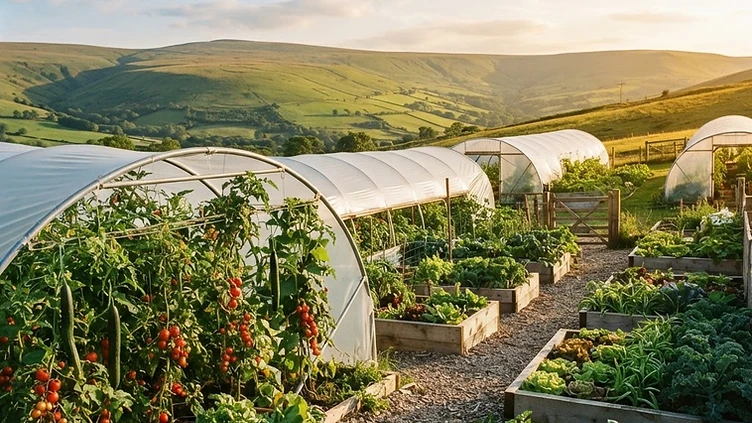
Deep within the rolling hills near Newtown, Powys, a quiet revolution in land management has begun. Where once only dormant grazing pastures stretched across the Mid landscape, a vibrant horticultural hub is now flourishing. The project at stands as a beacon of what can be achieved when land, community, and purpose align. Just eighteen months before the bountiful harvest of late summer 2026, the fifteen-hectare site was uncultivated and largely inactive. Today, thanks to a unique partnership between the Our Food Trust charity, , and Birmingham City ’s food system team, the land has been reclaimed to address a pressing national need for fresh, local produce.
The initiative secured long-term stability through a landmark 95-year lease, ensuring that the land remains committed to agricultural output for generations to come. Perhaps most innovative is the change in local planning policy, which now allows for rural enterprise dwellings. These timber chalets, offered at affordable rents, allow young farmers to live directly on the sites they cultivate. This structural support has effectively dismantled the traditional, often prohibitive barriers that have historically kept young growers from accessing land and secure housing. With shared barn facilities, backup generators, and on-site solar panel arrays providing renewable energy, the farm operates as a modern, sustainable model for rural enterprise.
Cultivating a New Generation of Growers
At the heart of this transformation are the young independent growers who have turned their dreams of sustainable farming into a reality. Tilly manages a 4.9-hectare holding known as Cân y Pridd, which translates from Welsh as "Song of the Soil." Within her half-hectare of active cultivation, which includes poly-tunnels, she has demonstrated the immense potential of intensive, small-scale farming. Working alongside her, Rosie Dibben, 28, and her partner operate a seven-acre holding named Tir a Nant, or "Land and Stream."
Despite the erratic and often challenging weather conditions that swept across both Wales and during the growing season, these resilient plots yielded an impressive bounty. Boxes filled with crisp salad leaves, fragrant herbs, tomatoes, cucumbers, and courgettes have become a weekly staple of the operation. This success is particularly notable when considering that only 0.2 percent of land across Wales is currently allocated to commercial horticulture. By maximizing the utility of these three partitioned plots at Wern Farm, the growers have proven that even a modest allocation of land, when managed with dedication and modern technique, can produce significant results.
Nourishing Communities Across the Border
Beyond the physical harvest, the most heartwarming aspect of the Wern Farm initiative is its direct impact on food security. Each week, a dedicated transport van collects the fresh yield and travels from the serene valleys of Powys across the border to the urban heart of Birmingham. This shortened supply chain is a deliberate effort by Birmingham’s municipal food strategy team to create more resilient connections between the countryside and the city’s 1.2 million residents. The goal is simple but ambitious: to provide healthy, nutritious options to those who need them most.
The produce is seamlessly integrated into Birmingham’s Holiday Activities and Food Programme. During the 2026 summer period, this partnership saw roughly 1,000 children attending municipal holiday clubs receive fresh vegetable boxes to eat or cook during their sessions. For families from lower-income backgrounds, this access to fresh, organic-quality produce provides a vital nutritional boost. It demonstrates that regional food self-sufficiency is not just a theoretical goal, but a practical tool for improving public health and community wellbeing.
A Blueprint for Future Resilience
currently imports roughly 40 percent of its food, a reliance that leaves the nation vulnerable to external supply disruptions and global price volatility. Projects like the one at Wern Farm offer a compelling solution to this structural dependency. By reclaiming dormant land and focusing on domestic horticulture, the initiative serves as a replicable model for how rural areas can bolster national food security while simultaneously supporting the local economy. It bridges the gap between rural production and urban consumption, creating a pathway that is both sustainable and socially conscious.
As the seasons turn and the growers look toward future harvests, the success of the Wern Farm initiative highlights a new potential for the Welsh landscape. It is a story of how innovative land-sharing, thoughtful policy reform, and the energy of a new generation can breathe life into neglected fields. The project proves that small plots can produce heavy yields, and that the distance between a farm in Powys and a dinner table in Birmingham can be successfully bridged by collaboration. In an era where food insecurity and environmental challenges loom large, this humble patch of Mid Wales offers a hopeful blueprint for the future, proving that with enough vision, every acre can be made to serve a greater purpose.
Originally reported by
All rights in the original reporting remain with the publishers below.
Originally reported by A joyful harvest: the young Welsh farmers growing food for Birmingham — theguardian.com. Our feature is written independently from verified facts — please support the original reporting:
Read the original storyRelated Wins

 Environment
Wildlife arrives on time at rewilded chalk grasslands built along HS2 route
A major rewilding project along the HS2 route in the Colne Valley is proving to be a resounding success as birds and insects return to newly created chalk grasslands. Despite the ongoing construction of the high-speed railway, the Western Slopes initiative has successfully transformed former agricultural land into a thriving sanctuary for local biodiversity.
London & South · 10 hours ago

 Environment
Volunteers clear overgrown Sparrow Lane footpath in community clean-up effort
A dedicated group of local volunteers in Knutsford recently transformed a neglected public footpath on Sparrow Lane, clearing away years of overgrown vegetation to restore access for the community.
North of England · 15 hours ago

 Environment
A Blooming Legacy: RHS Chelsea Gold Medal Plants Find New Home in Widnes
A prestigious collection of plants from an award-winning RHS Chelsea Flower Show garden has been gifted to the Wonky Garden in Widnes, providing a vibrant new lease of life for the community and ensuring the display continues to inspire local residents.
North of England · 15 hours ago
The Sunshine Digest
One bright email each week — verified good news only, unsubscribe in a click.