Vibrant Rosy Footman Moth Makes a Colorful Debut on the Shores of Anglesey
The rosy footman moth has been identified as a new arrival in Ynys Môn, signaling a positive shift in local biodiversity and air quality. This peach-hued insect relies on healthy lichen growth for its life cycle, making its presence a natural testament to the clean environment of the Welsh island.
The story in 20 seconds
20The rosy footman moth (Miltochrista miniata) has been recorded in Ynys Môn, also known as Anglesey, in Wales.
This observation was officially reported in late August 2026.
The moth is recognized by its distinctive peach or nectarine-colored wings.

A Splash of Peach Across the Welsh Coast
The shores of Ynys Môn, or as it is commonly known, have long been celebrated for their rugged beauty and coastal charm. Yet, in the twilight hours of late 2026, the island became the stage for a truly remarkable ecological debut. A team of dedicated naturalists, steered by the expertise of Nigel Brown, confirmed the arrival of a vibrant new visitor: the rosy footman moth. Dressed in wings the color of a summer nectarine, this striking creature has officially staked its claim on the island, transforming the local landscape into a sanctuary for a species previously far more at home in the southern corners of and Wales. The arrival of the miniata is not merely a curiosity for local enthusiasts; it is a vivid marker of change, indicating that the ecological tapestry of North Wales is evolving in ways that invite new life to flourish.
Nature’s Delicate and Silent Indicator
To understand why the presence of a moth is cause for quiet celebration, one must look closely at its unique life cycle. The rosy footman is not an insect that can thrive just anywhere; it is a creature with specific tastes and a high demand for environmental quality. Its larvae depend entirely upon the abundance of lichen, those curious, hardy organisms that cling to the branches of trees and shrubs found throughout the diverse habitats of Anglesey. are notoriously sensitive, acting as living barometers for the health of the air we breathe. Because they are highly susceptible to pollutants such as sulfur dioxide, their presence is a clear signal that the atmosphere is clean and stable. Where lichens prosper, the rosy footman follows, using these patches as a vital food source. Consequently, the discovery of this insect in northern Wales serves as a biological testament to the purity of the local environment. It is a quiet, natural vote of confidence in the air quality of the region, suggesting that the coastal woodlands of the island are providing the exact conditions needed for life to thrive in harmony.
Decoding the Elegance of the Footman
The moth itself is a marvel of subtle design, belonging to the family. With a wingspan typically measuring between 23 and 27 millimeters, it might seem small at a glance, but its visual impact is significant. Its forewings are painted in delicate shades of peach, adorned with tiny black dots and intricate dark lines. These patterns are so precise and rhythmic that they evoke the appearance of ancient script or forgotten hieroglyphs, a mysterious language of wings that has now become a part of the Welsh summer. The name "footman" is equally curious, harkening back to a bygone era. When the moth is at rest during the day, it holds its wings stiffly against its body, a posture that resembles the formal, upright stance of a traditional house servant in full uniform. By night, however, these creatures take to the air. Researchers tracking their movements often rely on light traps to document their nocturnal activities, allowing them to map the expansion of this species as it steadily moves from its traditional southern strongholds toward the north and west of the UK. This movement is part of a broader, fascinating trend, as species shift their ranges in response to changing environmental conditions across the country.
A Brighter Future for Our Biodiversity
The appearance of the rosy footman in Ynys Môn is a story of resilience and expansion. It highlights the importance of the diverse habitats found on Anglesey, from its sheltered coastal groves to the varied trees that host the all-important lichens. For those who watch the skies and the hedgerows, this addition to the island's fauna is a symbol of an environment that is not just sustaining itself but actively supporting an increase in biodiversity. It is a reminder that even the smallest creatures play a significant role in telling the story of our landscape. As these peach-hued visitors continue to settle into their new northern home, they bring with them a sense of optimism. Their presence serves as a bridge between the southern regions where they were once primarily located and the northern frontiers they are now exploring. For the island of Anglesey, and indeed for all of Wales, the rosy footman represents a positive shift. It is a gentle, winged pioneer proving that when we prioritize the health of our air and the preservation of our natural habitats, nature responds with grace and color. We look forward to seeing how these vibrant, hieroglyphic-patterned travelers continue to settle into the Welsh countryside, marking their place in a world that is becoming, bit by bit, a little more welcoming to the natural wonders that share our earth.
Originally reported by
All rights in the original reporting remain with the publishers below.
Originally reported by Country diary: A peachy, summer beauty that loves the clean air | Nigel Brown. Our feature is written independently from verified facts — please support the original reporting:
Read the original storyRelated Wins

 Environment
A NATURAL REVIVAL FOR BARNES GREEN
A major river restoration project has successfully transformed the Beverley Brook at Barnes Green into a thriving, natural habitat. This initiative has introduced a meandering river channel and a new island, significantly boosting local flood resilience and biodiversity.
London & South · 11 hours ago

 Environment
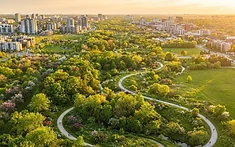
A "Nature Ring" for London: Ambitious Green Corridor Takes Root
A visionary 25-year project is underway to encircle the capital with a continuous 200km green corridor, transforming the city’s outer edges into a thriving habitat for both wildlife and residents. By connecting existing green spaces with new orchards, hedgerows, and woodlands, the initiative aims to restore biodiversity and provide nature-deprived communities with improved access to the outdoors.
London & South · 1 day ago

 Environment
'Outstanding' school 'over-capacity' to move and expand from Bermondsey to Peckham
A highly-rated special school is set to expand its capacity and move into a modern, sustainable facility to better support children with complex needs. This relocation will provide 21 additional places for pupils, ensuring more families have access to high-quality, purpose-built educational environments.
London & South · 1 day ago
The Sunshine Digest
One bright email each week — verified good news only, unsubscribe in a click.