The Song of the Wild: How a ‘Forgotten’ Bedfordshire Farm Became the UK’s Newest Rewilding Blueprint
A pioneering rewilding project at Strawberry Hill in Bedfordshire has been hailed as a national success, revealing how forty years of natural recovery can bring back red-listed species. New data released this week confirms the site is now a critical haven for rare nightingales and turtle doves, marking a major victory for community-led conservation and the UK’s biodiversity targets.
The story in 20 seconds
20Populations of the turtle dove have plummeted by over 98% since the 1970s.
New monitoring data released on July 23, 2026, confirms Strawberry Hill is a successful rewilding site.
The Wildlife Trust for Bedfordshire, Cambridgeshire, and Northamptonshire (BCN) officially secured the site in 2024 following a public appeal.
The Dawn of a New Wilderness
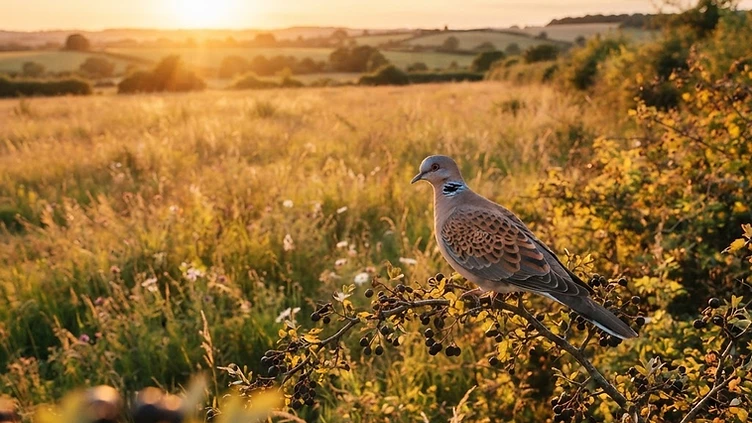
As the sun rises over the gently rolling landscape of northern Bedfordshire, the air is no longer filled with the mechanical hum of industrial tractors or the rhythmic clatter of farm machinery. Instead, it is saturated with a sound that had almost vanished from the British countryside: the deep, purring croon of the turtle dove. For decades, this iconic bird—once a staple of English summers—has been in a precipitous decline, with plummeting by over 98% since the 1970s. Yet here, at a former farm known as , the species is not just surviving; it is thriving. This week, conservationists and local volunteers are celebrating a milestone that many thought impossible just a generation ago. New monitoring data released on July 23, 2026, confirms that Hill has become one of the most successful rewilding sites in the country, proving that when nature is given the space and time to heal, the results are nothing short of miraculous.
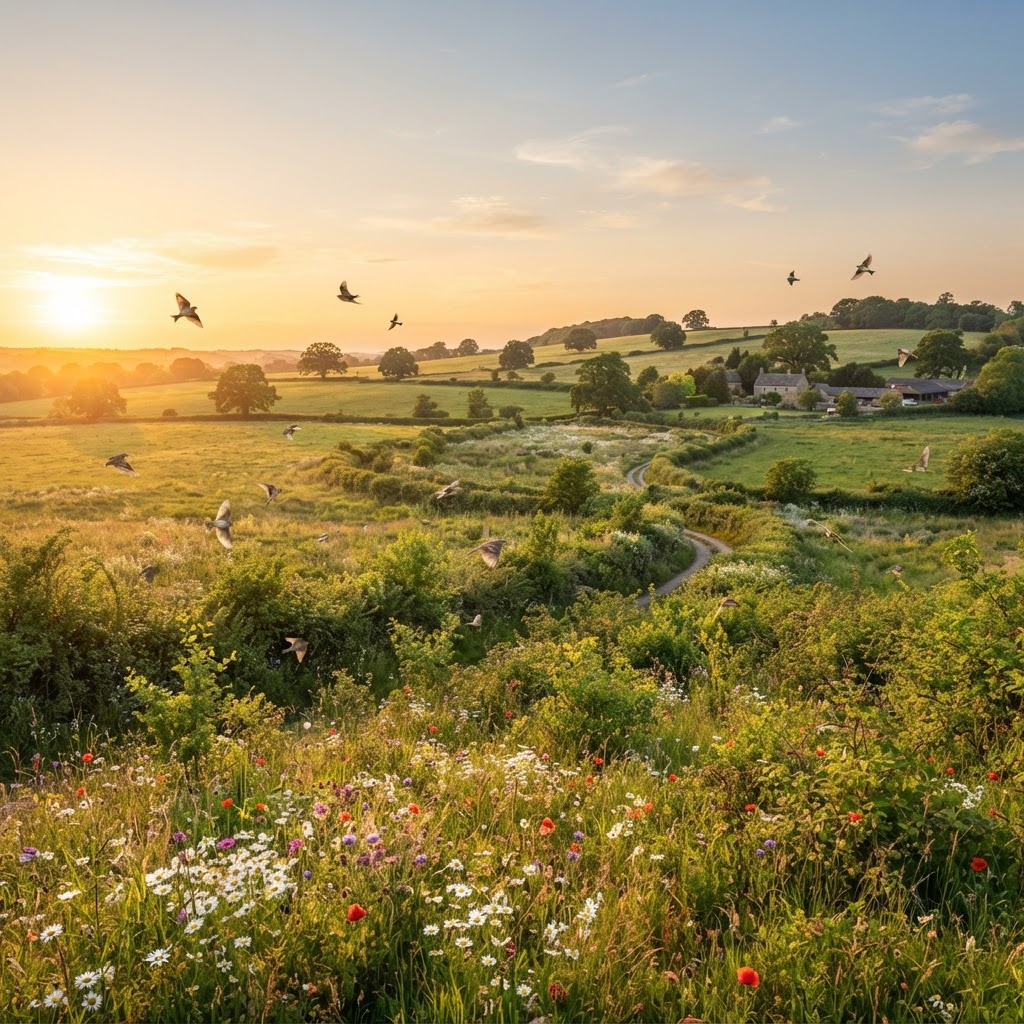
Strawberry Hill represents a radical departure from traditional conservation. Rather than intensive management or artificial habitat creation, the site has been allowed to follow its own path of natural regeneration for nearly forty years. This ‘passive’ approach has transformed 150 hectares of former arable land into a rich, tangled mosaic of scrubland, thickets, and wild meadows. For Brian Eversham, Chief Executive of for Bedfordshire, Cambridgeshire, and Northamptonshire (BCN), the success of the site is both a professional triumph and a personal joy. “Walking through Strawberry Hill today is like stepping back into my teenage years,” Eversham remarked during a recent site visit. “The sheer abundance of birdsong and the density of insect life are reminiscent of a countryside we thought we had lost forever. It is a powerful reminder that we can bring it back; we know roughly what to do, and nature does the rest.”
Forty Years in the Making
The story of Strawberry Hill began in the late 1980s when the land was essentially abandoned by commercial agriculture. At the time, the site was considered ‘marginal’—unprofitable for intensive farming and largely ignored by developers. For the next few decades, the land underwent a slow, silent transformation. Without the regular application of pesticides and fertilizers, the soil began to recover its natural microbial health. Brambles, hawthorn, and blackthorn began to creep across the fields, creating a habitat that is often disparagingly called ‘scrub’ but is, in fact, one of the most biodiverse environments in the temperate world. In 2024, following a massive public appeal that saw thousands of local residents and nature lovers donate to save the site from potential development, the officially secured its future as a permanent nature reserve.
This week’s data release marks the culmination of two years of intensive biological surveying since the Trust took over management. The findings are staggering. Beyond the headline success of the turtle dove, the site has recorded record numbers of nightingales and cuckoos. These birds depend on the thick, thorny scrub that Strawberry Hill provides—a habitat that is increasingly rare in a managed landscape where ‘tidiness’ is often prioritized over ecological function. The survey also highlighted the presence of the rare black hairstreak butterfly, a species that is found in only a handful of locations across the UK and relies on the ancient blackthorn thickets that have matured on the site. The data suggests that Strawberry Hill is now performing at an ecological level comparable to some of the most famous rewilding sites in Europe, such as the in West Sussex.
A Sanctuary for Endangered Songs
The return of the turtle dove is particularly significant. As a migratory species that travels from sub-Saharan Africa to breed in the UK, it faces numerous threats, from hunting along its flyway to the loss of nesting sites and food sources at home. At Strawberry Hill, the doves find exactly what they need: a safe, dense nesting habitat in the scrub and a diverse range of wild seeds to eat. The success of the colony here is being used as a blueprint for other land managers across the Midlands and the South of England. It proves that rewilding does not always require thousands of acres of Highland wilderness; even smaller, local sites can provide a critical lifeline for species on the brink of extinction. The community’s role in this success cannot be understated. The £1.5 million raised during the public appeal to save the site was one of the fastest-growing fundraising efforts in the Trust’s history, demonstrating a profound public hunger for wilder spaces.
Local volunteer Margaret Thorne, who has lived near the site for fifty years, describes the change as atmospheric. “When I was a girl, you took the sound of the cuckoo for granted. Then, for years, there was just silence. To hear them back now, so loud and so frequent, feels like the land is breathing again,” she said. This emotional connection to the land is a key component of the ‘Strawberry Hill Effect.’ By saving the site, the community didn't just preserve a patch of green; they restored a piece of their heritage. The Trust is now working to improve public access to the edges of the site, ensuring that people can experience the ‘wilding’ without disturbing the sensitive breeding areas. The goal is to show that nature recovery and human well-being are inextricably linked.
Beyond the Birdsong: A Green Economic Future
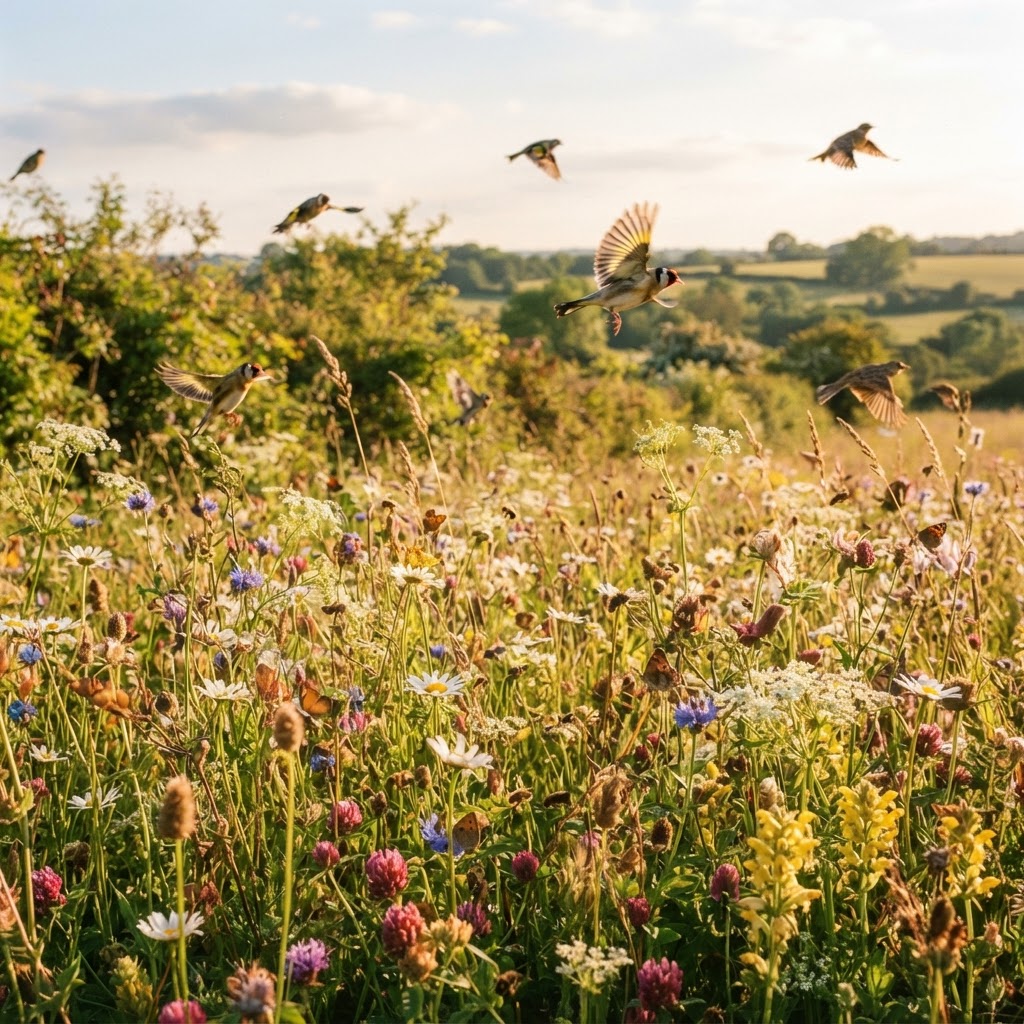
The implications of Strawberry Hill’s success extend far beyond the borders of Bedfordshire. This week, a national report by Rewilding Britain highlighted that rewilding projects across the UK are becoming major drivers of local economies. In England alone, equivalent jobs at rewilding sites have increased by 93% over the last few years. These are not just roles in conservation; they include eco-tourism, education, scientific research, and sustainable land management. Strawberry Hill is contributing to this trend, attracting visitors who support local businesses and providing a living laboratory for university students studying the long-term effects of natural regeneration. The report suggests that if 30% of Britain were dedicated to nature recovery by 2030, it could create tens of thousands of new ‘green’ jobs while simultaneously tackling the climate and biodiversity crises.
Furthermore, the site is providing vital data on carbon sequestration. The transition from bare arable soil to a complex ecosystem of shrubs and trees captures significant amounts of atmospheric carbon. Unlike monoculture plantations, the ‘chaos’ of a rewilded site like Strawberry Hill creates a more resilient carbon sink that is less prone to disease or fire. This multi-benefit approach—where one site provides a home for rare species, a place for human recreation, a source of local employment, and a tool for climate mitigation—is increasingly being seen as the future of UK land use policy. The government’s recent focus on ‘Environmental Land Management’ schemes is beginning to favor projects like this, moving away from the old system of subsidizing production at the expense of the environment.
Scaling the Strawberry Hill Model
Looking forward, the success of Strawberry Hill is inspiring a wave of similar projects across the UK. The BCN Wildlife Trust is already in discussions with neighboring landowners about creating ‘nature corridors’—wildlife superhighways that would allow species from Strawberry Hill to migrate and colonize new areas. This landscape-scale thinking is essential for the long-term survival of migratory birds and climate-sensitive insects. By connecting isolated patches of habitat, conservationists can build a more resilient network that can withstand the challenges of a changing climate. The Trust is also launching a new ‘Rewilding at Home’ initiative, encouraging local residents to leave a corner of their gardens wild to mimic the scrubland of Strawberry Hill.
As the summer of 2026 continues, the success at Strawberry Hill stands as a beacon of hope. It is a story that proves it is never too late to reverse the damage of the past. In a world that often feels overwhelmed by environmental gloom, this small patch of Bedfordshire offers a different narrative: one of resilience, recovery, and the enduring power of the wild. When we step back and let nature take the lead, she doesn't just return; she returns with a song that can be heard for miles. The mission now is to ensure that the song of the turtle dove becomes once again a permanent feature of the British summer, echoed across every county in the land.
Originally reported by
All rights in the original reporting remain with the publishers below.
Originally reported by Wildlife Trust for Bedfordshire, Cambridgeshire & Northamptonshire. Our feature is written independently from verified facts — please support the original reporting:
Read the original storyRelated Wins

 Sport
SportCHESS PRODIGIES BREAK BARRIERS IN NATIONAL LEAGUE DEBUT
The 'She Plays to Win' Lionesses have made history by competing in the top division of the Four Nations Chess League, marking the culmination of three consecutive promotions. Despite facing unique regulatory challenges regarding team composition, the squad continues to demonstrate exceptional skill and camaraderie at the highest level of British chess.
London & South · 2 hours ago

 Science
NEW PATHWAYS TO DIAGNOSIS: CAMBRIDGE STUDY SHEDS LIGHT ON AUTOIMMUNE HEALTH
A landmark study from the University of Cambridge is paving the way for more accurate medical care by highlighting critical gender disparities in the diagnosis of autoimmune conditions. By identifying how and why these misdiagnoses occur, researchers are providing the evidence needed to ensure patients receive faster, more effective support for their physical health.
London & South · 2 hours ago

 Environment
A NATURAL REVIVAL FOR BARNES GREEN
A major river restoration project has successfully transformed the Beverley Brook at Barnes Green into a thriving, natural habitat. This initiative has introduced a meandering river channel and a new island, significantly boosting local flood resilience and biodiversity.
London & South · 8 hours ago
The Sunshine Digest
One bright email each week — verified good news only, unsubscribe in a click.