SCOTLAND’S FIFE REGION SET FOR £5 BILLION AI DATA INFRASTRUCTURE BOOST
Plans for a massive new hyperscale data centre in Fife have highlighted a multi-billion pound surge in Scotland's digital infrastructure sector. The £5 billion "Cato" project aims to combine the nation's renewable energy resources with next-generation AI technology to create thousands of jobs across the Central Belt.
The story in 20 seconds
20The 'Cato' project represents a private investment of approximately £5 billion for the Fife development alone.
The facility is designed with a 600MW capacity, nearly ten times the size of current large-scale Scottish data centres.
Developer ILI Group is a specialist Scottish clean energy company focused on energy storage and renewables.
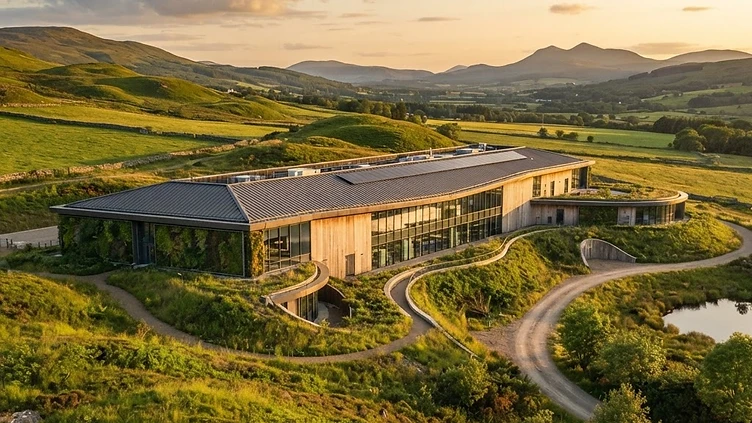
A Bold New Digital Era for Fife
The quiet landscape surrounding the small village of Auchtertool is poised for a transformation of historic proportions. As the technological revolution gathers pace, Fife is set to become the beating heart of a digital future, thanks to an ambitious plan to construct a massive hyperscale data centre known as the project. This colossal development, backed by a staggering £5 billion private investment, represents a seismic shift for infrastructure landscape. By marrying the nation's immense renewable energy potential with the cutting-edge requirements of artificial intelligence, this project signals a new chapter for the Central Belt, promising to weave sustainable innovation into the very fabric of the region's economy.
Spearheaded by the Scottish clean energy specialist ILI Group, the Cato project is far from a modest addition to the local area. With a planned capacity of 600MW, this facility is designed to be nearly ten times the size of any existing large-scale data centre currently operating in Scotland. Such a scale is necessary to meet the hungry processing requirements of modern AI, ensuring that the technology powering tomorrow’s digital services is grounded in robust, reliable infrastructure today. The site, which has already received employment land designation within the local planning framework, is currently navigating a rigorous planning scrutiny process to ensure every detail meets the standards expected of such a monumental undertaking.
Powering Growth Through Sustainability
What makes the Cato project particularly compelling is its unwavering commitment to the environment. The vision for this site is for it to run entirely on renewable electricity, an approach that perfectly aligns with Scotland's ambitious net-zero targets. By harnessing clean energy to fuel high-tech advancement, the s are demonstrating that industrial progress and climate responsibility are not mutually exclusive goals. Furthermore, the infrastructure is being designed with careful consideration for the surrounding community. For instance, the facility’s water cooling systems will operate on a network entirely independent of the village’s own infrastructure. Scottish Water has already formally confirmed that the existing local capacity is more than sufficient to accommodate these requirements without placing any pressure on the needs of local residents.
Securing the necessary energy to support such a powerhouse is a complex challenge, yet the project has already achieved a major milestone by securing an approved Gate 2 grid position. This confirmation of high-capacity electricity access acts as a foundation for the entire endeavor, providing the certainty required for such a long-term investment. It is a testament to the strategic planning involved that the site can thrive in Auchtertool while maintaining a harmonious relationship with its immediate neighbours and the broader environmental goals of the Scottish Government.
A Wider Vision for Scotland
While the Cato project stands as a beacon of development in Fife, it is merely one piece of a much larger, more intricate puzzle. This initiative is a core component of the Stoics network, a sprawling £15 billion infrastructure vision spanning the breadth of . The strategy extends to other key regions, including the Rufus site in East Ayrshire, boasting a 540MW capacity, and the Aurelius facility in , which is planned for 400MW. Together, these sites form an interconnected grid of innovation, effectively creating an AI Growth Zone that has already captured over £8 billion in related private investment from across the globe.
This investment is not just about servers and cooling towers; it is about building a foundation for human prosperity. According to detailed economic analysis provided by BiGGAR Economics, the construction phase alone is expected to inject a massive £708 million in (GVA) into the Scottish economy. Perhaps most exciting is the direct impact on the workforce. The project is projected to generate roughly 9,660 over the course of its construction. In Fife specifically, the local community will see the direct benefit of 1,450 construction roles tailored for the region. Once the facility transitions into full operation, it will pivot toward long-term stability by supporting 120 permanent, highly skilled technical roles, offering high-quality employment opportunities for years to come.
Looking Toward a Brighter Future
The arrival of the Cato project in Fife serves as a powerful endorsement of Scotland’s national AI Strategy. By creating the infrastructure necessary to harness the economic potential of emerging technology, Scotland is positioning itself at the forefront of the global digital race. This is a story of a nation leveraging its natural resources, its commitment to sustainability, and its technical expertise to foster an environment where innovation can flourish. As the project moves through its planning stages, there is a tangible sense of momentum building across the Central Belt.
Ultimately, the vision is one of long-term economic resilience. By attracting significant private capital and building a modern digital backbone, the region is preparing itself for the challenges and opportunities of the 21st century. The blend of massive scale, environmental stewardship, and job creation marks this as a defining moment for Fife. As the community looks ahead, the Cato project stands not only as a landmark for data processing but as a symbol of what can be achieved when bold ambition meets strategic planning. It is a warm, optimistic step forward for the Scottish economy, ensuring that the nation remains a competitive and capable player in the rapidly evolving world of artificial intelligence.
Originally reported by
All rights in the original reporting remain with the publishers below.
Originally reported by ‘Never seen this level of objection’: Scotland pushes back against datacentre boom. Our feature is written independently from verified facts — please support the original reporting:
Read the original storyRelated Wins

 Tech
TechNEW SUPERMARKET GREEN-LIT FOR WARWICKSHIRE
A new Lidl supermarket has been granted planning permission in Warwick, marking a significant step forward for local retail infrastructure. The development will transform a vacant industrial site into a modern shopping facility, bringing new investment and convenience to the community.
Midlands · 59 mins ago

 Tech
TechYoung chefs helped into work as West Midlands mayor hails youth unemployment drive
A major regional initiative has successfully reached a milestone of 20,000 work placements, providing vital career pathways for young people across the West Midlands. This collaborative effort between local government and industry partners is actively transforming the job prospects of residents aged 18 to 24 by offering hands-on training and professional mentorship.
Midlands · 1 day ago

 Tech
TechHammersmith cycleway to be made permanent as council backs TfL scheme
A major cycleway in Hammersmith is set to become a permanent fixture following a decision by the local council to support the transport scheme. This move solidifies a key piece of active travel infrastructure, ensuring long-term accessibility for cyclists and commuters in the area.
London & South · 1 day ago
The Sunshine Digest
One bright email each week — verified good news only, unsubscribe in a click.