Safe Scenic Walkway Unlocks Active Travel in Ceredigion After Decades of Planning
Residents of a Welsh village are celebrating the opening of a dedicated footpath that replaces a hazardous road route after thirty years of local campaigning. The new trail provides a protected and scenic connection for pedestrians and cyclists, supporting both community safety and carbon reduction goals.
The story in 20 seconds
20The new path is located in Comins Coch, Ceredigion, and forms part of the Waunfawr to IBERS Active Travel Link.
Local residents had campaigned for a safe walking route for over 30 years before its completion.
The path replaces a previous route where walkers had to use the narrow edge of the A487 trunk road.

A Dream Realised After Thirty Years
In the quiet, rolling landscape of , Ceredigion, a profound change has taken hold this July 2026. For decades, the local community nurtured a singular, persistent aspiration: to secure a safe, dedicated route for those moving between their homes and the wider world. What was once a distant dream of safety has finally crystallised into reality with the opening of a segregated shared-use footpath and cycleway. This achievement marks the culmination of thirty years of tireless campaigning by dedicated residents, including long-term advocate John Gilbey. Their perseverance has transformed a long-standing local frustration into a triumph of community spirit and civic planning, serving as a beacon of progress for rural Wales. For the people of Comins Coch, this is far more than mere tarmac and path; it is the physical manifestation of three decades of hope, finally realised in the heart of Mid Wales.
Escaping the Danger of the A487
For generations, life in this picturesque village was shadowed by a pervasive sense of peril. The primary thoroughfare connecting residents to the Bow Street transport interchange was the A487 trunk road, a busy arterial route that forced to navigate the narrow, unlit edges of the asphalt. Walking this route required not only high-visibility clothing but a rare breed of nerves. Mothers with pushchairs, students heading to their studies, and the elderly were often forced to skirt dangerously close to heavy traffic, feeling the rush of vehicles mere inches away. This hazardous existence became an accepted, albeit resented, part of local life. The new infrastructure now provides a vital, life-saving alternative, shielding the community from the traffic and offering a protected sanctuary for anyone choosing to walk or cycle. The liberation of the village from this daily gamble is perhaps the most significant victory for the residents who stood their ground and demanded better.
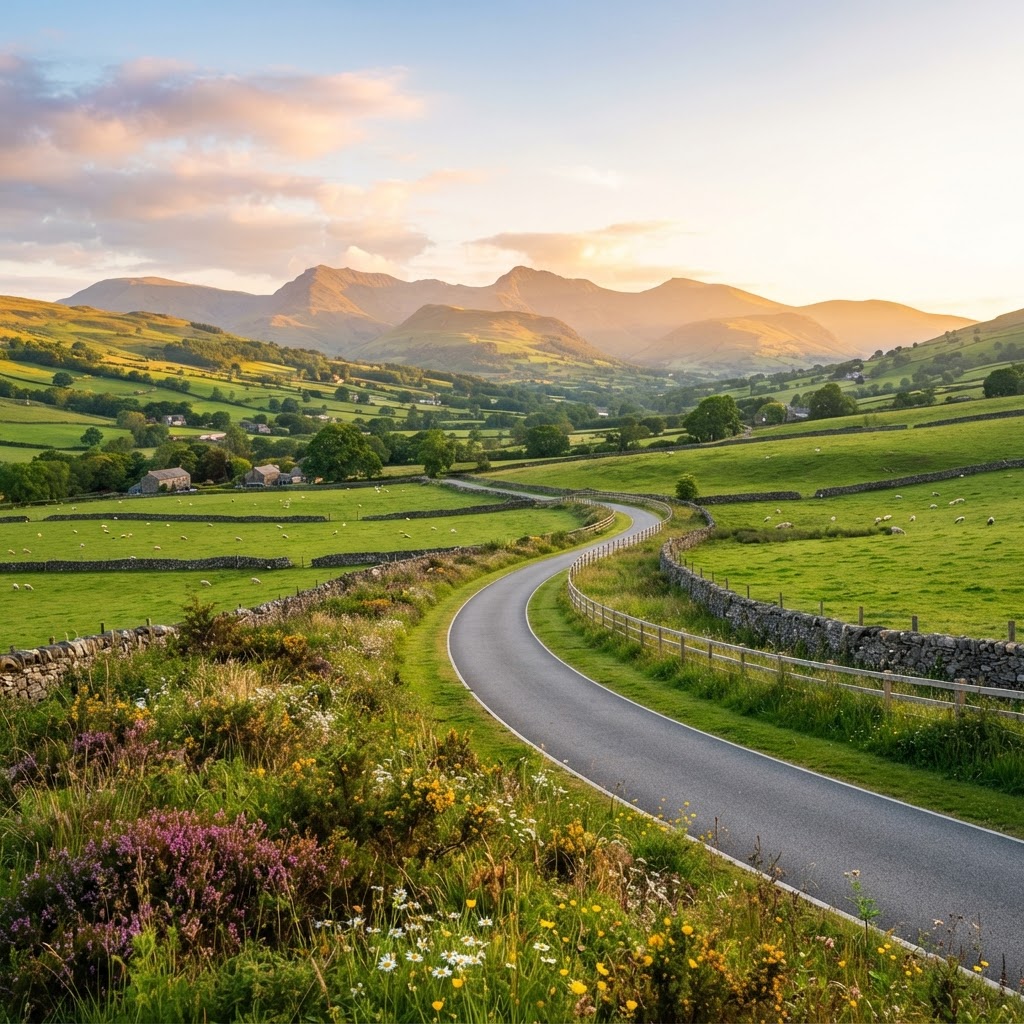
Nature Meets Necessary Infrastructure
The design of the new path is as thoughtful as its inception was arduous. Rather than simply paving a strip alongside the road, planners carved the trail into the upper margins of the local fields, creating a natural physical barrier that separates commuters from the flow of cars and lorries. This strategic placement not only ensures safety but also enhances the experience of the journey. As residents traverse the path, they are treated to breathtaking, elevated vistas of the Clarach Valley and the distant majesty of the Cambrian Mountains. This project proves that essential infrastructure does not have to be an eyesore; it can, in fact, become a gateway to the natural beauty of the region. The landscape design has been handled with sensitivity, featuring the planting of native hardwood saplings, primarily sturdy oaks, which will grow alongside the path to provide shade and character for years to come. Furthermore, the soil along the verges has been carefully seeded with a vibrant wildflower mix, already attracting a bustling population of pollinating insects, including bees and butterflies, ensuring the path thrives as a living, breathing corridor.
Connecting Communities and Campuses
The significance of this link extends well beyond the boundaries of Comins Coch. The path serves as a crucial component of the Waunfawr to , creating a seamless 'campus-to-campus' connection between and Plas Gogerddan sites. This infrastructure is a powerful tool for academic and local integration, allowing students and faculty to move safely between locations. By linking the village directly to the Bow Street transport interchange, the project facilitates smoother, greener journeys, encouraging a shift away from reliance on private vehicles. This is a practical response to the (Wales) Act 2013, moving from theory into a functioning, all-weather asset. The path is specifically designed for inclusivity, featuring a robust, accessible surface that accommodates cyclists, walkers, and individuals with limited mobility, ensuring that every member of the community can enjoy the benefits of this new connectivity.

A Collective Effort for Progress
Bringing this vision to life was a monumental undertaking that required the alignment of numerous bodies and stakeholders. Ceredigion County Council, supported by the Welsh Government, took the lead in this ambitious project, with the financial backbone provided by the . The coordination required for such an endeavor was considerable, involving expert support from Transport for Wales and the North & . When local voices like John Gilbey’s combined with administrative dedication, the result was a project that could withstand the complexities of modern planning. Cabinet members within the Ceredigion County Council have been vocal in their support, emphasizing that this development is not just about moving people, but about improving public health, enhancing local air quality, and fostering an environment where active travel becomes the natural choice rather than the difficult one. It is a testament to what can be achieved when government institutions truly listen to and partner with the communities they serve.
A Green Future for Ceredigion
As the ribbon is cut and the path officially enters into service, the broader implications for Wales and the UK become clear. This project is a tangible contribution to wider carbon reduction goals, demonstrating how local interventions can aggregate into significant environmental progress. By making it safer and more pleasant to walk or cycle, the council is actively reducing the pressure on road networks and promoting a healthier lifestyle for all citizens. The success of this path serves as a pilot for future ambitions; there is already talk of further extensions that aim to connect the network directly with Aberystwyth town centre. The story of Comins Coch proves that the path toward sustainability is often a long one, requiring patience, fortitude, and a clear vision. Yet, standing on the path today, looking out over the Clarach Valley with the sound of traffic replaced by the hum of bees and the rustle of young oak leaves, one thing is certain: for the people of Ceredigion, the journey was worth every step. The path is now open, and with it, a new, greener, and safer chapter for the village has officially begun.
Originally reported by
All rights in the original reporting remain with the publishers below.
Originally reported by Country diary: I always dreamed of a safe, scenic footpath. Finally, my wish has been granted | John Gilbey. Our feature is written independently from verified facts — please support the original reporting:
Read the original storyRelated Wins

 Environment
A NATURAL REVIVAL FOR BARNES GREEN
A major river restoration project has successfully transformed the Beverley Brook at Barnes Green into a thriving, natural habitat. This initiative has introduced a meandering river channel and a new island, significantly boosting local flood resilience and biodiversity.
London & South · 7 hours ago

 Environment
A "Nature Ring" for London: Ambitious Green Corridor Takes Root
A visionary 25-year project is underway to encircle the capital with a continuous 200km green corridor, transforming the city’s outer edges into a thriving habitat for both wildlife and residents. By connecting existing green spaces with new orchards, hedgerows, and woodlands, the initiative aims to restore biodiversity and provide nature-deprived communities with improved access to the outdoors.
London & South · 1 day ago

 Environment
'Outstanding' school 'over-capacity' to move and expand from Bermondsey to Peckham
A highly-rated special school is set to expand its capacity and move into a modern, sustainable facility to better support children with complex needs. This relocation will provide 21 additional places for pupils, ensuring more families have access to high-quality, purpose-built educational environments.
London & South · 1 day ago
The Sunshine Digest
One bright email each week — verified good news only, unsubscribe in a click.