PRESERVING PREHISTORY: NEW CAMPAIGN TO SHIELD BRITISH FOSSILS AS NATIONAL TREASURES
A legislative push is underway to update UK export laws to ensure rare and scientifically significant fossils can be designated as national treasures. This initiative aims to protect Britain's prehistoric heritage by allowing local museums the opportunity to secure unique finds for public research and education.
The story in 20 seconds
20Edward Morello, the Liberal Democrat Member of Parliament for West Dorset, is leading the call for new regulations to protect UK fossils.
The campaign proposes that significant fossils be classified under the 'Waverley criteria,' the benchmarks used to define objects as national treasures.
Currently, these criteria only apply to 'made' objects like art and antiquities, leaving natural history items unprotected.
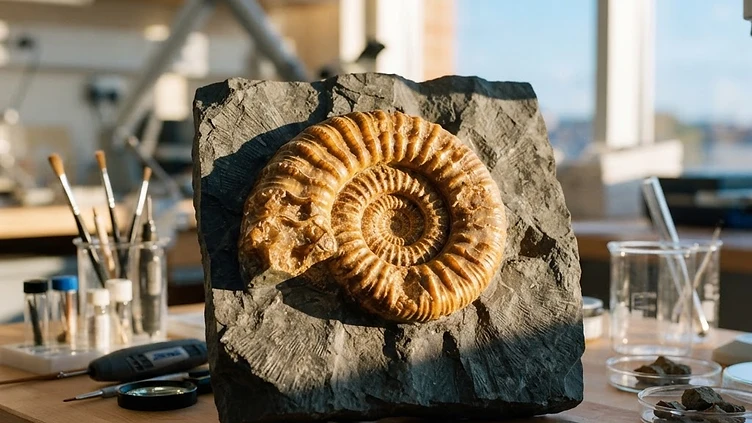
Safeguarding Our Ancient Legacy
Stretching along the sun-drenched edges of the Dorset shoreline lies the Jurassic Coast, a stretch of earth that acts as a profound library of our planet's deep past. As the UK's only natural World Heritage site, this breathtaking coastline offers a continuous 185-million-year geological record that remains unparalleled on the global stage. Yet, despite its international prestige, there is a growing concern that the treasures buried within these ancient cliffs are increasingly vulnerable to being lost forever. This August, a spirited movement is gathering momentum, led by West Dorset MP , who is championing a vital legislative shift to ensure that our most scientifically significant fossils are finally granted the status they deserve as true national treasures.
Closing The Legal Gap
At the heart of this campaign lies a fundamental inconsistency in how Britain views its heritage. , the esteemed ' criteria' act as a protective gatekeeper for objects of national importance, preventing unique art and historical antiquities from being whisked away to foreign shores. However, these regulations are strictly tailored to 'made' objects, leaving the incredible natural history specimens found in the Lower Lias of Dorset entirely unprotected. While a Roman coin or a Renaissance painting would trigger a rigorous export licensing process, a world-class fossil specimen can currently leave our borders without any such regulatory scrutiny. This legislative gap has created a situation where the remnants of our prehistoric landscape are treated with less legal caution than man-made artifacts, a reality that MP Morello is determined to rectify in his formal correspondence with Fiona Twycross, the Minister for Museums, Heritage, and Gambling.
The Wake-Up Call
The urgency of this reform was brought into sharp focus following the recent sale of a monumental private collection. Amassed by collector , these hundreds of rare specimens—including magnificent prehistoric ichthyosaurs—were central to the Jurassic Coast's geological narrative. When the collection came to market, both the in London and Amgueddfa Cymru () were offered the chance to acquire it. Despite their clear interest, the eye-watering eight-figure price tag proved insurmountable for these public institutions. Ultimately, the collection was sold to the Natural History Museum in Abu Dhabi. For the local experts at the , this was a moment of profound loss, sparking a renewed commitment to ensuring that such important scientific data never again slips out of the public domain simply because of a price tag.
Building A Future For Research
Looking toward a more secure future, the proposed reforms offer a glimmer of optimism for palaeontology in Britain. By extending the Waverley criteria to include natural history, the campaign seeks to introduce a temporary export bar. This mechanism would provide a vital window of opportunity for UK museums to match overseas offers, ensuring that these irreplaceable items remain available for public education and rigorous scientific study. Bridget Houseago, Director of the Lyme Regis Museum, and Dr. Jonathan Evans, chair of the museum trust, have been vocal in their support, noting that such a change is essential for preserving the integrity of British geological history. Their vision is not just about ownership, but about accessibility; they argue that these fossils provide unique scientific data that belongs to the public.
Tracking Our Geological History
Beyond the implementation of export bars, advocates are calling for a national register of significant fossil finds. Such a system would help track Britain's paleontological heritage, ensuring that the authorities and the scientific community are aware of extraordinary discoveries before they are traded away. By fostering a culture of transparency and proactive heritage management, the campaign hopes to turn the tide. If successful, these new rules would provide a robust framework to protect the Jurassic Coast's unique contribution to human knowledge. It is a vision of a nation that respects its deep past as much as its recent history, ensuring that the stories written in stone by ichthyosaurs and other ancient creatures remain within reach of the students and scientists who stand to learn the most from them. As the movement gains traction in August 2026, the focus remains clear: safeguarding our natural heritage so that future generations can continue to be inspired by the prehistoric wonders resting beneath our very feet.
Originally reported by
All rights in the original reporting remain with the publishers below.
Originally reported by theguardian.com. Our feature is written independently from verified facts — please support the original reporting:
Read the original storyRelated Wins

 Sport
SportCHESS PRODIGIES BREAK BARRIERS IN NATIONAL LEAGUE DEBUT
The 'She Plays to Win' Lionesses have made history by competing in the top division of the Four Nations Chess League, marking the culmination of three consecutive promotions. Despite facing unique regulatory challenges regarding team composition, the squad continues to demonstrate exceptional skill and camaraderie at the highest level of British chess.
London & South · 1 hour ago

 Science
NEW PATHWAYS TO DIAGNOSIS: CAMBRIDGE STUDY SHEDS LIGHT ON AUTOIMMUNE HEALTH
A landmark study from the University of Cambridge is paving the way for more accurate medical care by highlighting critical gender disparities in the diagnosis of autoimmune conditions. By identifying how and why these misdiagnoses occur, researchers are providing the evidence needed to ensure patients receive faster, more effective support for their physical health.
London & South · 1 hour ago

 Environment
A NATURAL REVIVAL FOR BARNES GREEN
A major river restoration project has successfully transformed the Beverley Brook at Barnes Green into a thriving, natural habitat. This initiative has introduced a meandering river channel and a new island, significantly boosting local flood resilience and biodiversity.
London & South · 7 hours ago
The Sunshine Digest
One bright email each week — verified good news only, unsubscribe in a click.