Plans revived to build statue for London's first Black mayor in Battersea
A community-led initiative has been reignited to erect a permanent statue in Battersea to honour John Archer, who made history as London's first Black mayor in 1913, with Wandsworth Council pledging initial funding to support the project.
The story in 20 seconds
20John Archer served as the Mayor of Battersea in 1913
The initiative to build a statue was originally launched six years ago
Wandsworth Council has pledged an initial donation of £10,000
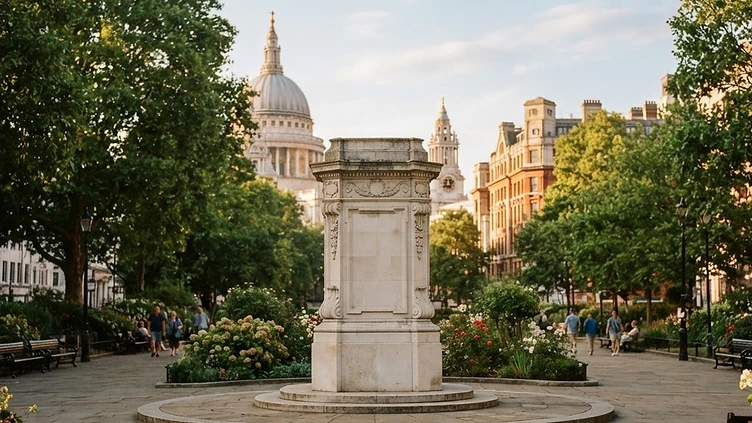
A Local Hero Rediscovered
In the heart of , a quiet but profound shift is occurring, breathing new life into a narrative of historical significance. For those who walk the streets of this vibrant corner of London, there is a renewed energy surrounding the memory of a man who broke barriers long before the modern era. The community has recently stirred into action, reigniting a plan that carries the weight of history and the promise of a more inclusive future. This initiative is centered on the creation of a permanent statue to honour , a figure whose presence in the records of the city remains a testament to early leadership and resilience.
John Archer stands out in the archives of local governance as a trailblazer of immense stature. Back in 1913, he achieved a remarkable feat, becoming the first Black mayor in London. His tenure in Battersea was not merely a footnote in time but a foundational moment that helped shape the civic identity of the area. Now, more than a century later, the people of Battersea are ensuring that his contributions are etched into the landscape itself. After a hiatus of six years, the project to build this monument has officially been brought back to the forefront of local ambition.
Community Spirit and Council Support
The driving force behind this resurgence is the dedicated community group known as . Their commitment to the cause serves as the backbone of the campaign, reflecting a collective desire to see one of their own honored in a way that is visible, permanent, and inspiring. This is not merely about stone and bronze; it is about community members coming together to claim and celebrate their local history. The initiative highlights the power of grassroots efforts when they are matched with institutional recognition, showing that when a community identifies a gap in their historical narrative, they have the agency to fill it.
This sense of purpose has been bolstered by significant backing from those in power. has officially stepped forward, pledging an initial donation of £10,000 to jump-start the project. This financial commitment from the local authority acts as more than just a seed fund; it serves as an official acknowledgement of John Archer’s legacy. By aligning themselves with the Love Battersea group, the council is demonstrating a tangible commitment to honouring figures whose service helped build the foundations of contemporary London. This partnership between residents and the council is a heartwarming example of how municipal resources can be directed toward projects that unify the public and educate future generations about the people who paved the way.
Why This Matters Today
The significance of this initiative extends far beyond the borders of Battersea. Across the United Kingdom, there is an ongoing reflection on how we choose to represent our history in public spaces. By prioritizing the erection of this statue, the residents of London are participating in a nationwide movement to ensure that our shared history reflects the full diversity of those who helped create it. Celebrating figures like John Archer allows the public to interact with the past in a way that feels personal and immediate. It turns the streets of London into a living classroom where the history of public service and civic progress is accessible to everyone.
Archer’s legacy is a story of breaking ceilings and serving with distinction. His appointment in 1913 was a milestone that set a precedent for future public servants. By recognizing him now, the community is not only correcting an oversight but is actively fostering an environment where young people can look up at a statue and see someone who reflects their own potential. The goal is to ensure that stories of historical achievements do not fade into obscurity but are instead elevated, providing inspiration to all who pass by. The impact of such a monument is intended to be lasting, serving as a permanent beacon of progress and dedication.
A Promising Horizon
As the plans for the statue begin to take shape in 2024, there is a distinct sense of optimism surrounding the project. What began six years ago as a dormant aspiration has transformed into a well-supported, active endeavor. The revival of this plan serves as a reminder that patience and persistence are essential when it comes to preserving history. The location, naturally, will be in Battersea, the very area where Archer served his constituents with such commitment. Ensuring the statue remains within this setting guarantees that his story remains tethered to the community he helped to lead.
Looking toward the future, the prospect of unveiling this statue offers a moment of reflection and celebration for all of London. It represents a forward-looking approach to history, where the goal is to expand the reach of our public monuments to be as inclusive as possible. With the initial funding secured and the community momentum gaining pace, the project is moving closer to reality with each passing day. This journey to honour John Archer is a testament to the fact that while history may sometimes be sidelined, it can always be reclaimed. In the streets of Battersea, the memory of London’s first Black mayor is set to be enshrined, ensuring that his influence is felt for generations to come.
Originally reported by
All rights in the original reporting remain with the publishers below.
Originally reported by mylondon.news. Our feature is written independently from verified facts — please support the original reporting:
Read the original storyRelated Wins

 Environment
London Estates Saved from Wrecking Ball
Residents of two historic South London housing estates can breathe a sigh of relief after Lambeth Council’s Cabinet voted to cancel long-standing plans for their demolition and redevelopment. Instead of clearing the sites, the council will now focus on retrofitting existing homes, improving maintenance, and bringing long-vacant properties back into use.
London & South · 1 hour ago

 Health
Lambeth housing estates saved from demolition and redevelopment
South London communities celebrate as Lambeth Council abandons plans to demolish the Central Hill and Cressingham Gardens estates, shifting focus to refurbishment and community preservation.
London & South · 7 hours ago

 Culture
Hackney’s Reborn Yard Theatre Opens Doors with Star-Studded Season
The Yard Theatre has successfully completed its transition from a temporary warehouse space into a permanent, architecturally significant venue in Hackney Wick. This ambitious £4 million project ensures the theatre can continue its mission of providing accessible, high-quality arts programming to the local community and beyond.
London & South · 7 hours ago
The Sunshine Digest
One bright email each week — verified good news only, unsubscribe in a click.