PIONEERING AI SURGERY SAVES PATIENT’S SIGHT
In a world-first medical milestone, surgeons in London have successfully removed a brain tumour using real-time artificial intelligence assistance to protect the patient's vision. The procedure marks a significant leap forward in surgical precision, allowing medical teams to navigate complex brain anatomy with unprecedented accuracy.
The story in 20 seconds
20Surgery performed at the National Hospital for Neurology and Neurosurgery in London.
Patient Rhys Hibbert, 48, underwent the procedure in May 2026.
AI system provided real-time colour-coded analysis of nerves and blood vessels.
A New Dawn for Surgical Precision in London
In the heart of the capital this May 2026, a truly remarkable medical breakthrough has occurred that promises to change the lives of countless s across the United Kingdom and beyond. At the renowned for Neurology and Neurosurgery in London, a surgical team successfully performed a world-first procedure that combines traditional expert care with the transformative power of artificial intelligence. This pioneering operation, which saw the removal of a brain , represents a significant leap forward in the way we approach complex medical challenges, offering a future where technology acts as an essential partner in preserving the most precious of human senses.
The patient at the centre of this historic milestone is 48-year-old Rhys Hibbert. Faced with a delicate and dangerous medical situation, Mr Hibbert required an intervention that demanded the absolute peak of surgical accuracy. The tumour, located on the pituitary gland and measuring 11mm, presented a high-risk scenario due to its proximity to the optic pathways. The success of this procedure was not merely a matter of surgical skill, but the result of a symbiotic relationship between human expertise and cutting-edge artificial intelligence, which worked in concert to safeguard his vision.
The Power of AI Assistance
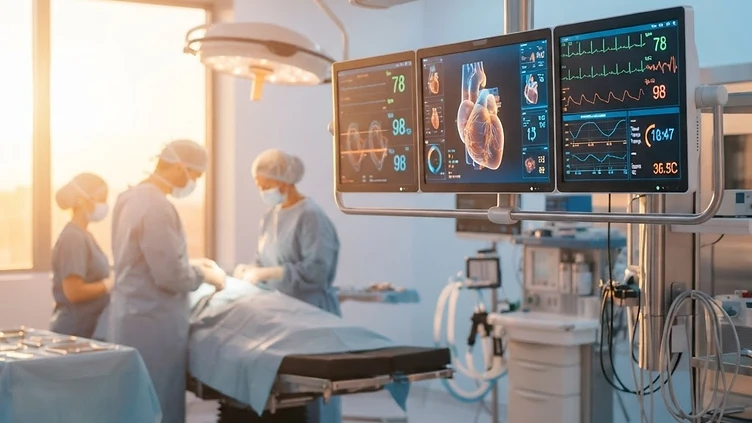
The technological innovation utilised during the surgery allowed the medical team to view the brain's anatomy with a level of clarity previously thought unattainable. Throughout the operation, the AI system provided real-time, colour-coded analysis of vital structures including blood vessels and delicate nerves. This constant, high-speed feedback loop enabled the surgeons to navigate the intricate landscape of the brain with unprecedented accuracy, ensuring that the tumour could be removed while meticulously protecting the surrounding healthy tissue. By identifying these critical structures instantly, the AI system acted as a digital guide, reducing the margin for error during a procedure where every millimetre is of paramount importance.
This level of surgical precision is more than just a technological triumph; it is a profound safety advancement. For patients facing the daunting prospect of brain surgery, the anxiety regarding potential side effects is immense. By mitigating these risks through advanced digital support, medical teams are now better equipped to provide care that is not only effective at removing the primary pathology but also deeply protective of the patient's long-term quality of life. The prevention of permanent blindness in this case serves as a powerful testament to the tangible human benefits of such advanced digital systems in the operating theatre.
Collaborative Investment for the Future
The realisation of this world-first achievement was made possible through a strategic collaboration between the public and private sectors. The surgery was funded by the for Health and Care Research alongside Google, highlighting the effectiveness of cross-industry partnership in driving medical innovation. When government research bodies and global technology leaders align their resources, the potential for rapid progress in clinical care becomes immense. This project demonstrates how targeted investment in healthcare technology can lead to direct, life-saving applications that benefit patients on the NHS frontline.
As the medical community reflects on the success of this operation, the focus is already shifting toward the broader implications for the United Kingdom. This is not an isolated experiment but a foundational moment for neurosurgery. The procedures followed at the National Hospital for Neurology and Neurosurgery provide a blueprint for how AI can be integrated into high-stakes clinical workflows. By demonstrating safety and efficacy in such a sensitive area of the human anatomy, the team has effectively paved the way for future clinical trials that will test the scalability and adaptability of this AI-driven approach.
Optimism on the Horizon
Looking ahead, the outlook for patients with similar diagnoses is brighter than ever. The integration of real-time AI analysis is poised to become an essential tool in the surgical toolkit, promising to make complex operations safer and more predictable. As the results from the National Hospital for Neurology and Neurosurgery are scrutinised and refined, the goal will be to expand this technology to a wider array of neurological conditions. The ripple effect of this success in London will likely be felt in hospitals throughout the country as more teams seek to adopt these sophisticated systems to enhance patient outcomes.
The story of Rhys Hibbert is one of hope and progress. It serves as a heartening reminder that when we combine the dedication of the UK’s medical professionals with the best of global technological innovation, we can overcome even the most daunting of obstacles. As we move further into 2026 and beyond, this milestone stands as a beacon of what is possible, marking a definitive shift toward a future where artificial intelligence is a routine, welcomed, and indispensable partner in protecting our health and our future.
Originally reported by
All rights in the original reporting remain with the publishers below.
Originally reported by theguardian.com. Our feature is written independently from verified facts — please support the original reporting:
Read the original storyRelated Wins

 Culture
South London father and son who make Jamaican patties now stocked in Aldi
A South London father and son have turned their family-run bakery into a national success story after their handmade Jamaican patties became a viral sensation. Their business, Flake Bake, secured a major distribution deal that saw their products stocked in 1,000 Aldi stores across the UK.
London & South · 11 hours ago

 Science
COSMIC CULINARY DISCOVERY: SCIENTISTS UNLOCK THE SECRETS OF BLACK HOLE FEEDING CYCLES
Researchers have identified a universal pattern in how black holes consume matter, revealing that these massive objects release powerful jets of energy at specific, predictable stages of their feeding process. This breakthrough provides a new understanding of the life cycles of black holes, demonstrating that they follow consistent physical rules regardless of their size.
London & South · 11 hours ago

 Tech
TechHEART-WARMING MILESTONE: SURVIVOR TAKES ON BELFAST HALF MARATHON
A resilient mother from Newtownabbey has completed a major personal milestone by participating in the Belfast City Half Marathon to raise vital funds for cardiovascular research. After surviving a life-threatening heart attack at age 36, she successfully rebuilt her health and confidence to tackle the 13.1-mile course.
Northern Ireland · 11 hours ago
The Sunshine Digest
One bright email each week — verified good news only, unsubscribe in a click.