MODERN SCIENCE RECREATES ANCIENT ROMAN COLOUR-CHANGING GLASS
Researchers at the University of Sheffield have successfully replicated the mysterious optical properties of the 1,600-year-old Lycurgus Cup. By recreating the ancient technique of embedding gold and silver nanocrystals into molten glass, the team has brought a lost Roman engineering marvel back to life.
The story in 20 seconds
20Scientists at the University of Sheffield have reproduced the 'dichroic' effect found in the 4th-century Roman Lycurgus Cup.
The effect is achieved through the precise dispersion of gold and silver nanocrystals within the glass matrix.
Metallic particles used in the glass are approximately 50 nanometers in diameter.
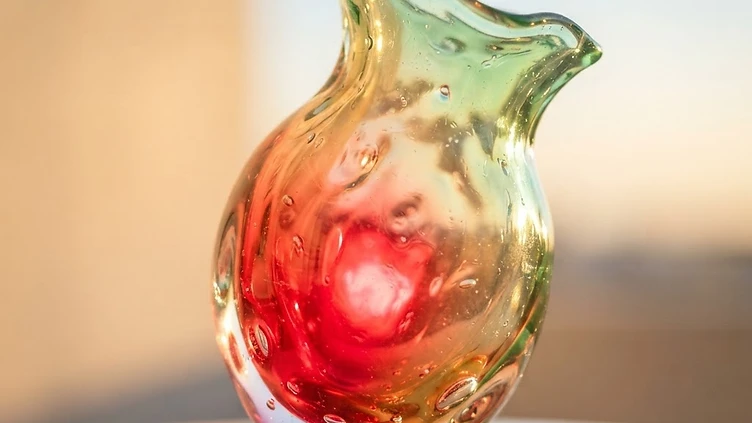
A Glimmer of Ancient Genius in Sheffield In a remarkable feat of experimental archaeology that bridges the gap between the modern laboratory and the workshops of the fourth century, researchers in the North of England have breathed new life into an age-old mystery. During October 2026, the University of Sheffield unveiled the successful replication of the legendary Lycurgus Cup, a 1,600-year-old Roman artefact known for its puzzling ability to change colour. By recreating the intricate techniques once mastered by long-lost craftsmen, contemporary scientists have not only solved a riddle of light and shadow but have also demonstrated that ancient Roman engineering held complexities that we are only now fully beginning to understand and replicate. This project, which formed a highlight of the university’s Festival of the Mind initiative, serves as a poignant reminder of the enduring brilliance of human innovation, proving that the tools and techniques of the past still have much to teach us today.
The Secret of the Dichroic Glass At the heart of this research was the desire to mimic the unique 'dichroic' effect that has baffled historians for generations. When held up to different light sources, the original cup shifts its appearance, a phenomenon that has fascinated observers since antiquity. Led by Dr. Lisa Hollands, the team at the University of Sheffield embarked on a rigorous scientific process to uncover exactly how Roman artisans achieved such a precise optical illusion. The secret, as it turns out, lies in the microscopic world of materials science. The researchers successfully dispersed gold and silver nanocrystals into a molten glass matrix, a process requiring extreme technical control. These metallic particles, which measure approximately 50 nanometers in diameter, are the key to the glass's ability to manipulate light in such a sophisticated manner. Dr. Hollands and her colleagues carefully managed the molten glass as it cooled from temperatures exceeding 1,000°C, a challenge that demanded absolute precision to ensure the particles were distributed with the exact density needed to replicate the Roman effect. This meticulous work shows that while our terminology may have shifted to the language of nanotechnology, the fundamental mastery over raw materials is a tradition that continues to thrive in our modern academic institutions.
Mastering the Engineering of the Past The achievement is far more than just a successful chemistry experiment; it is a profound testament to the technological capabilities of the Roman Empire. By physically recreating the cup, the researchers have validated theories regarding the sophisticated nature of ancient engineering. The process required the team to step into the shoes of those ancient glassmakers, navigating the same physical constraints of heat and material composition that were faced nearly two millennia ago. This hands-on approach has provided invaluable insights into the advanced understanding of optics and metallurgy that Roman scientists evidently possessed. It is a striking thought that the same principles being explored in a high-tech laboratory in the North of England today were being applied with such dexterity in the fourth century. This project successfully highlights the sophistication of the ancient world, reinforcing the idea that progress is not always a linear path but rather a continuous dialogue with the ingenuity of those who came before us. The success of the project acts as a bridge, grounding our high-tech ambitions in the solid reality of historical accomplishment.
A New Perspective on Our Legacy As we look toward the future, the implications of this study are both wide-reaching and profoundly optimistic. The ability to manipulate the optical properties of glass at a nanoscale level opens up exciting possibilities for future technological applications, while simultaneously ensuring that we maintain a deep respect for our heritage. The work conducted by Dr. Lisa Hollands and her team at the University of Sheffield during the Festival of the Mind has invigorated the academic community and the public alike, proving that historical research can be as dynamic and forward-looking as any modern technical pursuit. By mastering the techniques of the past, we are better equipped to innovate in the present. This successful replication not only honours the Roman artisans who first crafted the Lycurgus Cup but also celebrates the spirit of curiosity that defines scientific enquiry in the UK. As the project concludes, it leaves behind a legacy of its own: a clear demonstration that our modern scientific mastery is perfectly complemented by a dedicated appreciation for the brilliance of the ancient world. The researchers have not just replicated a piece of glass; they have successfully brought a long-lost engineering marvel into the twenty-first century, ensuring that the mystery of the Lycurgus Cup continues to inspire generations of scientists to come.
Originally reported by
All rights in the original reporting remain with the publishers below.
Originally reported by ‘It’s magic’: scientists rediscover how to make ancient Roman colour-changing glass — theguardian.com. Our feature is written independently from verified facts — please support the original reporting:
Read the original storyRelated Wins

 Environment
Primary pupils from 15 schools brighten up the town with seasonal planting
Pupils from 15 primary schools in Northwich collaborated on a seasonal planting initiative to enhance the local environment and foster community spirit.
North of England · 1 hour ago

 Science
UK’s longest-running astrophysics podcast celebrates 20 years with live show
The Jodcast, the UK’s longest-running astrophysics podcast, is celebrating its 20th anniversary with a special live event at the Jodrell Bank Space Dome, bringing together researchers and the public to discuss the universe.
North of England · 7 hours ago

 Health
A Heartwarming Act of Altruism in Poynton
Kate Clarkson, a dedicated 72-year-old resident of Poynton, is being celebrated for her altruistic decision to donate a kidney to a stranger in 2012, highlighting the profound impact of non-directed organ donation.
North of England · 7 hours ago
The Sunshine Digest
One bright email each week — verified good news only, unsubscribe in a click.