Midlands Wildlife Milestone: White Storks Return After 600-Year Absence
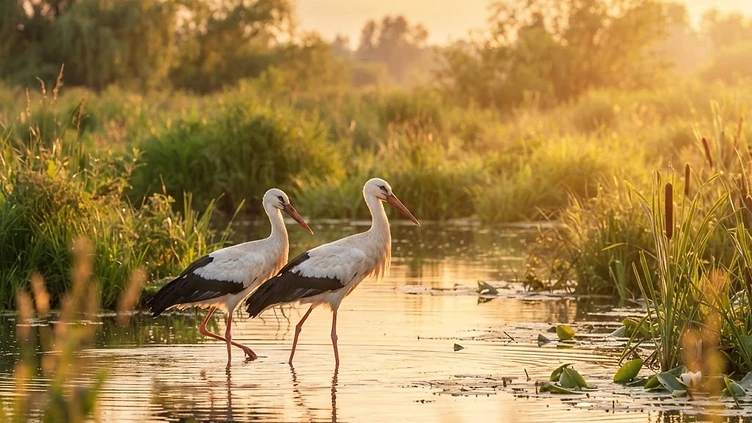
Derbyshire Wildlife Trust has launched a landmark project to reintroduce white storks to the Midlands, marking the species' first return to the region in six centuries. This initiative aims to restore vital wetland biodiversity and reconnect local communities with a species that has been absent since the Middle Ages.
The story in 20 seconds
20The project is led by the Derbyshire Wildlife Trust to establish a self-sustaining breeding population of white storks.
White storks were last recorded as a breeding species in the Midlands approximately 600 years ago.
The initiative is part of a broader, long-term strategy by the Trust to restore lost species and enhance regional biodiversity.
A Royal Return to the Midlands Skies
The skies of the Midlands are set to witness a breathtaking revival that has been six centuries in the making. In a move that feels as though it has been pulled from the pages of history, the Derbyshire Wildlife Trust has unveiled a landmark initiative to welcome the majestic white stork back to its ancestral home. For those who cherish the natural heritage of the British landscape, this project represents more than just a conservation effort; it is a heartwarming reunion with a species that has been entirely absent since the Middle Ages. As we look toward the summer of 2026, the anticipation continues to build for a sight that has not graced these fields for nearly six hundred years. This is a story of endurance, hope, and the remarkable power of restoration.
Restoring Nature’s Ancient Balance
The white stork is far more than a figure of cultural significance or a character found in the pages of European folklore. Within the delicate tapestry of our environment, these birds act as industrious ecosystem engineers. By regulating small animal populations, they play an essential role in maintaining the balance of their surroundings. Furthermore, the very nests they construct are architectural marvels that provide crucial habitats for a variety of other bird species, turning a single pair of storks into catalysts for broader biodiversity. The Derbyshire Wildlife Trust has meticulously chosen sites that are capable of supporting the unique foraging and nesting requirements of these long-legged visitors, ensuring that the local wetland ecosystems are primed for their grand return. By focusing on the health of these wetlands, the project is not merely introducing a new resident but is actively enhancing the environmental resilience of the entire region. This is a critical step in a much larger, long-term strategy to bring back lost species and breathe new life into our local habitats.
A Project Rooted in Community
While the ecological benefits of this reintroduction are profound, the project is equally concerned with the human spirit. The Trust envisions this milestone as a beautiful opportunity to reconnect local residents with the natural world in a way that feels intimate and tangible. For many, the return of such a legendary bird is expected to foster a deeper appreciation for the beauty and fragility of our local environment. The initiative is bolstered by widespread local conservation efforts and meaningful community engagement, proving that the desire to protect and cherish our regional wildlife is a shared passion. As the project progresses, the Trust continues to monitor the chosen sites with great care, ensuring that every necessary resource is available for the storks to thrive. It is a collaborative effort that bridges the gap between our historical connection to the land and our responsibility to protect its future.
Looking Toward a Wilder Future
As we move closer to the summer of 2026, the significance of this milestone becomes increasingly clear. This initiative serves as a shining indicator of the success and potential of regional rewilding efforts. It is a testament to the fact that with dedication, scientific foresight, and community support, it is possible to repair the damage of the past and create a more vibrant future. The Midlands is preparing to become a sanctuary once more, marking the beginning of a self-sustaining breeding population that will hopefully grace our horizon for generations to come. The return of the white stork is a hopeful signal that our landscapes are healing, offering a unique chance for us all to witness a chapter of nature being written anew. We are standing on the cusp of an era where lost wonders can once again be part of our daily lives, transforming the way we view our wetlands and the creatures that call them home. As the Derbyshire Wildlife Trust moves forward with their plans, the pride in this achievement is palpable, reminding us that we are all stewards of a living, breathing history. The prospect of seeing these iconic birds soar above the Midlands is a gift of optimism, highlighting the resilience of nature and the enduring bond between the people of this region and the wild spaces they inhabit.
Originally reported by
All rights in the original reporting remain with the publishers below.
Originally reported by derbyworld.co.uk. Our feature is written independently from verified facts — please support the original reporting:
Read the original storyRelated Wins

 Tech
TechNEW SUPERMARKET GREEN-LIT FOR WARWICKSHIRE
A new Lidl supermarket has been granted planning permission in Warwick, marking a significant step forward for local retail infrastructure. The development will transform a vacant industrial site into a modern shopping facility, bringing new investment and convenience to the community.
Midlands · 1 hour ago

 Environment
A NATURAL REVIVAL FOR BARNES GREEN
A major river restoration project has successfully transformed the Beverley Brook at Barnes Green into a thriving, natural habitat. This initiative has introduced a meandering river channel and a new island, significantly boosting local flood resilience and biodiversity.
London & South · 7 hours ago

 Culture
Birmingham’s Fierce Festival Returns with Bold Artistic Vision
Birmingham’s long-running live art festival has returned to the city, transforming unconventional spaces into vibrant stages for experimental performance. The event showcases a diverse range of creative works, including immersive installations and unique site-specific productions that challenge traditional theatre boundaries.
Midlands · 13 hours ago
The Sunshine Digest
One bright email each week — verified good news only, unsubscribe in a click.