London beavers intervene to prevent flooding at Greenford Tube station
A pioneering conservation project in West London has successfully used nature-based solutions to resolve chronic flooding issues at a major transport hub. By reintroducing Eurasian beavers to a local wetland, the project has effectively diverted water away from Greenford Underground station, proving that wildlife can play a vital role in urban infrastructure resilience.
The story in 20 seconds
20The project took place at Paradise Fields, a wetland area near Greenford station on the Central line.
The site historically suffered from severe flooding during heavy rainfall.
A collaborative partnership was formed in 2023 between the Ealing Wildlife Group, Ealing Council, Citizen Zoo, and Friends of Horsenden Hill.
Nature Takes Command In West London
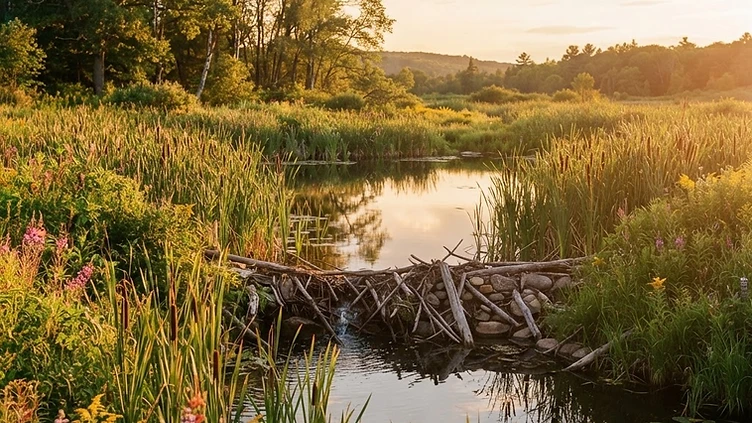
Deep in the heart of West , a quiet transformation is unfolding at . For years, this wetland site near Greenford station on the Central line was a place of persistent concern. Whenever the heavens opened and heavy rainfall descended upon the capital, the surrounding area struggled to manage the deluge. This chronic issue often manifested as severe flooding, creating significant disruption at the major transport hub. However, an unlikely team has stepped in to rewrite the narrative of this suburban landscape. In a remarkable fusion of conservation and urban infrastructure management, the arrival of a special family of engineers has turned the tide, offering a masterclass in how we might rethink our relationship with the natural world.
A Collaborative Vision For The Wild
In 2023, a diverse group of passionate organisations joined forces to tackle the problem with a bold, nature-based approach. The , Ealing Council, Citizen Zoo, and the Friends of Horsenden Hill formed a collaborative partnership that would eventually change the face of the local environment. Their shared vision was to use the rewilding of beavers as a practical solution to the persistent flooding challenges that had long plagued Greenford. By reintroducing these creatures to the local wetland, the project partners hoped to harness the innate talents of the animals to manage water levels naturally. This initiative represents a pioneering step, proving that wildlife can indeed play an essential role in bolstering the resilience of our urban infrastructure against the elements.
Busy Engineers At Work
Since their arrival, the beavers have wasted no time in establishing themselves as the masters of the creek. Acting as diligent natural water managers, these creatures have set about creating a series of dams and ponds throughout the wetland. This instinctive construction work has had an immediate and measurable impact on the landscape. By slowing and diverting the flow of water, the beavers have successfully mitigated the pressure on the local drainage systems that previously struggled during storm events. The genius of their work lies in its simplicity; by encouraging the water to linger in the landscape rather than rushing forward, they have essentially created a buffer zone that protects the vital transport infrastructure nearby.
The Results Speak For Themselves
The success of this initiative has been nothing short of transformative for Greenford station and its commuters. Where there was once the constant worry of flood-related closures, there is now stability. The definitive proof of the project's efficacy is the total cessation of flooding incidents at the station since the beavers established their home. The project has garnered high-level recognition, with the Mayor of London, Sadiq Khan, publicly praising the animals for their exceptional work. By acknowledging these beavers as nature's own engineers, the Mayor has highlighted the broader importance of such rewilding efforts in an urban context. The project at Paradise Fields stands as a testament to the power of biodiversity to solve complex modern problems.
Looking Toward A Greener Future
As we look toward the future of the United Kingdom’s urban centres, the Paradise Fields project offers an incredibly optimistic blueprint for change. It demonstrates that the path to a more resilient environment does not always require more concrete or heavy-duty engineering. Sometimes, the most effective solution is found in supporting the natural behaviours of the species that share our land. This project serves as a compelling reminder that the restoration of nature and the functioning of human society can go hand in hand. By creating spaces where wildlife can thrive, we are simultaneously safeguarding the infrastructure that keeps our communities moving.
The implications for other areas across London and the South are significant. If Eurasian beavers can manage the water flow effectively enough to protect a major Underground station, one has to wonder what other benefits await in similar projects. The partnership between local authorities, conservation groups, and the public has yielded results that were once considered impossible. As the seasons pass at Paradise Fields, the ongoing work of the beaver family will continue to shape the wetlands, reinforcing the success of this conservation effort. It is a story of hope, highlighting how local action can have a profound impact on the wider environment. In the end, the beavers have done more than just save a station from flooding; they have reminded us all of the profound and beautiful potential of the natural world to care for us if we only give it the space to thrive.
Originally reported by
All rights in the original reporting remain with the publishers below.
Originally reported by mylondon.news. Our feature is written independently from verified facts — please support the original reporting:
Read the original storyRelated Wins

 Sport
SportCHESS PRODIGIES BREAK BARRIERS IN NATIONAL LEAGUE DEBUT
The 'She Plays to Win' Lionesses have made history by competing in the top division of the Four Nations Chess League, marking the culmination of three consecutive promotions. Despite facing unique regulatory challenges regarding team composition, the squad continues to demonstrate exceptional skill and camaraderie at the highest level of British chess.
London & South · 2 hours ago

 Science
NEW PATHWAYS TO DIAGNOSIS: CAMBRIDGE STUDY SHEDS LIGHT ON AUTOIMMUNE HEALTH
A landmark study from the University of Cambridge is paving the way for more accurate medical care by highlighting critical gender disparities in the diagnosis of autoimmune conditions. By identifying how and why these misdiagnoses occur, researchers are providing the evidence needed to ensure patients receive faster, more effective support for their physical health.
London & South · 2 hours ago

 Environment
A NATURAL REVIVAL FOR BARNES GREEN
A major river restoration project has successfully transformed the Beverley Brook at Barnes Green into a thriving, natural habitat. This initiative has introduced a meandering river channel and a new island, significantly boosting local flood resilience and biodiversity.
London & South · 8 hours ago
The Sunshine Digest
One bright email each week — verified good news only, unsubscribe in a click.