London Artist Transforms Everyday Trash into Mythical Masterpieces
London-based artist Woo Jin Joo is breathing new life into discarded urban waste by transforming it into intricate sculptures inspired by East Asian mythology. By blending traditional shamanic themes with modern materials like old shopping bags, she invites viewers to find wonder in the everyday objects of the city.
The story in 20 seconds
20Artist Name: Woo Jin Joo.
Heritage: Korean-Chinese.
Location: Based in London, UK.

A New Kind of London Magic
In the heart of , an artistic revolution is currently breathing life into the discarded remnants of our city streets. As the leaves begin to turn this autumn of 2026, the local art scene finds itself enchanted by the unique vision of . Her work acts as a bridge between the ancient spirits of East Asian folklore and the relentless pace of a modern UK metropolis. What was once considered urban waste—old shopping bags and discarded domestic items—is being reclaimed to form intricate, mythical sculptures that challenge our perception of the mundane. This is not merely an exercise in recycling; it is a profound celebration of cultural and a reimagining of what it means to find wonder in the objects we thoughtlessly cast aside.
The Alchemist of the Studio
Within the walls of her London workspace, Woo Jin Joo conducts a quiet, daily miracle. Stepping into her studio is akin to entering a realm where discarded are granted a second, more meaningful existence. Amidst an environment described as being saturated with magic, she transforms the utilitarian into the ethereal. She works with a distinctive palette of found objects, including the iconic blue plastic bags often found in our homes and shaggy cream-colored fibers that provide her creations with a hauntingly soft texture. By blending these modern, often synthetic materials with traditional ceramic elements, she constructs figures that feel both familiar and otherworldly. Her process is a testament to the idea that nothing is truly lost, provided there is an artist with the vision to see its hidden potential.
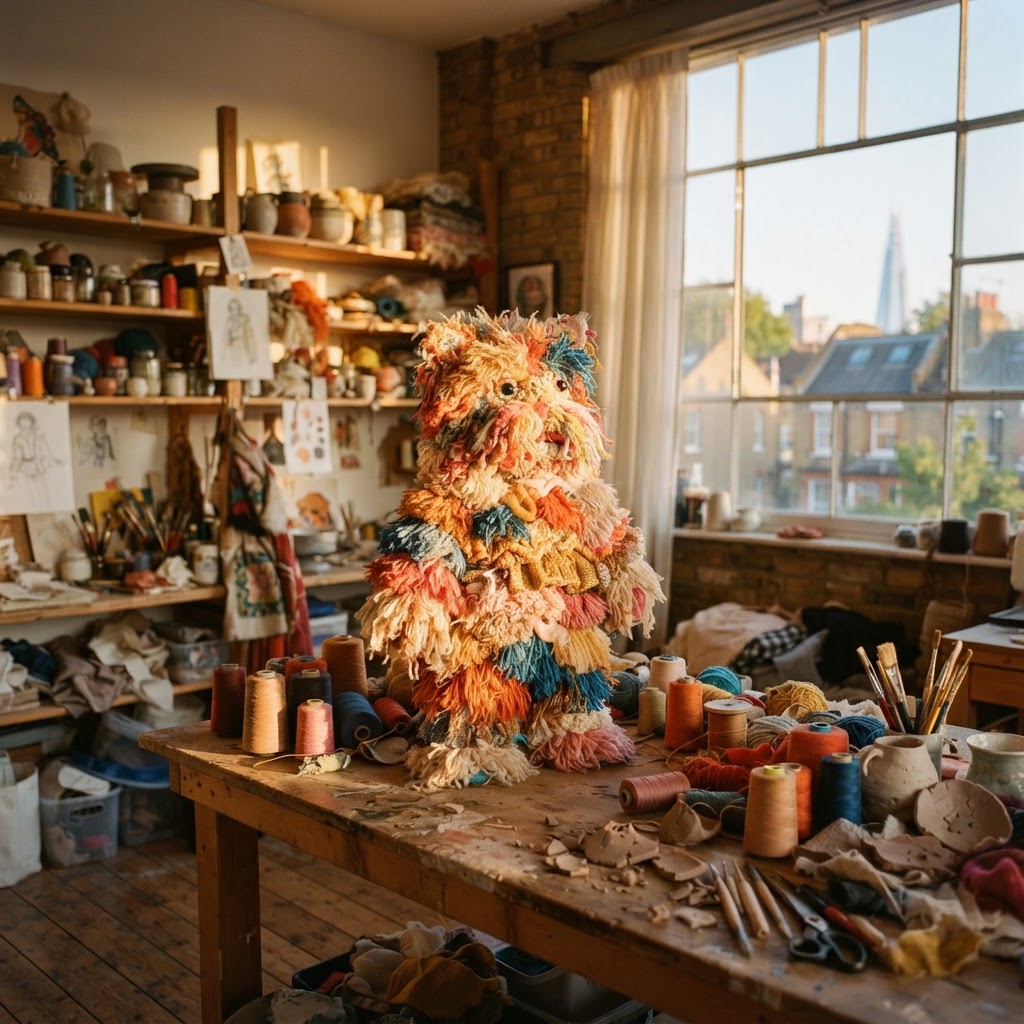
Weaving Threads of Myth
The heart of Joo’s practice lies in her deep connection to shamanism and folklore. As a Korean-Chinese artist based in London, she navigates the space between diverse belief systems, exploring concepts such as Her sculptures, such as the evocative piece titled serve as physical manifestations of these abstract themes. Hide, which features a figure with crossed arms cloaked in those signature shaggy fibers, captures a moment of suspended animation, inviting the viewer to contemplate what lies beneath the surface of our reality. Through like ceramic goblin feet and furry, disembodied legs, she constructs a visual language that feels rooted in ancient history yet entirely relevant to our current urban experience. It is a bold aesthetic that manages to be both whimsical and intellectually challenging.
Bringing the Spirit to London
The impact of Joo’s work was clearly felt when she was featured in the exhibition On a Thread of Wonder at The Knitting & Stitching Show in London. This platform provided a vital space for her to connect with a wider audience, demonstrating how textile-based art can serve as a catalyst for conversation. Her presence at such a significant event highlights the growing appreciation for craft-based disciplines in the UK art scene. By bringing ancient belief systems into our modern, sometimes impersonal urban life, she offers a necessary antidote to the monotony of daily city existence. The Ruup & Form has played a crucial role in showcasing her talent, helping to foster a dialogue about the importance of sustainable creativity and the enduring power of myth in contemporary society.
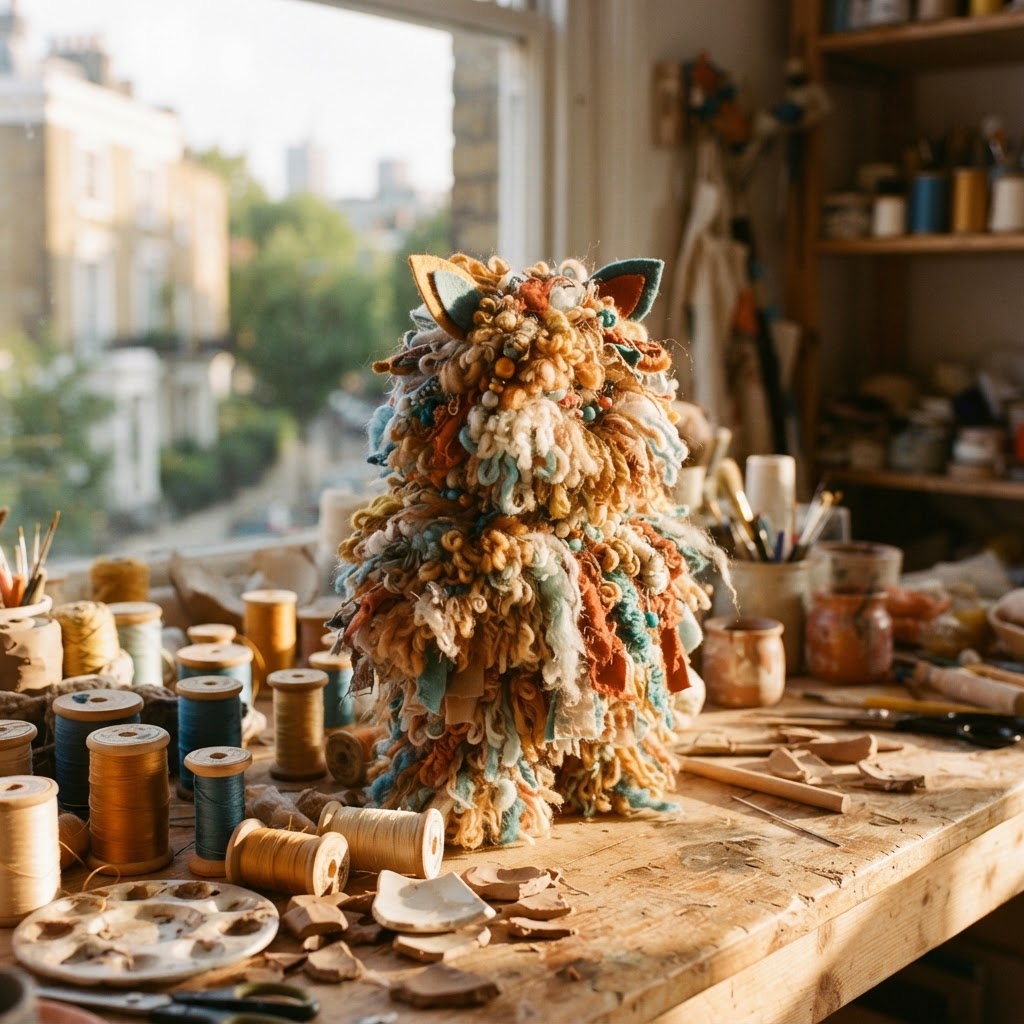
Beauty in the Mundane
The artistic philosophy championed by Woo Jin Joo is one of persistent optimism. She suggests that if we look closely enough at the items we deem as trash, we might discover a hidden enchantment that has been there all along. This perspective is particularly resonant in 2026, a year that has seen a surge in interest regarding how we interact with our environment and the objects we produce. By repurposing discarded materials, she not only cleans our streets but also cleans our mental landscape, encouraging us to value the history and texture of everything we touch. This approach to art-making is inherently inclusive; it does not demand a degree in history to understand the feeling of magic she creates, but rather an open mind willing to see the extraordinary in the everyday.
A Bright Future for Craft
As we move through the autumn of 2026, it is clear that Joo’s influence is only growing. Her work has been highlighted as part of the Best Art and Architecture of Autumn 2026, a distinction that speaks to the calibre of her contribution to the UK’s creative landscape. Recognition in media outlets, such as her profile in The Guardian on September 1, 2026, reinforces the idea that her message is one that resonates with the public at large. We are witnessing a shift in the cultural zeitgeist where the integration of traditional storytelling and modern sustainable practice is becoming a hallmark of excellence. Joo is at the forefront of this movement, and her future projects are eagerly anticipated by those who seek art that nourishes the spirit.
The Legacy of the Discarded
The story of Woo Jin Joo is a reminder of the transformative power of creativity. Her ability to take a discarded item and elevate it to the status of a masterpiece is a profound act of defiance against the disposable nature of modern culture. By grounding her work in her Korean-Chinese heritage and exploring the rich veins of shamanic tradition, she provides a unique contribution to the diversity of London’s artistic voice. The sculptures she creates are more than just aesthetic objects; they are conduits for wonder, curiosity, and reflection. As we continue to navigate the complexities of life in the UK, the presence of such art serves as a comforting reminder that even in the most mundane corners of our city, there is beauty waiting to be unearthed by a creative hand. Her journey is a testament to the fact that when we change the way we look at the world, we change the world itself.
Originally reported by
All rights in the original reporting remain with the publishers below.
Originally reported by Meet the magical creatures inspired by shamanism, folklore … and an old Ikea bag. Our feature is written independently from verified facts — please support the original reporting:
Read the original storyRelated Wins

 Culture
Local Students Bring Spooky Fun to the Stage
Young performers in Mid Cheshire are preparing to delight audiences this October with a lively production of The Addams Family musical, showcasing the dedication and artistic development of local youth.
North of England · 54 mins ago

 Sport
SportCHESS PRODIGIES BREAK BARRIERS IN NATIONAL LEAGUE DEBUT
The 'She Plays to Win' Lionesses have made history by competing in the top division of the Four Nations Chess League, marking the culmination of three consecutive promotions. Despite facing unique regulatory challenges regarding team composition, the squad continues to demonstrate exceptional skill and camaraderie at the highest level of British chess.
London & South · 1 hour ago

 Science
NEW PATHWAYS TO DIAGNOSIS: CAMBRIDGE STUDY SHEDS LIGHT ON AUTOIMMUNE HEALTH
A landmark study from the University of Cambridge is paving the way for more accurate medical care by highlighting critical gender disparities in the diagnosis of autoimmune conditions. By identifying how and why these misdiagnoses occur, researchers are providing the evidence needed to ensure patients receive faster, more effective support for their physical health.
London & South · 1 hour ago
The Sunshine Digest
One bright email each week — verified good news only, unsubscribe in a click.