Heritage Grain Revival Transforms Cotswold Landscape into Biodiversity Haven
A Cotswold farmer has successfully restored local wildlife and soil health by reintroducing traditional heritage wheat varieties to his land. By moving away from intensive modern monocultures, the project demonstrates how ecological restoration and profitable food production can thrive together.
The story in 20 seconds
20Henry Astor manages Bruern Abbey Farm, located in the Oxfordshire Cotswolds
The farm has reintroduced wheat varieties such as Red Lammas, which dates back to the 16th century
Other varieties grown include Maris Widgeon, a traditional straw-producing wheat favored for thatching and artisan baking
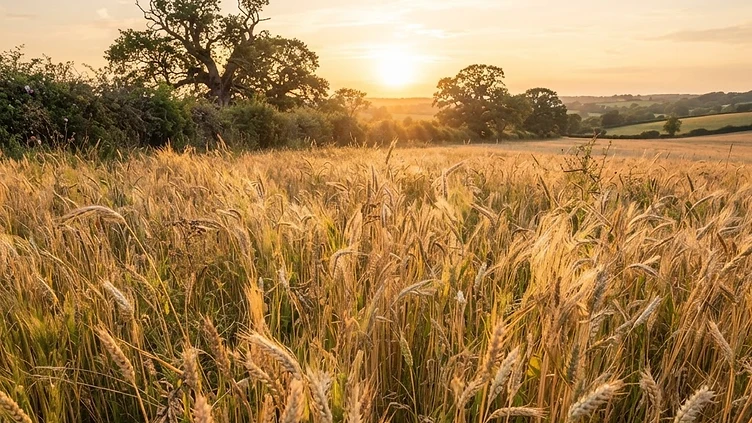
A Golden Revival in the Cotswolds As the golden heat of August 2026 settles over the Oxfordshire Cotswolds, a quiet revolution is unfolding across the fields of Bruern Abbey Farm. In a landscape that has long been synonymous with traditional beauty, Henry Astor is redefining what it means to be a modern British farmer. By turning away from the intensive monocultures that have dominated agricultural practice for decades, Astor has embarked on a bold mission to restore the intrinsic health of the land. This is not merely an attempt to produce food, but a comprehensive effort to reweave the fabric of a broken ecosystem. At the heart of this transition is a return to heritage, quite literally, in the form of ancient grain varieties that have not graced these hills for generations. Among the stalks swaying in the late summer breeze, one can find Red Lammas, a wheat variety tracing its lineage back to the 16th century. Alongside it, the farm produces Maris Widgeon, a traditional straw-producing wheat prized as much for its utility in thatching as for its exceptional quality in artisan baking. This shift represents a deliberate departure from the industrial supply chains that prioritize speed over quality, offering instead a model where history and ecology work hand-in-hand to provide sustainable, locally-sourced food.
Restoring Balance to the Land The impact of this transition on the local environment has been profound and swift. By eliminating synthetic insecticides and fungicides entirely, the farm has allowed nature to reclaim its role as the primary guardian of crop health. To facilitate this natural recovery, Astor has introduced sophisticated infrastructure such as beetle banks and expansive wildflower margins. These serve as vital corridors, encouraging pollinators and natural predators to thrive, while thousands of newly planted native trees and fresh hedgerows have been integrated to improve landscape connectivity. The results are visible to the naked eye. Biodiversity monitoring has confirmed the heartening return of the English grey partridge and corn buntings, species that had previously retreated from the area. Soil health, which is the foundational pillar of any resilient farm, is maintained through the use of herbal leys and cover crops. These plants act as nature’s own engineers, fixing nitrogen and sequestering carbon to ensure the fertility of the land remains high without the need for aggressive chemical interventions. This restorative approach also directly addresses critical local environmental concerns, particularly regarding soil erosion and the overall water quality of the River Evenlode, which has long suffered from the runoff associated with intensive farming practices.
A Blueprint for the Future While the transformation at Bruern Abbey Farm is impressive in its own right, it is also a vital component of a much larger, coordinated effort. The farm operates as a member of the North East Cotswold Farmer Cluster, a collaborative group comprised of more than 50 local landowners. Together, they are demonstrating that ecological restoration and profitable food production are not mutually exclusive goals, but rather interdependent partners in a long-term economic model. This ambition is bolstered by the Evenlode Landscape Recovery project, a significant initiative supported by £100 million in blended public and private funding. This project stands as one of the first Landscape Recovery schemes in the United Kingdom to successfully move from the initial planning phase into full, tangible delivery. Its scope is vast, aiming to restore 3,000 hectares of habitat across the Midlands and South East, spanning across Warwickshire, Gloucestershire, and Oxfordshire. By scaling this vision beyond the boundaries of a single estate, the project provides a blueprint for how rural communities across the country can transition toward more resilient and sustainable land management.
Flourishing Beyond the Farm The success of this transition is marked by a shift in how produce reaches the community. By operating an on-site mill, Astor has created a closed-loop system that allows him to sell high-quality flour directly to local bakers, successfully bypassing the industrial supply chains that often diminish the value of a farmer's labor. This economic independence ensures that the farm remains a viable business, proving that high environmental standards can underpin a profitable future. The 2026 harvest, which began in early August, serves as a poignant symbol of this resurgence. It was one of the earliest on record, signaling that when the soil is treated with care and the natural cycle of the land is respected, the bounty it provides is both rich and timely. As the Cotswold landscape continues to transform into a sanctuary for both rare wildlife and traditional crops, the efforts at Bruern Abbey Farm offer an optimistic glimpse into the future of British agriculture. It is a story of resilience, where the lessons of the past are helping to shape a healthier, more productive, and more vibrant countryside for the generations that will follow.
Originally reported by
All rights in the original reporting remain with the publishers below.
Originally reported by Going with the grain: how restoring biodiversity led one farmer back to heritage wheat. Our feature is written independently from verified facts — please support the original reporting:
Read the original storyRelated Wins

 Sport
SportCHESS PRODIGIES BREAK BARRIERS IN NATIONAL LEAGUE DEBUT
The 'She Plays to Win' Lionesses have made history by competing in the top division of the Four Nations Chess League, marking the culmination of three consecutive promotions. Despite facing unique regulatory challenges regarding team composition, the squad continues to demonstrate exceptional skill and camaraderie at the highest level of British chess.
London & South · 1 hour ago

 Science
NEW PATHWAYS TO DIAGNOSIS: CAMBRIDGE STUDY SHEDS LIGHT ON AUTOIMMUNE HEALTH
A landmark study from the University of Cambridge is paving the way for more accurate medical care by highlighting critical gender disparities in the diagnosis of autoimmune conditions. By identifying how and why these misdiagnoses occur, researchers are providing the evidence needed to ensure patients receive faster, more effective support for their physical health.
London & South · 1 hour ago

 Environment
A NATURAL REVIVAL FOR BARNES GREEN
A major river restoration project has successfully transformed the Beverley Brook at Barnes Green into a thriving, natural habitat. This initiative has introduced a meandering river channel and a new island, significantly boosting local flood resilience and biodiversity.
London & South · 7 hours ago
The Sunshine Digest
One bright email each week — verified good news only, unsubscribe in a click.