Giant Pollen Sculpture on the Thames Grants Visitors a Wonder-Filled Bee’s-Eye View of Nature
Acclaimed British artist Luke Jerram has unveiled Pollenarium, a walk-in outdoor sculpture beside the River Thames designed to help the public experience urban ecosystems through insect vision. Containing more than one hundred optical lenses, the giant model of a pollen grain offers visitors a striking compound-lens perspective while championing the vital role of local pollinators.
The story in 20 seconds
20The artwork is titled Pollenarium and was designed by British installation artist Luke Jerram.
The exterior structure represents a giant, highly magnified single grain of pollen.
The interior incorporates more than 100 lenses arranged to imitate the compound vision of insects such as bees.
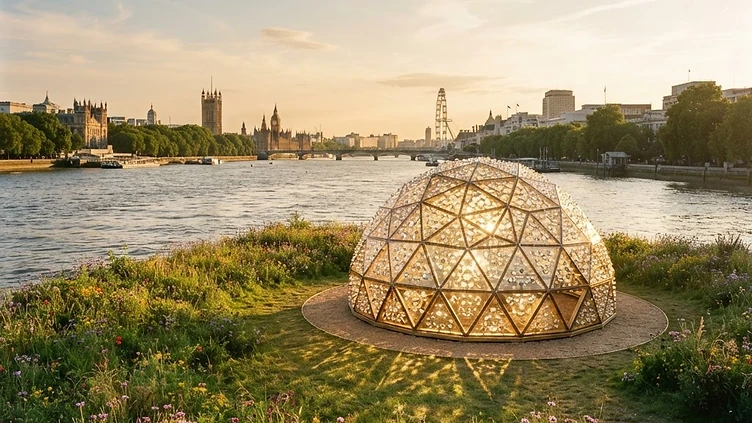
A New Perspective on the Thames Riverside The banks of the River Thames have long served as a lifeline for London, but this September, a remarkable transformation at Barking Riverside is inviting us to see the landscape through a completely different set of eyes. British artist Luke Jerram, a creative mind celebrated across the globe for bringing us the awe-inspiring Museum of the Moon and Gaia, has unveiled his latest masterpiece in east London. Titled Pollenarium, this striking installation is not merely a piece of public art; it is a sensory journey that beckons the curious to step inside the microscopic world. Commissioned by Creative Barking and Dagenham, the work serves as a brilliant bridge between the complex science of our urban ecosystems and the local community, turning the riverfront into an open-air classroom for anyone who wanders by.
Walking Inside a Microscopic Wonder At first glance, the sculpture appears as a massive, alien structure resting on the north bank of the Thames, but its form is rooted deeply in the natural world. Designed to represent a single, gargantuan pollen grain, the installation is a triumph of imagination and ecological reverence. What truly sets Pollenarium apart, however, is the hidden wonder contained within its walls. As visitors venture into the heart of this giant seed, they encounter an intricate arrangement of more than one hundred optical lenses. These lenses are meticulously positioned to replicate the compound vision typical of our most industrious insects, including wild bees, hoverflies, and butterflies. Stepping inside allows the viewer to gaze out at the familiar riverbank and the expansive sky, but the experience is utterly transformed; the landscape is fractured and multiplied into dozens of simultaneous visual perspectives, mimicking the kaleidoscopic view that a pollinator might experience during its daily flight.
Celebrating the Smallest Urban Workers This installation is about more than just light and lenses; it is a warm, celebratory nod to the vital role that pollinators play within our cities. Often overlooked in the hustle and bustle of urban life, these creatures are the unsung heroes of our green corridors. By physically placing the public in the shoes of a bee or butterfly, Luke Jerram has created an uplifting cultural experience that fosters a deeper, more personal connection to the biodiversity thriving along the Thames. The project highlights the necessity of these pollinators for the health of our environment, encouraging a greater appreciation for the delicate balance of nature that persists even in the most developed corners of the United Kingdom. It is a rare opportunity for people to engage directly with ecological education, turning the abstract concept of biodiversity into an interactive, wonder-filled reality that everyone can enjoy for free.
A Future Rooted in Green Spaces The choice of location for Pollenarium is particularly poignant. Barking Riverside stands as one of the most ambitious brownfield redevelopment projects in the UK, a testament to how modern planning can breathe new life into industrial legacies. By integrating newly created parklands, sprawling wetlands, and mudflats along the Thames Estuary, this area is rapidly becoming a sanctuary for both people and wildlife. Placing such an evocative piece of art here serves as a powerful reminder of how far our urban landscapes have come and where they might be headed. As we look at the Thames today, we are seeing a shift in how we value our public spaces, prioritising the health of our habitats alongside the growth of our communities. The installation stands as a beacon of optimism, suggesting that when we take the time to look at our surroundings from a new angle, we find that our local environments are richer and more connected than we ever dared to imagine. As September progresses, the Pollenarium acts as a seasonal landmark, drawing locals and visitors alike to engage with the riverbank in a way that is both educational and deeply atmospheric. It asks us to slow down, step inside, and consider the buzzing world that works tirelessly just out of sight. By blending science with the creative spirit of a visionary artist, this project ensures that the lessons of nature are not just heard, but felt and seen through a completely new lens, reminding us all of the magic that exists in the smallest of places.
Originally reported by
All rights in the original reporting remain with the publishers below.
Originally reported by A bee’s-eye view: art installation beside the Thames celebrates crucial pollinators. Our feature is written independently from verified facts — please support the original reporting:
Read the original storyRelated Wins

 Tech
TechKinky dating app Feeld’s founders share in record £3.8m dividend after sales jump
A London-founded technology company, Feeld, has achieved significant financial success, reporting a £3.8 million dividend distribution to shareholders following a surge in global sales. Established in 2014 by Ana Kirova and Dimo Trifonov, the platform has grown into a global service operating in over 100 countries, catering to individuals seeking non-monogamous and inclusive relationship structures.
London & South · 16 mins ago

 Environment
Centuries of Tradition: Nottingham’s Iconic Goose Fair Returns to the Forest
Nottingham’s historic Goose Fair has made its grand return to the Forest Recreation Ground, bringing over 700 years of tradition and hundreds of attractions to the city. The 10-day event serves as a major cultural highlight for the region, drawing half a million visitors to enjoy a mix of modern thrill rides and nostalgic fairground classics.
Midlands · 6 hours ago

 Science
Nature’s Hidden Rhythm: Exeter Exhibition Harmonises Science and Art Through Fungi
Scientists and artists have joined forces in Devon to reveal the unseen, vibrant world of fungi, showcasing their role as both vital ecological players and hidden musical performers. This unique exhibition at the Royal Albert Memorial Museum & Art Gallery (RAMM) explores the deep connection between the natural world and human creativity.
London & South · 6 hours ago
The Sunshine Digest
One bright email each week — verified good news only, unsubscribe in a click.