From Arable Desert to Biodiversity Haven: The Industrial-Scale Rewilding of South Lincolnshire
A landmark project is transforming more than 1,500 acres of intensive Lincolnshire farmland into a self-sustaining wildland ecosystem. Led by rewilding pioneer Sir Charles Burrell, the initiative aims to prove that nature recovery is a financially viable alternative to traditional industrial agriculture.
The story in 20 seconds
20Boothby Wildland covers 1,525 acres (approximately 617 hectares) of land in the South Lincolnshire countryside.
The estate was purchased for £13.8 million in late 2021 by the specialist conservation firm Nattergal.
The project is led by Sir Charles Burrell, the 10th Baronet and a prominent advocate for large-scale nature recovery in the UK.
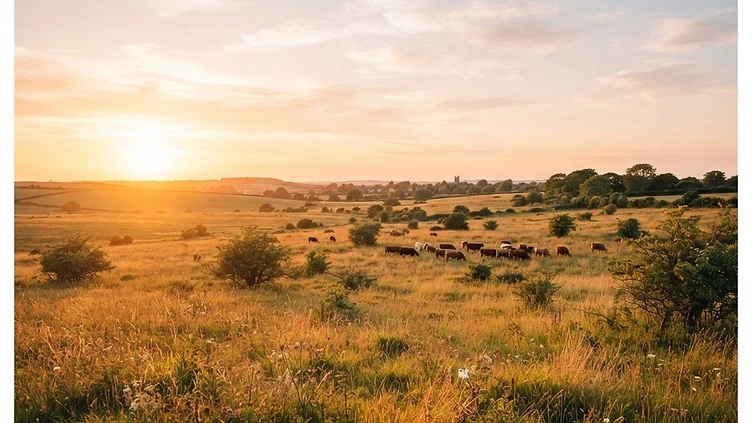
A New Dawn for South Lincolnshire The golden fields of South Lincolnshire, once synonymous with the relentless production of feed wheat and oilseed rape, are undergoing a profound and historic metamorphosis. Near the town of Grantham, a landscape that was long defined by the efficiency of industrial-scale arable farming is being surrendered back to the natural world. At the heart of this transformation is Boothby Wildland, a sprawling 1,525-acre estate that is proving to be a beacon of hope for Britain's declining natural heritage. Purchased in late 2021 by the specialist conservation firm Nattergal for £13.8 million, this project represents one of the most ambitious private rewilding initiatives in the Midlands. Guided by the vision of co-founder and noted rewilding pioneer Sir Charles Burrell, the project seeks to challenge the long-held assumption that the only future for rural land is intensive agriculture. By stepping back and allowing nature to take the lead, the team at Nattergal is crafting a blueprint for what a sustainable, biodiversity-rich landscape could look like for the rest of the United Kingdom.
The Return of Nature to the Clay In the quiet corners of the South Lincolnshire countryside, the machinery of modern farming has fallen silent. On this challenging heavy clay soil, the era of chemical fertilizers and synthetic pesticides has been brought to a firm close. Instead of the monotonous rows of monoculture crops, the land is being encouraged to develop into a vibrant wood pasture mosaic. This complex habitat, which blends open grassland with patches of scrub and emerging woodland, is being shaped not by human hand, but by the natural processes of ecological succession. Rather than relying on manual tree planting, the conservationists are entrusting the future of the landscape to the wind and the wildlife, allowing natural seed dispersal to dictate the species that thrive. This strategy ensures that the emerging ecosystem is perfectly attuned to the local climate and soil conditions, fostering a degree of resilience that human-managed planting often struggles to replicate. The result will be a wilder, more chaotic, and ultimately more stable environment that serves as a vital refuge for threatened species, including the grey partridge and the turtle dove.
Ecosystem Engineers at Work The real heroes of the Boothby Wildland project are its four-legged inhabitants, who act as the essential ecosystem engineers of this burgeoning wild landscape. By introducing free-roaming herbivores such as native Lincoln Red cattle and Exmoor ponies, Nattergal is recreating the natural cycles that have been absent from British farmland for generations. These animals do not merely exist on the land; they actively shape it. Through their grazing, browsing, and trampling, they maintain the structural diversity of the vegetation, creating the complex patchwork of habitats that wildlife requires to survive. Joining them are the Tamworth pigs, which play a specialized role by rooting up the ground. This disturbance is vital, as it creates the perfect seedbeds for new flora to germinate and provides a boost to the local insect population, which in turn supports the bird life returning to the estate. It is a slow and deliberate process, with the most significant ecological impacts expected to manifest over the coming five to seven years, but the vision is clear: these creatures are restoring a functional rhythm to the land that has been dormant since the mid-20th century.
A Financially Viable Future Beyond the environmental restoration, the Boothby project is designed to tackle a critical question: can nature recovery stand on its own two feet in a commercial world? For too long, the narrative has been that large-scale conservation is a charitable luxury, divorced from the harsh economic realities of the modern land market. Nattergal is working to dismantle this idea by developing a business model that proves rewilding can be a financially viable alternative to marginal arable farming. By generating revenue through the sale of biodiversity units to organizations seeking to fulfill their own environmental mitigation requirements, the project creates a market-led incentive for land managers to choose restoration over destruction. This is an optimistic vision for the future of the UK countryside, where the financial success of a farm is no longer measured solely by the tonnage of its harvest, but by the health and diversity of the ecosystem it supports. Given that England has witnessed the loss of over 90% of its freshwater wetlands and more than 60% of its farmland bird population since the middle of the last century, the importance of this shift cannot be overstated. By demonstrating that nature can be a profitable partner, Boothby Wildland offers a hopeful path forward for farmers and landowners across the country who are looking for a way to nurture the land while ensuring their own long-term survival. The fields near Grantham may no longer produce wheat, but they are beginning to yield something far more valuable: a living, breathing testament to the restorative power of the wild.
Originally reported by
All rights in the original reporting remain with the publishers below.
Originally reported by ‘It makes your heart sing’: can a pioneering project show that rewilding really works? – podcast. Our feature is written independently from verified facts — please support the original reporting:
Read the original storyRelated Wins

 Tech
TechNEW SUPERMARKET GREEN-LIT FOR WARWICKSHIRE
A new Lidl supermarket has been granted planning permission in Warwick, marking a significant step forward for local retail infrastructure. The development will transform a vacant industrial site into a modern shopping facility, bringing new investment and convenience to the community.
Midlands · 2 hours ago

 Environment
A NATURAL REVIVAL FOR BARNES GREEN
A major river restoration project has successfully transformed the Beverley Brook at Barnes Green into a thriving, natural habitat. This initiative has introduced a meandering river channel and a new island, significantly boosting local flood resilience and biodiversity.
London & South · 8 hours ago

 Culture
Birmingham’s Fierce Festival Returns with Bold Artistic Vision
Birmingham’s long-running live art festival has returned to the city, transforming unconventional spaces into vibrant stages for experimental performance. The event showcases a diverse range of creative works, including immersive installations and unique site-specific productions that challenge traditional theatre boundaries.
Midlands · 14 hours ago
The Sunshine Digest
One bright email each week — verified good news only, unsubscribe in a click.