FEATHERED NAVIGATORS: SCIENTISTS UNCOVER THE SECRET OF SEABIRD JET LAG
A groundbreaking two-decade study has revealed that Manx shearwaters experience a phenomenon similar to human jet lag when flying rapidly across time zones. Researchers discovered that these resilient seabirds can temporarily lose their internal sense of time, causing minor navigational adjustments during their long-distance foraging trips.
The story in 20 seconds
20Study published in the journal Science on 29 October 2026.
Research led by the University of Oxford’s Department of Biology.
Data set spanned 20 years of GPS tracking.

Our Brave Welsh Voyagers
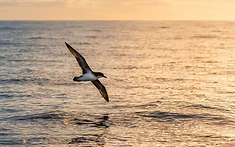
For two decades, the rugged coastlines of Wales have served as the silent backdrop to a monumental scientific endeavor. ers from the University of Oxford and ZSL’s Institute of Zoology have been keeping a watchful eye on one of the most remarkable travelers of the North Atlantic: the Manx shearwater. These resilient sea, close cousins to the majestic albatross, lead lives defined by distance and endurance, frequently embarking on epic foraging trips that see them travel up to 1,000 kilometres away from their nesting colonies. Now, thanks to an exhaustive analysis published in the journal on 29 October 2026, we are finally beginning to understand the secret, internal struggles these birds face as they navigate the vast, watery expanse of the open ocean.
The Secret of Flap Lag
It turns out that even the most seasoned aerial navigators are not immune to the disorienting effects of rapid travel. Much like the weary human traveler stepping off a long-haul flight, Manx shearwaters appear to suffer from a phenomenon akin to jet lag. Scientists have dubbed this "flap lag," a curious state where a bird's delicate biological clock falls momentarily out of sync with the position of the sun. For years, the team monitored the movements of 1,045 individual birds, painstakingly recording data across a staggering 3,688 foraging trips. By synthesising two decades of high-precision GPS tracking, the researchers revealed that this mismatch between internal timekeeping and local solar time can cause a subtle, temporary loss of orientation.
Precision in the Clouds
Navigation for a seabird is a complex dance involving the sun, which acts as their primary compass to guide them across the featureless horizon. When the internal clock and the sun’s actual position fail to align, the result is a error. The data gathered from the Welsh breeding colonies shows that the compass error observed in these birds was approximately seven degrees. In the grand scale of a 1,000-kilometre trek, this represents a minor deviation, typically adding only about five kilometres to their arduous journey. While these tiny errors might seem trivial, they represent a fascinating insight into the biological hurdles that these animals must overcome every single day. The shearwaters, it appears, are constantly recalibrating their course, proving that even when their internal systems are slightly misaligned, they possess an extraordinary capacity for adjustment.
Resilience on the Wing
Why does this matter? Beyond the sheer technical achievement of tracking seabirds over twenty years, this study offers a profound look at the resilience of nature. Led by the University of of Biology and co-authored by at ZSL’s Institute of Zoology, the research highlights how these birds navigate the physical constraints of their own biology. Rather than being hampered by their "flap lag," the shearwaters show a persistent ability to correct their trajectory, successfully finding their way back to their nests despite the complexities of their internal timing mechanisms. This resilience is a testament to the evolutionary success of the species, as they continue to thrive in the demanding environments of the North Atlantic.
Understanding Animal Navigation
This groundbreaking study does more than just identify a unique biological phenomenon; it deepens our collective understanding of how animals interact with our world. By mapping the movements of these birds over two decades, researchers have gained a clearer picture of the intricate relationship between a bird's physiology and its environment. We now know that the sun is not merely a beacon for the shearwater, but a fundamental reference point that requires precise internal timing to be used effectively. Recognizing that these birds experience something as relatable as jet lag serves to bridge the gap between our understanding of human biology and the extraordinary natural world around us. It encourages us to look at the skies above Wales with a newfound appreciation for the silent, invisible battles being fought by these intrepid explorers as they return home to the safety of their colonies. As we look ahead, the data collected provides a solid foundation for future research, ensuring that our connection to these winged navigators remains as strong as their own sense of direction. The story of the Manx shearwater is one of triumph, patience, and the incredible, persistent pull of home.
Originally reported by
All rights in the original reporting remain with the publishers below.
Originally reported by Migrating seabirds face a surprising problem: jet lag. Our feature is written independently from verified facts — please support the original reporting:
Read the original storyRelated Wins

 Science
NEW CAFE BREWS COMMUNITY SPIRIT IN WANDSWORTH
A new independent coffee shop, Slow Mornings, is opening in the New Acres development in Wandsworth this Saturday, October 31st, featuring an introductory £1 coffee promotion and a vision to serve as a community hub.
London & South · 14 hours ago

 Science
FEATHERED NAVIGATORS REVEAL SECRETS OF BIOLOGICAL CLOCKS
Oxford University researchers have discovered that Manx shearwaters experience a phenomenon akin to jet lag during rapid long-distance flights across the Atlantic. This study provides new insights into how these seabirds use internal biological clocks to navigate by the sun.
London & South · 1 day ago

 Science
Scottish communities are celebrating a major cultural milestone as three towns from across the nation have been shortlisted for the inaugural UK Town of Culture 2028 title.
Leith, the Isle of Bute, and Lerwick have been selected as finalists for the inaugural UK Town of Culture 2028, each receiving a £60,000 grant to develop their bids for the national title and the potential £3 million prize.
Scotland · 1 day ago
The Sunshine Digest
One bright email each week — verified good news only, unsubscribe in a click.