Deep-Level Farming Innovation Transforms North Yorkshire Mine into Sustainable Food Hub
Researchers have successfully harvested crops from the world’s deepest underground farm located over a kilometre beneath the North Yorkshire countryside. By utilizing the naturally stable environment of a working mine, this project offers a climate-resilient method to boost food production while reducing energy costs.
The story in 20 seconds
20The farm is situated 1,100 metres (approximately 0.7 miles) below the surface, making it the deepest of its kind globally.
It is located within the Boulby mine in North Yorkshire, a site that is also the world's only commercial producer of polyhalite fertiliser.
The agricultural trials are led by researchers from the University of Sheffield, including research fellow Jacob Nickles.
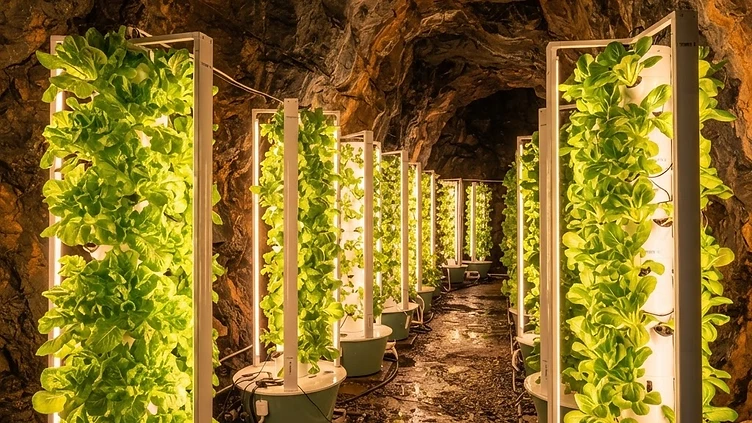
Deep Beneath the North Yorkshire Soil
High above the picturesque village of Sea, life in follows the familiar rhythm of the changing British seasons. Yet, nearly three quarters of a mile directly beneath the rolling countryside, a revolutionary experiment in agricultural resilience is flourishing within the silent, industrial darkness of the Boulby mine. Here, shielded from the unpredictability of surface weather, a team of researchers from the University of Sheffield is rewriting the rulebook on how we produce our food. This project, which stands as the world's deepest underground farm, offers a compelling vision of the future where industrial infrastructure becomes a sanctuary for sustainable crop production.
A Journey Into the Earth
To reach this subterranean oasis, visitors and staff must undertake a journey that feels like a plunge into the very heart of the planet. An eight-minute descent in a lift—a sturdy piece of engineering constructed over half a century ago—transports workers from the breezy surface air into the constant, controlled climate of the deep earth. At 1,100 metres below ground, the farm operates in a world where the extremes of heatwaves and droughts are entirely unknown. This site, managed in partnership with ICL-UK, is famous for being the world's only commercial producer of polyhalite fertiliser, but it is now gaining a reputation for a far more delicate operation: the cultivation of fresh, leafy greens.
Innovation in the Dark
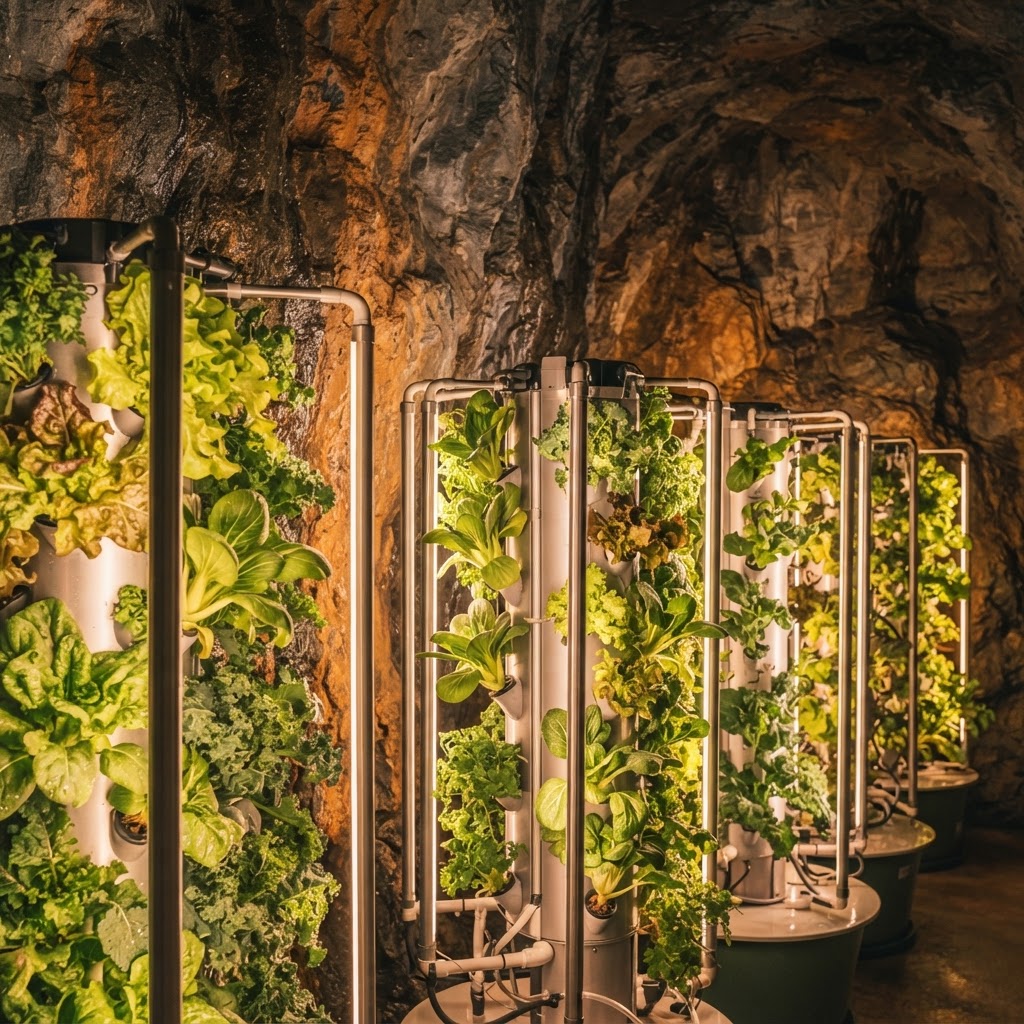
The facility is a triumph of modern ingenuity, housing not only agricultural trials but also high-level physics research dedicated to the mysteries of dark matter. In this specialized environment, research fellow and his team from the University of Sheffield are proving that sunlight and traditional soil are not strictly necessary for successful farming. By utilizing vertical farming towers, the team grows crisp lettuce and pak choi, stacking their harvest toward the cavern ceiling. Without the need for solar exposure, the plants thrive in an environment that is naturally temperature-stable, dramatically reducing the energy costs typically associated with the climate control of surface greenhouses.
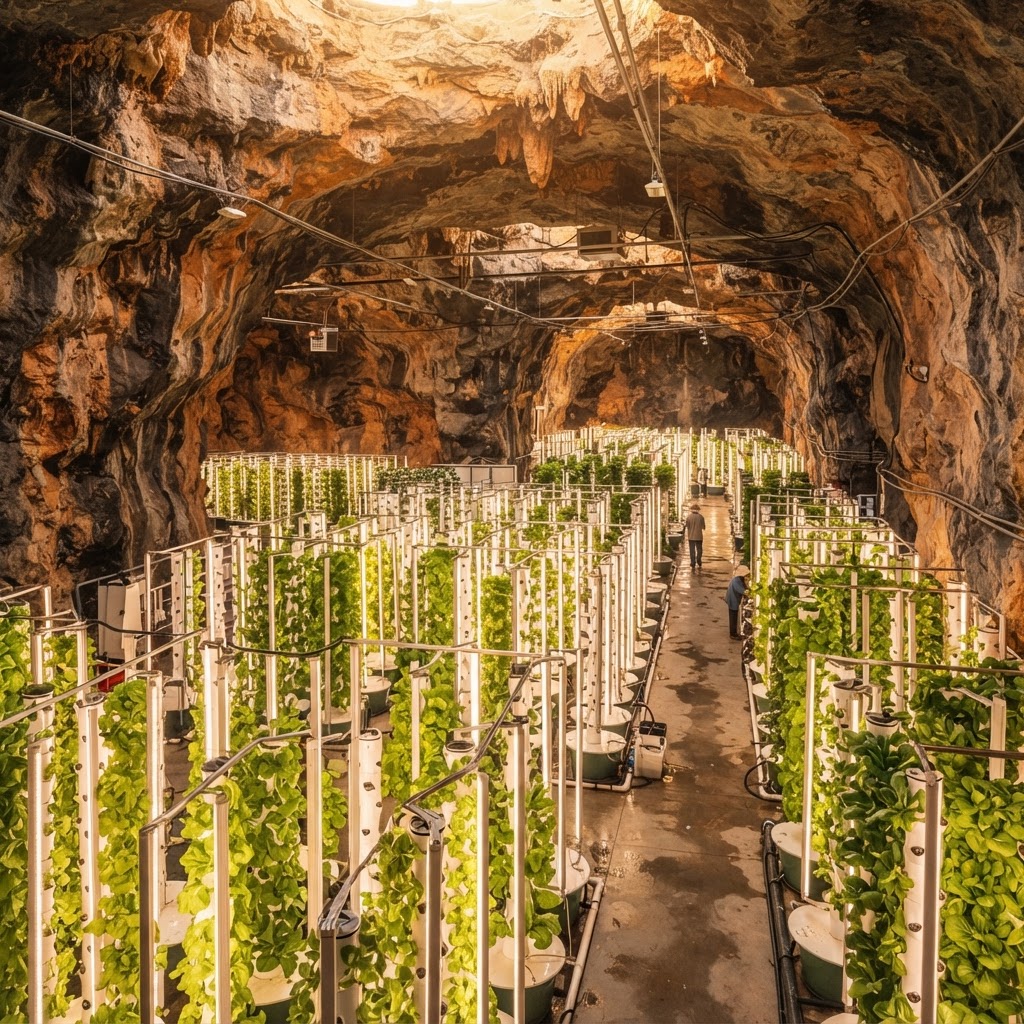
Climate Resilience for the Future
The necessity for such a radical approach is rooted in the urgent global challenge of doubling food production by the year 2050. As surface temperatures become increasingly volatile and historical weather patterns shift, the UK must seek innovative ways to safeguard its food supply. This subterranean project provides a robust solution, effectively insulating crops from the climate-driven threats that disrupt traditional outdoor farming. By repurposing industrial spaces that would otherwise remain dormant, the initiative transforms an extraction site into a beacon of food security, aligning with government goals to reduce the nation's reliance on imported produce.
The Team Behind the Harvest
Success at this depth is a testament to the dedication of a tight-knit group of approximately 20 to 25 specialized workers. Their expertise bridges the gap between traditional agricultural science and high-tech facility management. Working deep below North Yorkshire, they ensure that every variable—from moisture to nutrient delivery—is meticulously monitored. The atmosphere of the site is one of quiet determination, as these pioneers refine their methods to demonstrate that deep-level farming is not merely a theoretical exercise, but a viable, scalable industry. Their harvests have confirmed the feasibility of the concept, paving the way for larger ambitions.
A Vision for Subterranean Growth
The ambition of the University of Sheffield team does not end with current success. Plans are already in motion to significantly scale operations, with a new, expansive cavern currently being prepared. By the year 2030, the project expects to increase its total growing space by five times. This growth represents a major commitment to sustainable, local production that can operate independently of seasonal constraints. As the facility expands, it reinforces the position of the North of England as a vital hub for agricultural technology and environmental innovation.
Strengthening National Food Security
Looking toward the middle of the century, the implications of this underground farm are profound. By demonstrating that we can produce high-quality, fresh food in climate-resilient environments, the project offers a blueprint for national stability. The partnership between industry and academia, supported by the UK government, highlights a concerted effort to rethink the supply chain from the ground up—literally. As we navigate a changing world, the ability to generate nutrition in a protected environment, far removed from the unpredictability of the surface, could prove to be one of the most important developments in British food production in decades.
Looking Toward a Greener Horizon
As the team at Boulby mine continues their work, the world watches with interest. The success of these leafy greens, grown in the silence of the earth, serves as a powerful reminder of human ingenuity. When we consider the challenges that lie ahead, it is comforting to know that in the depths of North Yorkshire, a team is working tirelessly to secure the future of our dinner tables. The transition from mining mineral wealth to harvesting fresh, sustainable food is a journey that promises to yield growth for years to come, proving that sometimes, the best way to move forward is to dig a little deeper.
Originally reported by
All rights in the original reporting remain with the publishers below.
Originally reported by Subterranean salad: underground farmers seek solution to food crisis in disused UK mines. Our feature is written independently from verified facts — please support the original reporting:
Read the original storyRelated Wins

 Culture
Local Students Bring Spooky Fun to the Stage
Young performers in Mid Cheshire are preparing to delight audiences this October with a lively production of The Addams Family musical, showcasing the dedication and artistic development of local youth.
North of England · 1 hour ago

 Culture
Traitors star Joe Lycett funds free pints at Knutsford bar to support struggling pubs
Comedian Joe Lycett has stepped in to support the local hospitality industry by funding free drinks for patrons at a Knutsford bar. This generous gesture aims to boost footfall and provide a helping hand to a local business during challenging economic times.
North of England · 7 hours ago

 Health
Widnes youngster cutting hair after 10 years for good cause
A young Widnes resident has donated his hair after growing it for a decade to support children facing hair loss due to medical treatment.
North of England · 7 hours ago
The Sunshine Digest
One bright email each week — verified good news only, unsubscribe in a click.