CELESTIAL WONDER: UK COMMUNITIES UNITE FOR SPECTACULAR SOLAR ECLIPSE
Across the United Kingdom, millions of stargazers gathered this week to witness a rare and breathtaking partial solar eclipse. From improvised pinhole projectors to shared viewing parties, the event sparked a nationwide moment of collective awe and scientific curiosity.
The story in 20 seconds
20The partial solar eclipse occurred on August 12, 2026.
The event was visible across the entire United Kingdom and Ireland.
The moon covered approximately 90% to 96% of the sun’s surface at the peak of the eclipse.
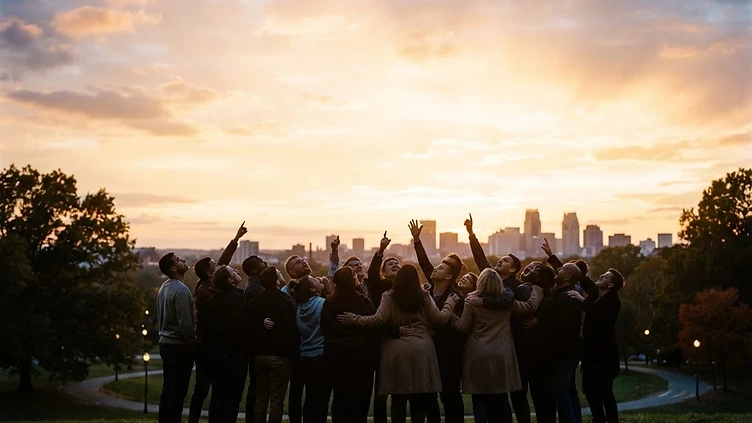
A Rare Moment of Cosmic Wonder On the evening of August 12, 2026, the United Kingdom experienced a rare and profound celestial event that brought millions of people together in a shared moment of breathtaking awe. Shortly after 18:00 BST, a significant partial solar eclipse began to unfold across the British Isles, capturing the attention of stargazers from all walks of life. This remarkable phenomenon, which saw the moon obscure between 90% and 96% of the sun’s surface, marked the most significant solar eclipse visible from the UK so far this century. As the skies darkened and the day took on an ethereal quality, communities across the country paused their routines to look upward in unison, united by the sheer majesty of the universe. The event was not merely a scientific occurrence but a collective experience that fostered a renewed sense of connection and wonder among the British public.
Communities United by the Sky Throughout the UK, from busy city parks to quiet private gardens and local observatories, the atmosphere was one of palpable excitement and curiosity. People of all ages gathered to witness the dramatic transformation, turning the evening into a nationwide event of community engagement. Rather than merely being passive observers, families and neighbors took the opportunity to host viewing gatherings, sharing the experience with friends and local residents alike. This spirit of togetherness was a key feature of the day, as individuals leaned on one another to make sense of the shifting light and shadow. The event served as a gentle reminder of the importance of community and the joy that can be found in shared experiences, particularly when faced with the grand, humbling scale of the solar system. For those who might have missed the direct view, the Royal Observatory Greenwich offered vital support, providing live-streamed coverage that ensured the beauty of the eclipse was accessible to everyone, regardless of their location or access to specialized equipment.
Science Made Accessible to All The accessibility of the event was a major success, largely due to the widespread distribution of guidance on how to view the eclipse safely. Experts widely recommended the use of pinhole projection as the most accessible and secure way to observe the celestial dance, a method that saw people improvising with various household items to safely project the sun's image. This simple yet effective technique empowered thousands of amateur astronomers to participate directly in the observation, sparking a deep and lasting surge in public interest toward space science and astronomy. By providing a tangible, safe way to engage with the phenomenon, the eclipse transformed abstract scientific concepts into an immediate, lived experience for millions. This enthusiasm for learning and discovery was perhaps one of the most positive outcomes of the evening, as people sought to understand the mechanics behind the shadows and the rare alignment that made such a sight possible. The eclipse served as a brilliant, natural classroom, demonstrating how accessible and fascinating the physical world can be when we take the time to observe it carefully.
A Lasting Memory for the Nation The partial eclipse lasted for an impressive duration of approximately 1 hour and 50 minutes, providing viewers with ample time to witness the slow, methodical encroachment of the moon across the solar disc. While this specific event was part of a larger phenomenon that saw a total solar eclipse sweep across parts of Greenland and the North Atlantic, the UK’s view was a momentous occasion in its own right. It reminded the nation of its place within the wider cosmos and sparked conversations that will likely continue for years to come. As many realized, this was a singular occurrence for this century; with the next total solar eclipse visible from the UK not expected until 2090, the events of August 12 will surely be remembered as a highlight of the decade. The eclipse was more than just a passing shadow; it was a catalyst for curiosity, a demonstration of the power of community, and a testament to the enduring appeal of the wonders hidden in plain sight above our heads. In an era where our lives are often dominated by the immediate and the digital, this rare alignment served as a grounding reminder of the immense, beautiful, and sometimes mysterious nature of the universe we call home.
Originally reported by
All rights in the original reporting remain with the publishers below.
Originally reported by ‘The colander worked best!’ Guardian readers share their experience of the solar eclipse. Our feature is written independently from verified facts — please support the original reporting:
Read the original storyRelated Wins

 Sport
SportCHESS PRODIGIES BREAK BARRIERS IN NATIONAL LEAGUE DEBUT
The 'She Plays to Win' Lionesses have made history by competing in the top division of the Four Nations Chess League, marking the culmination of three consecutive promotions. Despite facing unique regulatory challenges regarding team composition, the squad continues to demonstrate exceptional skill and camaraderie at the highest level of British chess.
London & South · 57 mins ago

 Science
NEW PATHWAYS TO DIAGNOSIS: CAMBRIDGE STUDY SHEDS LIGHT ON AUTOIMMUNE HEALTH
A landmark study from the University of Cambridge is paving the way for more accurate medical care by highlighting critical gender disparities in the diagnosis of autoimmune conditions. By identifying how and why these misdiagnoses occur, researchers are providing the evidence needed to ensure patients receive faster, more effective support for their physical health.
London & South · 57 mins ago

 Environment
A NATURAL REVIVAL FOR BARNES GREEN
A major river restoration project has successfully transformed the Beverley Brook at Barnes Green into a thriving, natural habitat. This initiative has introduced a meandering river channel and a new island, significantly boosting local flood resilience and biodiversity.
London & South · 6 hours ago
The Sunshine Digest
One bright email each week — verified good news only, unsubscribe in a click.