Celestial Archer: How to Spot the Tiny Arrow Gracing Britain’s Late Summer Skies
Stargazers across the UK are being encouraged to look up this week to spot Sagitta, a small but distinctive constellation shaped like a flying arrow. Despite its diminutive size, the cluster offers a perfect entry point for amateur astronomers navigating the vast Summer Triangle.
The story in 20 seconds
20Sagitta is officially ranked as the third-smallest constellation among the 88 recognized by the International Astronomical Union.
The name "Sagitta" is the Latin word for "arrow."
The constellation is currently visible to observers throughout the Northern Hemisphere, including all regions of the UK.
A Cosmic Arrow in the Evening Sky
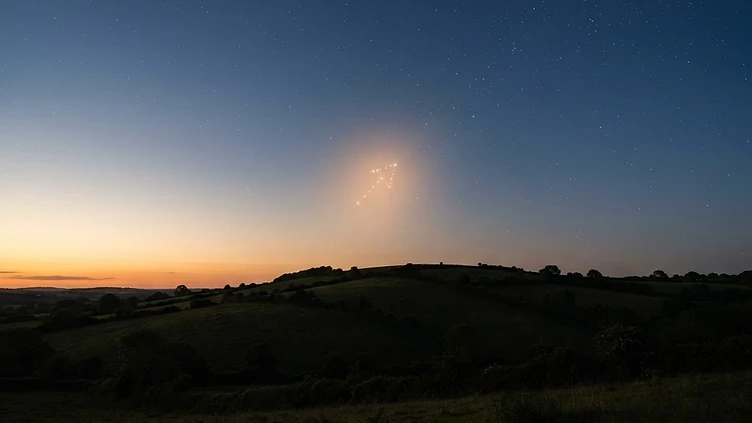
As the golden hues of late summer begin to stretch across the British landscape, a different kind of illumination is capturing the imagination of amateur astronomers and curious families alike. Across the United Kingdom, from the rugged coastlines to the suburban rooftops, a peculiar celestial visitor is currently reaching its peak visibility. Known to the ancient world as , this small yet undeniably distinctive constellation is inviting us all to cast our gaze upward this week. It is a moment of quiet magic, offering a rare and accessible opportunity for anyone with a clear sky and a bit of patience to connect with the vast, sparkling tapestry of our galaxy. By simply stepping outside around 9:00 PM throughout these late August and early September evenings, you might find yourself tracing the ancient outline of a flying arrow soaring through the darkness.
Understanding the Celestial Archer
To appreciate the beauty of Sagitta, one must first understand its place among the stars. While the heavens are filled with giants and complex sprawling clusters, Sagitta stands apart for its modest footprint. According to the , which recognizes 88 distinct constellations, Sagitta earns the title of the third-smallest among them. Its name, derived from the Latin word for arrow, perfectly captures the narrow, pointed silhouette formed by its four primary stars. Despite occupying a mere 80 square degrees of the celestial sphere, its impact on the amateur astronomer is anything but small. It serves as an ideal landmark for those just beginning to navigate the complex geography of the night sky, providing a focused target that is both rewarding to find and deeply satisfying to observe.
The Geometry of the Summer Triangle
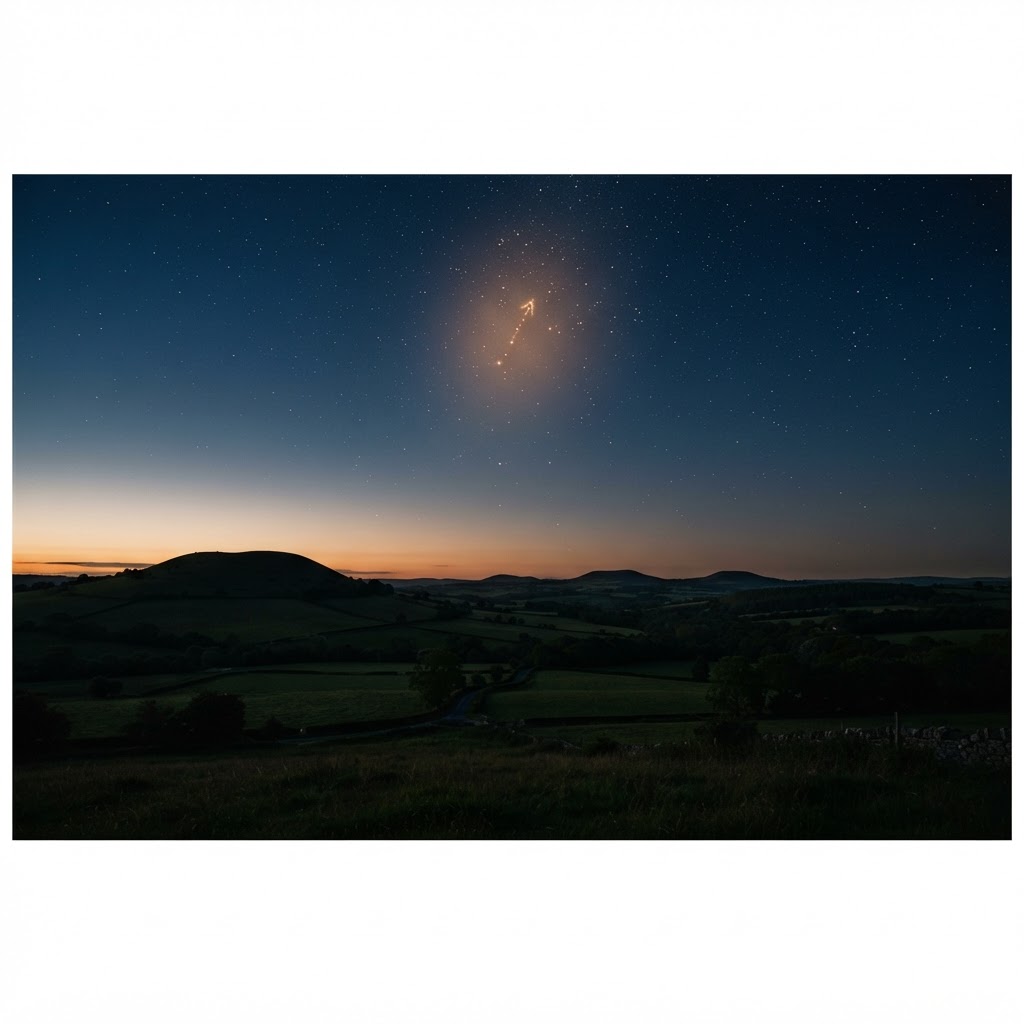
Navigating the night sky can often feel like finding one’s way through an endless sea of light, but the presence of the provides a reliable map for observers throughout the , including every corner of the UK. This grand celestial asterism is defined by three brilliant stars: Vega, Deneb, and . It acts as a beacon, guiding the eye toward the most interesting corners of our view of the cosmos. Sagitta is nestled comfortably within these boundaries, serving as a quiet, graceful companion to the brighter lights that dominate the summer season. If you are looking to find this elusive arrow, focus your attention on the imaginary line that connects Altair and Deneb. Approximately halfway along this path, the distinct shape of the four-star configuration waits to be discovered.
Mythology and the Galactic Band
Beyond its visual charm, Sagitta carries with it a rich heritage of human storytelling. In the traditions of Greek mythology, the constellation is often associated with the very arrow that Hercules used to dispatch the eagle that haunted Prometheus. This adds a layer of narrative weight to the cluster, transforming it from a simple group of stars into a character within a timeless drama played out upon the velvet backdrop of space. The setting for this drama is equally spectacular, as Sagitta sits within the dense, glowing band of the Milky Way. When viewing this arrow, you are looking into the heart of our galaxy, a region teeming with light and history. It is a reminder that the stars we see are not merely points of light, but neighbors in a structure that spans millions of years of existence.
A Journey Through Stellar Giants
Among the four primary stars that form the arrow, two in particular invite closer inspection. holds the prestigious position of the tip of the arrow, acting as the leading edge of this celestial projectile. Further back, you will find , which carries the traditional name of Sham. Sham is a bright yellow giant star, and its presence provides a striking visual focal point for the constellation. It is a humbling thought that the light we observe from Sham has traveled across approximately 430 light-years of space to reach our eyes. When we look at Sham, we are not seeing it as it exists this evening, but rather as it appeared long before modern telescopes were invented. It is a profound connection to the sheer scale of the universe that remains available to anyone willing to look up.
Practical Tips for Your Night Out
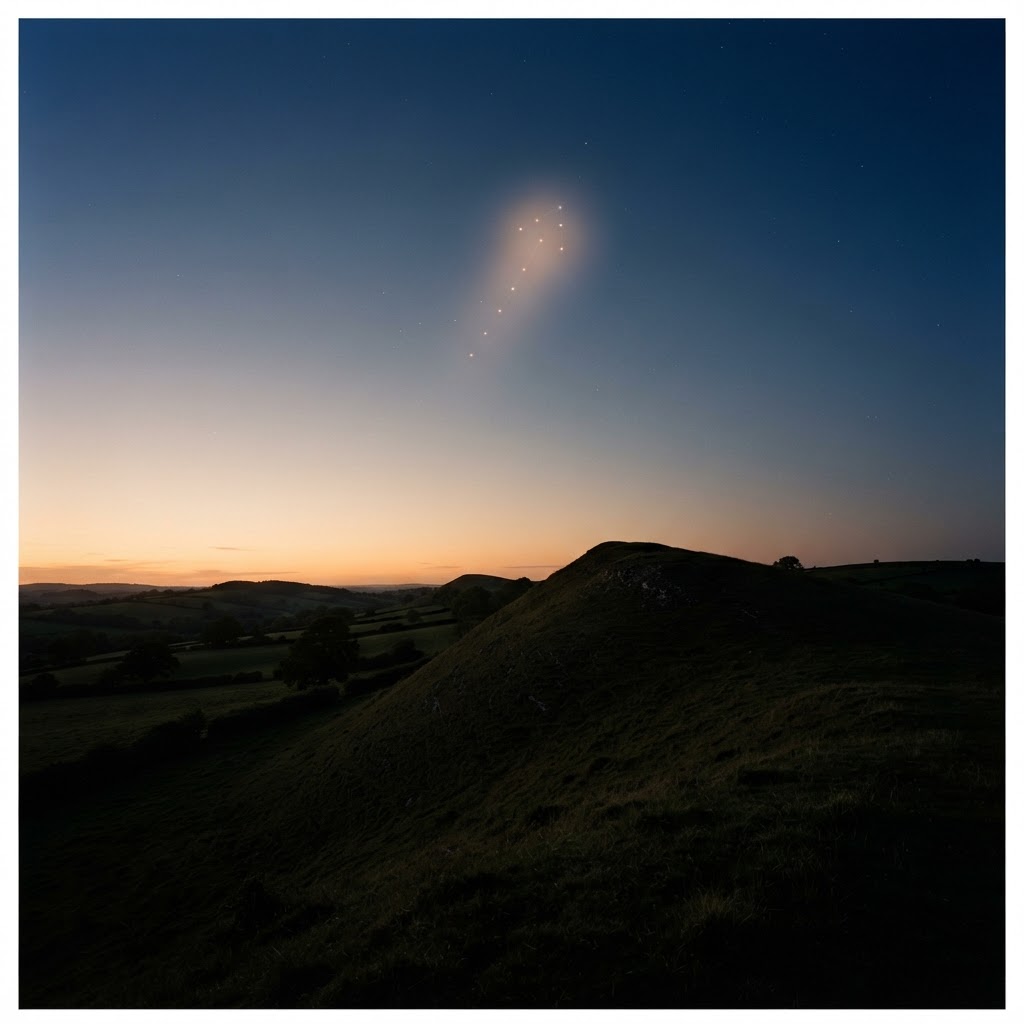
While Sagitta can be spotted with the naked eye in areas with low light pollution, it is a rewarding experience to use a pair of binoculars to draw out its fainter features, especially for those living in urban or suburban environments. Because the constellation is small, the extra magnification can help to clarify its form and reveal the subtle beauty of its four primary components. The optimal viewing window during late August and early September is right around 9:00 PM, when the sky has reached that perfect level of twilight darkness. It is an ideal activity for families looking to engage with science in a hands-on way, or for the solitary wanderer seeking a moment of quiet reflection. Bordered by the neighboring constellations of Vulpecula, Hercules, Aquila, and Delphinus, Sagitta is well-situated for those hoping to expand their knowledge of the surrounding stellar neighborhoods.
Encouraging a New Generation
At its heart, the focus on Sagitta is about fostering a lifelong relationship with the natural world. By highlighting such a distinctive and accessible constellation, we provide a gateway for amateur scientists, young students, and curious adults to begin their own journey of discovery. Encouraging the public to engage with the night sky is about more than just identifying stars; it is about cultivating an appreciation for the vastness and beauty of the universe we inhabit. This is an invitation to step away from our busy, technology-driven lives and return to the ancient practice of looking at the stars. As we watch this tiny arrow fly across the UK night, we are participating in a communal act of exploration that has linked humanity to the heavens for generations. Whether you are an expert navigator of the stars or someone who has never pointed out a constellation before, the tiny, pointed silhouette of Sagitta is waiting for you to find it.
Originally reported by
All rights in the original reporting remain with the publishers below.
Originally reported by theguardian.com. Our feature is written independently from verified facts — please support the original reporting:
Read the original storyRelated Wins

 Sport
SportCHESS PRODIGIES BREAK BARRIERS IN NATIONAL LEAGUE DEBUT
The 'She Plays to Win' Lionesses have made history by competing in the top division of the Four Nations Chess League, marking the culmination of three consecutive promotions. Despite facing unique regulatory challenges regarding team composition, the squad continues to demonstrate exceptional skill and camaraderie at the highest level of British chess.
London & South · 5 hours ago

 Science
NEW PATHWAYS TO DIAGNOSIS: CAMBRIDGE STUDY SHEDS LIGHT ON AUTOIMMUNE HEALTH
A landmark study from the University of Cambridge is paving the way for more accurate medical care by highlighting critical gender disparities in the diagnosis of autoimmune conditions. By identifying how and why these misdiagnoses occur, researchers are providing the evidence needed to ensure patients receive faster, more effective support for their physical health.
London & South · 5 hours ago

 Environment
A NATURAL REVIVAL FOR BARNES GREEN
A major river restoration project has successfully transformed the Beverley Brook at Barnes Green into a thriving, natural habitat. This initiative has introduced a meandering river channel and a new island, significantly boosting local flood resilience and biodiversity.
London & South · 11 hours ago
The Sunshine Digest
One bright email each week — verified good news only, unsubscribe in a click.