‘Ceilidh renaissance’ lures gen Z offline in search of real-life joy
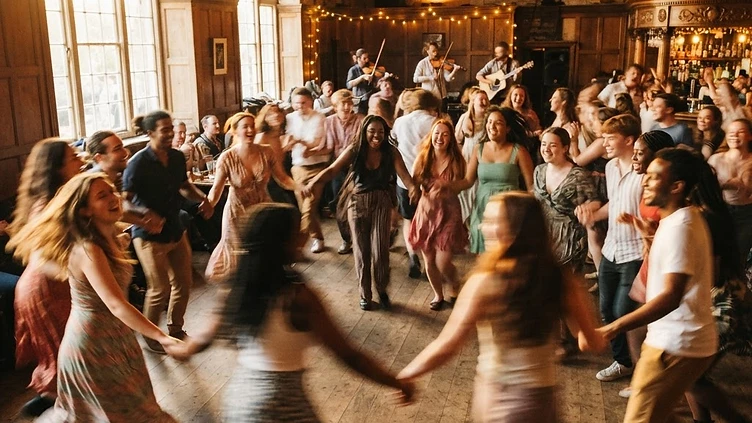
Younger generations are breathing new life into traditional dance as a community-led revival of the ceilidh sweeps through London. This surge in popularity is drawing Gen Z participants offline and into local venues to experience the joy of authentic, shared social connection.
The story in 20 seconds
20A ceilidh renaissance is currently underway in London.
The Ivy House in Nunhead is a focal point for these youth-led events.
Eventbrite reports a 16% growth in UK ceilidh ticket sales between 2024 and 2025.
A Traditional Rhythm Returns to London Streets
Across the bustling landscape of the capital, a spirited transformation is taking place that feels both remarkably fresh and delightfully timeless. For the generation coming of age in a world dominated by flickering screens and digital feedback loops, the search for authentic connection has led to an unexpected destination: the energetic, whirling world of the ceilidh. This community-led revival is drawing young people in their twenties and thirties away from their devices and onto the dance floor, breathing vibrant new life into traditional rhythms that have long been a staple of UK heritage. As we move through 2024 and into 2025, the ceilidh renaissance is firmly establishing itself as a cultural cornerstone for those seeking a more tangible form of joy. At its core, this movement represents a conscious choice to prioritise the participatory beauty of community arts over the passive consumption of digital content. In venues spanning the city, participants are discovering that the simple act of shared movement can foster a sense of belonging that no social media platform could ever replicate. It is a quiet revolution, marked not by algorithms, but by the rhythmic tap of shoes and the communal warmth of a crowded room.
The Heart of the Renaissance
While the energy of this revival can be felt across the wider region, specific cultural hubs have emerged as vital anchor points for the youth-led movement. in Nunhead has become a quintessential focal point for these gatherings, serving as a sanctuary where tradition meets a new, eager audience. It is here that the true spirit of the ceilidh flourishes, providing a space where the barriers between performer and participant dissolve. The appeal is grounded in the immediacy of the experience; there is no filter for a ceilidh, only the genuine, often breathless delight of human interaction. The data seems to confirm what many observers have sensed on the ground, with reports indicating a notable 16 per cent increase in UK ceilidh ticket sales between 2024 and 2025. This uptick is more than just a fleeting interest in novelty; it is a clear indication that a demographic often accused of being permanently tethered to the online world is actively reclaiming its right to offline, real-life socialisation. This shift towards physical, communal engagement marks a significant change in how young people define a meaningful evening out. By choosing to step into a local venue to learn traditional steps, participants are effectively opting out of the curated perfection of online spaces in favour of the messy, laughter-filled reality of a shared dance.
Beyond the Digital Horizon
The momentum continues to build as new productions emerge to meet this growing hunger for physical culture. The recent launch of Ceilidh the Musical at serves as a testament to the cultural weight this movement now carries. By elevating the traditions of the ceilidh to a theatrical stage, the production underscores the fact that this is not merely a nostalgic hobby, but a thriving, evolving art form that speaks to contemporary sensibilities. For Gen Z and under-thirties in , these events provide a rare opportunity to disconnect from the frantic pace of digital-only socialising. The allure lies in the simplicity of the experience: a caller leading a group through a series of steps, the music swelling, and the collective effort required to maintain the flow of the dance. It is a collaborative endeavour that demands presence and awareness, qualities that have become increasingly precious in our hyper-connected age. The wider implications for the UK are profound, suggesting a cultural landscape that is beginning to pivot back toward the local and the live. This is a story about the resilience of traditional arts and the capacity for younger generations to find value in the wisdom of the past, provided it is delivered in a context that feels open, inclusive, and genuinely joyous.
A Future Defined by Real Connection
As we look ahead, the trajectory of this ceilidh renaissance suggests that the hunger for real-life connection is only set to grow. The success seen at venues like The Ivy House indicates that as long as there are spaces for people to gather and move together, there will always be an audience eager to step away from the glare of the screen. This revival is a powerful reminder that culture is not something that is handed down in a static form, but something that is actively created by those who choose to participate. For those driving this movement, the benefits are clear: a renewed sense of community, the physical release of traditional dance, and the deep satisfaction of knowing that they are part of something that feels fundamentally human. It is an optimistic vision for London and beyond, one where the digital divide is bridged by the simple, ancient power of a group of people moving in harmony. By choosing to invest their time in these shared experiences, this generation is not just keeping a tradition alive; they are actively shaping a future where the most valuable social connections are the ones made face-to-face, in the heart of the community.
Originally reported by
All rights in the original reporting remain with the publishers below.
Originally reported by theguardian.com. Our feature is written independently from verified facts — please support the original reporting:
Read the original storyRelated Wins

 Environment
Greener front gardens could help combat air pollution and summer heat
New research highlights that maintaining lush, vegetated front gardens serves as a vital first line of defence for city dwellers against air pollution and rising summer temperatures. By prioritising hedges and diverse planting over paved surfaces, residents can significantly improve local air quality and keep their homes cooler during heatwaves.
London & South · 2 hours ago

 Sport
BALLON D’OR GLORY FOR LONDON CITY LIONESSES STAR
Spanish football icon and London City Lionesses midfielder Alèxia Putellas has been awarded the prestigious Ballon d’Or Féminin, marking a historic third win for the superstar. The accolade celebrates her exceptional contributions to the sport, including a trophy-laden final season with Barcelona Femení before her high-profile move to the London-based club.
London & South · 2 hours ago

 Culture
A Sea of Remembrance: 15,000 Poppies Cascade Down Widnes Church
A 131ft cascade of 15,000 handmade poppies has transformed the tower of St Mary’s Church in Widnes into a massive, community-led tribute for Remembrance Sunday, uniting hundreds of volunteers in a project of reflection.
North of England · 7 hours ago
The Sunshine Digest
One bright email each week — verified good news only, unsubscribe in a click.