British Satellite to Eavesdrop on the Early Universe from the Moon’s Far Side
A Cambridge-led team is developing a compact satellite to orbit the Moon and capture faint radio signals from the universe's earliest era. By utilizing the lunar far side as a shield against Earth's electronic noise, the mission aims to reveal how the first stars and galaxies formed.
The story in 20 seconds
20The mission is officially named CosmoCube.
The project is led by Dr. Eloy de Lera Acedo from the University of Cambridge’s Cavendish Laboratory.
The satellite is a 'CubeSat,' measuring roughly the size of a standard piece of carry-on luggage.
A New Vision from the Lunar Far Side
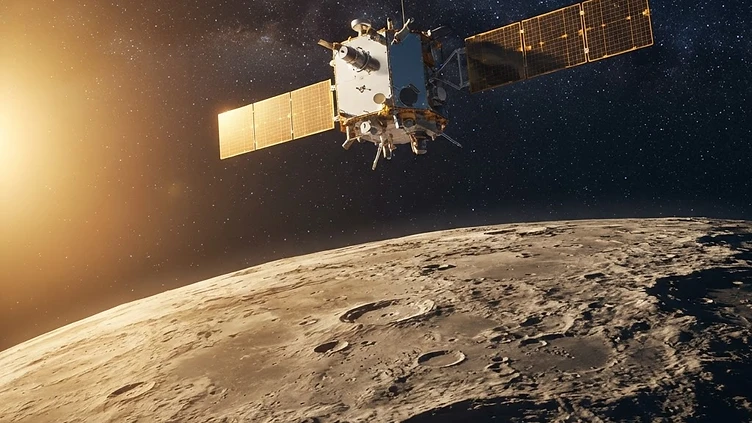
In the quiet corridors of the University of , a team of researchers is busy crafting the future of space exploration. Led by the visionary Dr. Eloy de Lera Acedo, these scientists are developing a compact yet ambitious satellite mission known as CosmoCube. This project, which recently took centre stage at the , represents a profound leap forward for UK space science. At its core, the mission seeks to peer back through the mists of time, aiming to uncover the secrets of the universe’s earliest history. By focusing on the so-called Dark Ages of the cosmos, the team intends to answer fundamental questions about how the very first stars and galaxies took shape. It is a bold undertaking that promises to turn our understanding of the origins of everything we see around us on its head, using technology that is as innovative as it is elegant in its simplicity.
The CubeSat Revolution in Deep Space
The heartbeat of this mission is the CosmoCube itself, a piece of engineering that demonstrates how modern innovation does not always require massive, resource-heavy craft. As a the satellite is remarkably modest in size, comparable roughly to a piece of standard carry-on luggage. This lightweight design is a strategic masterpiece, allowing the satellite to be launched as a secondary payload, which drastically reduces the overall costs of the mission. By keeping things compact, the UK team is proving that big science can be achieved through clever, cost-effective methods. This is not merely about saving money; it is about making high-level space exploration more accessible and sustainable for future generations. The CosmoCube is a testament to the idea that some of the greatest breakthroughs in human history might just come from the smallest of packages.
Escaping the Noise of Home
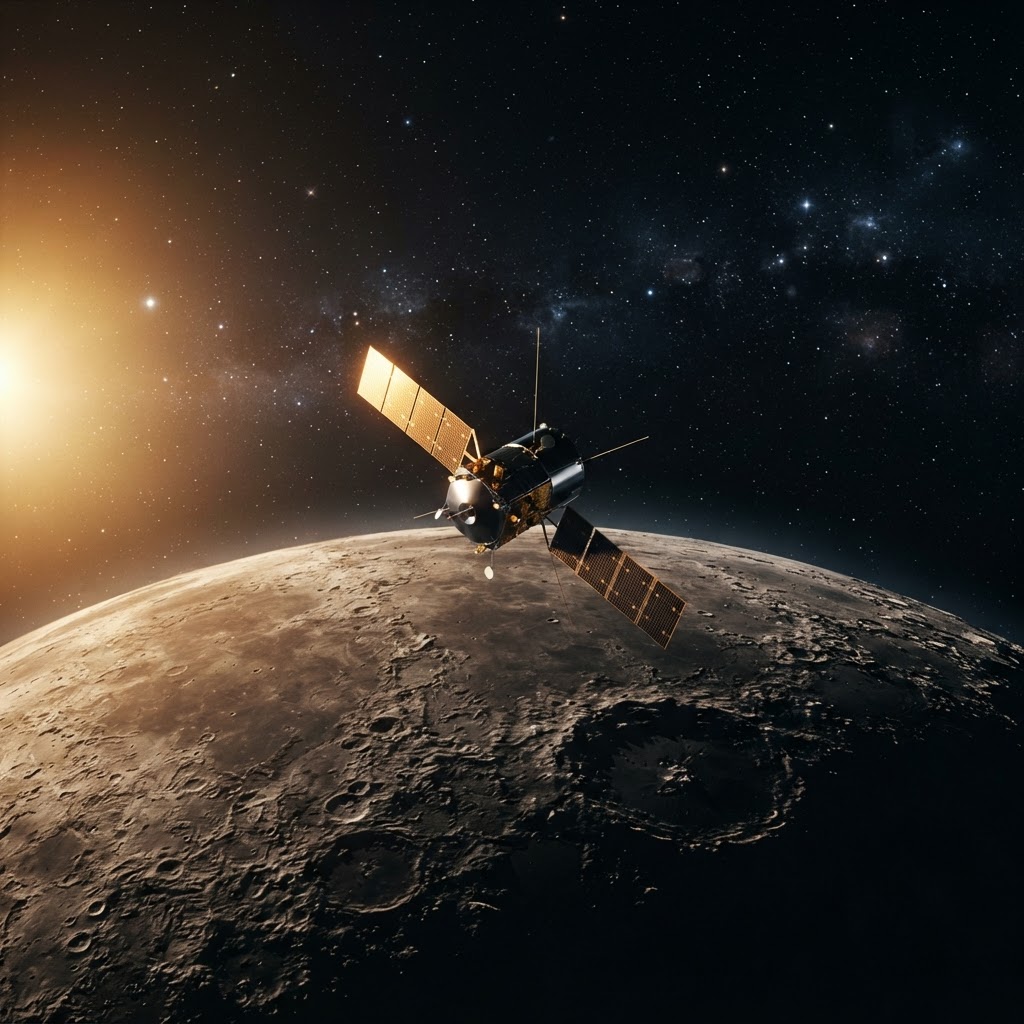
The environment in which the CosmoCube will operate is just as crucial as the technology itself. To capture the extremely faint signals from the early universe, the team has turned their gaze toward the far side of the Moon. On Earth, or even in orbit near our planet, the sheer volume of human-generated radio noise is overwhelming. In fact, electronics and our own radio signals can be upwards of 100,000 times louder than the delicate whispers that Dr. Eloy de Lera Acedo’s team is trying to detect. By using the bulk of the Moon as a natural radio shield, the CosmoCube will be protected from the interference caused by ionosphere and our dense network of human technology. Floating in a stable circular orbit at an altitude of 100 kilometres above the lunar surface, the satellite will find the profound silence required to perform its high-stakes task. This shielding effect is the linchpin of the mission, creating a unique window into the cosmos that is simply unavailable anywhere else in our immediate neighbourhood.
Listening for the Dark Ages
The primary goal of the CosmoCube mission is to detect the a specific radio frequency signal that serves as a cosmic beacon. This signal is emitted by neutral hydrogen, the most abundant element during the infancy of the universe. The mission will cast its eyes back to a period starting approximately 380,000 years after the Big Bang. This era, famously referred to as the predates the formation of stars and galaxies as we know them today. Before the sky was filled with the light of celestial bodies, the universe was a vast, cold expanse of gas, yet it held the blueprint for everything that followed. By capturing these faint emissions, the CosmoCube aims to provide the very first direct measurement of the state of the universe before the light-giving structures we recognise were born. This is a scientific journey into the literal beginning of time, allowing us to witness the building blocks of existence in their pristine, original form.
A Two-Year Odyssey
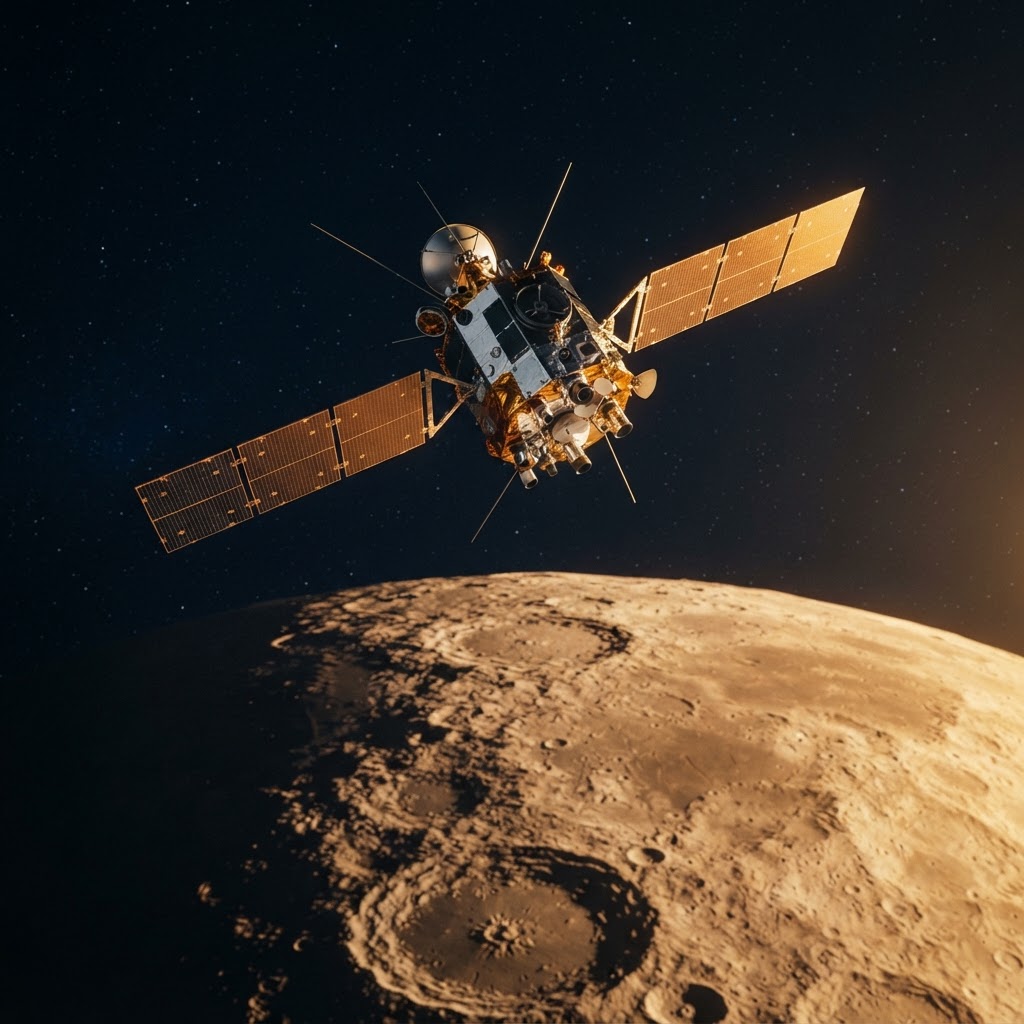
The science mission is scheduled to span two years, a duration designed to allow for a thorough and meticulous survey of the lunar environment and the signals emanating from the deep past. During this time, the satellite will continuously monitor the radio spectrum, sifting through the background hum of the universe to isolate the 21cm line. The data gathered during this primary mission window will provide researchers with an unprecedented dataset, one that will be analysed back home within the framework of the UK’s Science and . This two-year period is expected to yield transformative insights, offering a clear view of the universe’s structural evolution. As the CosmoCube orbits the Moon, it will essentially act as a cosmic historian, documenting the era of neutrality that eventually gave way to the spectacular birth of the first stars. Every day of that two-year cycle represents a new opportunity to learn something fundamental about the nature of our universe.
The UK’s Role in Cosmic Discovery
The development of CosmoCube is a shining example of the strength of the UK’s scientific research sector. By bringing together the expertise housed at the University of Cambridge and operating under the supportive umbrella of the Science and Technology Facilities Council, the project showcases what can be achieved when academic rigour meets institutional backing. This mission is more than just a satellite in orbit; it is a symbol of the UK's commitment to exploring the deepest mysteries of space. The visibility this project received at the National Astronomy Meeting underscores its significance within the broader scientific community. It highlights a clear path for UK-led initiatives to take the lead in international astronomy, setting a standard for how we approach complex, large-scale problems with targeted, high-impact space missions. It is a proud moment for all those involved and a source of inspiration for the next generation of space scientists who dream of peering back into the shadows of the past.
A Future Shaped by Ancient Light
Looking ahead, the implications of the CosmoCube mission extend far beyond the immediate data it will collect. By successfully observing the early universe from the far side of the Moon, the team is paving the way for a new paradigm in observational astronomy. The success of this project could establish the lunar far side as a premier site for future research, effectively turning it into a dedicated laboratory for those who wish to listen to the quietest corners of the universe. This is an optimistic vision of the future, where humanity’s technological reach is matched only by our curiosity. As we stand on the cusp of this new era of lunar-based exploration, the excitement within the scientific community is palpable. The work being done today by Dr. Eloy de Lera Acedo and their colleagues is essentially writing the prologue for our future understanding of the cosmos. As we wait for the launch and the subsequent two years of operation, we are reminded that even the biggest questions, such as the origins of the galaxies, can be tackled by those willing to look in the right place, with the right tools, and with an unwavering commitment to discovery.
Originally reported by
All rights in the original reporting remain with the publishers below.
Originally reported by Scientists hope to shed light on young universe by using far side of the moon. Our feature is written independently from verified facts — please support the original reporting:
Read the original storyRelated Wins

 Sport
SportCHESS PRODIGIES BREAK BARRIERS IN NATIONAL LEAGUE DEBUT
The 'She Plays to Win' Lionesses have made history by competing in the top division of the Four Nations Chess League, marking the culmination of three consecutive promotions. Despite facing unique regulatory challenges regarding team composition, the squad continues to demonstrate exceptional skill and camaraderie at the highest level of British chess.
London & South · 4 hours ago

 Science
NEW PATHWAYS TO DIAGNOSIS: CAMBRIDGE STUDY SHEDS LIGHT ON AUTOIMMUNE HEALTH
A landmark study from the University of Cambridge is paving the way for more accurate medical care by highlighting critical gender disparities in the diagnosis of autoimmune conditions. By identifying how and why these misdiagnoses occur, researchers are providing the evidence needed to ensure patients receive faster, more effective support for their physical health.
London & South · 4 hours ago

 Environment
A NATURAL REVIVAL FOR BARNES GREEN
A major river restoration project has successfully transformed the Beverley Brook at Barnes Green into a thriving, natural habitat. This initiative has introduced a meandering river channel and a new island, significantly boosting local flood resilience and biodiversity.
London & South · 10 hours ago
The Sunshine Digest
One bright email each week — verified good news only, unsubscribe in a click.