British Computing Giant Forecasts Groundbreaking Artificial Intelligence Role in Defeating Cancer
The head of the United Kingdom's leading technology firm has outlined a transformative vision where advanced artificial intelligence models crack previously unsolvable cellular biology to unlock cancer cures. Emphasising medicine as the most critical frontier for machine intelligence, the assessment predicts rapid shifts in drug discovery and therapeutic breakthroughs within a generation.
The story in 20 seconds
20The forecast was delivered by Rene Haas, chief executive officer of Cambridge-based semiconductor architecture firm Arm Holdings.
Haas has led Arm as CEO since February 2022.
Haas previously served on the board of British-Swedish pharmaceutical multinational AstraZeneca.
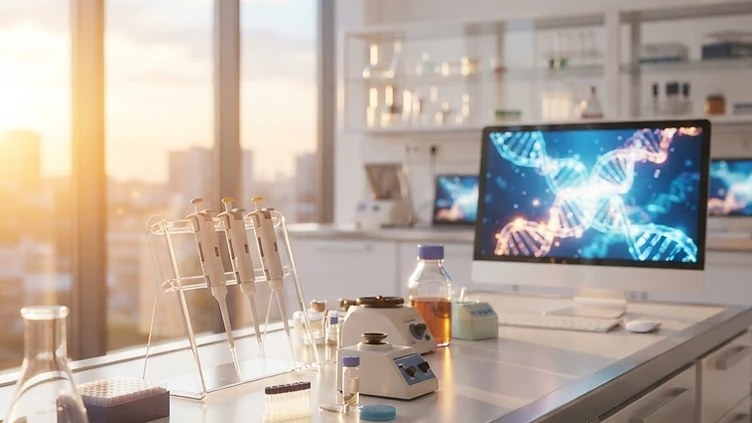
A New Dawn for Medicine in Cambridge In the heart of the historic university city of Cambridge, a transformation of monumental proportions is underway. As September 2026 unfolds, the British technological landscape is buzzing with an optimistic forecast from one of its most prominent leaders. Rene Haas, the chief executive officer of Arm Holdings, has stepped forward with a vision that promises to reshape our understanding of the most formidable challenges in clinical biology. For a nation that prides itself on scientific ingenuity, the prospect that artificial intelligence might soon unlock the definitive cures for cancer is a beacon of hope that resonates far beyond the laboratories of the United Kingdom. Under the leadership of Haas, who has been steering the ship at Arm since February 2022, the company has grown into a titan of the global tech industry. As the largest employer in Cambridge, Arm is more than just a business; it is the engine room of modern computing architecture. Following a year that saw the firm reach record-breaking valuation milestones, securing its position as the most valuable headquarters-based firm in British history, the company is now turning its considerable expertise toward the most noble of causes: the eradication of humanity's most intractable diseases.
The Power of Precision Computing The core of this optimism lies in the unique relationship between advanced semiconductor design and the complex puzzles of cellular biology. Haas, whose professional background includes significant experience on the board of the British-Swedish pharmaceutical giant AstraZeneca, is uniquely positioned to bridge the gap between silicon and science. He has argued that the real power of contemporary machine intelligence will manifest in its ability to solve the intricate mysteries of how specific DNA markers behave across various cancer types. This is not merely theoretical speculation. With Arm’s sophisticated processor designs currently powering half of the artificial intelligence data centres across the globe, the hardware required for this scientific revolution is already in place. The recent collaboration with Meta, which saw the launch of the specialised Arm AGI chip in March 2026, signals a decisive shift toward purpose-built computing. These systems are being designed to handle the massive, complex datasets required to decode the biological errors that lead to cancer. By leveraging such immense processing capacity, the path toward identifying life-saving treatments is being compressed from decades into a much shorter, more manageable horizon.
Accelerating the Path to Discovery Why is this shift happening now
According to Haas, medicine represents the single most important frontier for machine intelligence in the world today. The traditional pace of drug discovery and therapeutic development has long been hampered by the manual nature of clinical trials and the difficulty of target identification. Artificial intelligence is poised to disrupt this status quo by dramatically increasing the speed of synthesis and clinical validation. The academic community has expressed cautious excitement about this technological convergence. of the Institute of Cancer Research in London has pointed out that when artificial intelligence systems are trained on extensive patient samples, they gain the ability to drastically shorten the time it takes to develop effective treatment plans. By mapping the vast landscape of patient data, these machines can identify patterns that would have remained invisible to the human eye, potentially allowing clinicians to tailor therapies with unprecedented precision.
A Generation of Hope Looking ahead, the promise is nothing less than a generational shift in how we approach healthcare. The prospect of seeing cancer cures discovered within our own lifetimes is no longer a distant dream but a practical objective grounded in the rapid evolution of technology. As Arm continues to lead the way, the focus remains on transforming the way medicine is synthesised and delivered. The synergy between the clinical expertise found in places like the Institute of Cancer Research and the computational power being engineered in Cambridge creates a uniquely British engine for global progress. This collaborative effort between industry and academia underscores a broader narrative of progress in the United Kingdom. By positioning the nation at the centre of the AI-driven healthcare revolution, leaders like Haas are setting a standard for how modern corporations can contribute to the greater good of society. While the challenges ahead remain substantial, the technological foundation built in 2026 provides a robust framework for success. The combination of specialist AGI hardware, decades of expertise in architecture, and a focused commitment to human longevity suggests that we are entering an era where the most difficult biological questions may finally receive their long-awaited answers. As these digital models continue to learn and evolve, the ultimate reward—a world where cancer is a managed or cured condition—feels closer than ever before.
Originally reported by
All rights in the original reporting remain with the publishers below.
Originally reported by AI will help find cure for cancer ‘within our lifetimes’, says Arm Holdings chief. Our feature is written independently from verified facts — please support the original reporting:
Read the original storyRelated Wins

 Sport
SportCHESS PRODIGIES BREAK BARRIERS IN NATIONAL LEAGUE DEBUT
The 'She Plays to Win' Lionesses have made history by competing in the top division of the Four Nations Chess League, marking the culmination of three consecutive promotions. Despite facing unique regulatory challenges regarding team composition, the squad continues to demonstrate exceptional skill and camaraderie at the highest level of British chess.
London & South · 1 hour ago

 Science
NEW PATHWAYS TO DIAGNOSIS: CAMBRIDGE STUDY SHEDS LIGHT ON AUTOIMMUNE HEALTH
A landmark study from the University of Cambridge is paving the way for more accurate medical care by highlighting critical gender disparities in the diagnosis of autoimmune conditions. By identifying how and why these misdiagnoses occur, researchers are providing the evidence needed to ensure patients receive faster, more effective support for their physical health.
London & South · 1 hour ago

 Health
Widnes youngster cutting hair after 10 years for good cause
A young Widnes resident has donated his hair after growing it for a decade to support children facing hair loss due to medical treatment.
North of England · 6 hours ago
The Sunshine Digest
One bright email each week — verified good news only, unsubscribe in a click.