Back to the Blue: Welsh-Rescued Turtle Completes 5,000-Mile Journey Home
A critically endangered sea turtle found stranded on a Welsh beach has successfully completed a marathon journey back to his native waters. After years of specialist care in North Wales, the rare Kemp’s ridley turtle was flown across the Atlantic to be released into the warm currents of the Gulf of Mexico.
The story in 20 seconds
20The turtle, named Rhossi, is a Kemp’s ridley (Lepidochelys kempii), which is the most endangered sea turtle species globally.
He was found stranded on Rhosneigr beach on the island of Anglesey, North Wales.
The rescue occurred in December 2023 after the turtle was washed ashore by North Atlantic currents.
A Chance Encounter on a Welsh Beach
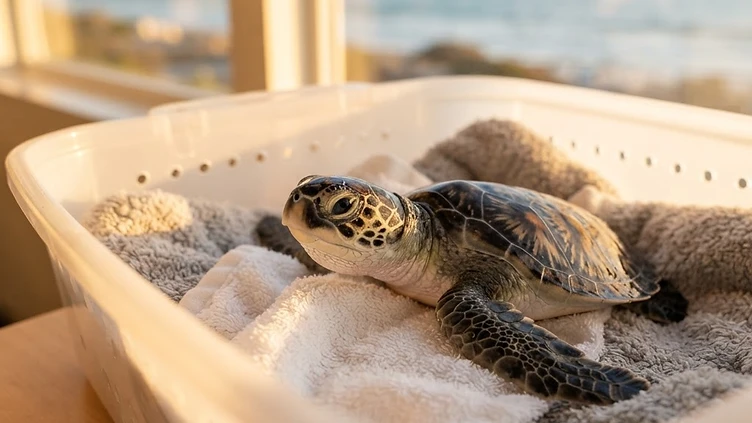
The story of , a critically endangered Kemp’s ridley sea turtle, began in the most unlikely of settings on a chilly December day in 2023. While the rugged coastline of Rhosneigr, on the island of Anglesey, , is often battered by the temperamental , it became the stage for a remarkable conservation triumph. It was here that a local dog walker, traversing the sands, made a discovery that would set in motion a multi-year effort to save a life. Stranded and suffering from the effects of cold-stunning, a tiny turtle had been swept far from his home by the relentless pull of North Atlantic currents. When he was found, Rhossi was a fragile creature, weighing less than 1kg and measuring only 25cm in shell length. The Kemp’s ridley, known scientifically as kempii, is recognized as the most endangered sea turtle species globally. His survival against such odds was anything but guaranteed, as many of his kind, once pulled into the freezing waters so far from their native ranges, rarely live to tell the tale. Yet, in this instance, human intervention turned the tide, marking the beginning of an extraordinary journey of recovery and homecoming.
The Long Road to Recovery in North Wales
Following his rescue, Rhossi was entrusted to the expert care of the team at . What followed was a period of sustained and meticulous dedication, lasting more than thirty months, as the committed themselves to nursing the critically endangered visitor back to health. The rehabilitation process was a scientific feat, requiring highly specialized, temperature-controlled environments. Since Rhossi had been profoundly affected by the cold, his metabolism had effectively shut down. The veterinary and care teams at the zoo had to work with extreme precision, utilizing their facility to gradually bring the young turtle’s body temperature back into a normal range, carefully monitoring his physical and physiological recovery throughout this extensive period. It was a slow, painstaking process that necessitated constant vigilance. Every day in the controlled tanks was a step forward, as the team aimed to restore his strength and prepare him for the long journey that lay ahead. This period served not only to rehabilitate an individual animal but to underscore the vital role that UK marine institutions play in international conservation efforts.

The Scientific Challenge of Marine Conservation
Understanding why Rhossi ended up on a Welsh beach requires a look at the broader, often perilous movements of marine life. Kemp’s ridley turtles are typically found in the warm, coastal waters of Mexico and the southeastern . The journey from these warm regions to the frigid waters of North Wales is a testament to the immense power of ocean currents, which can inadvertently carry marine life into habitats where they cannot survive. When a creature like Rhossi is swept into the cold North Atlantic, his survival is immediately compromised. The phenomenon of cold-stunning acts as a metabolic trap; as water temperatures drop, the animal becomes sluggish, eventually losing the ability to swim or forage effectively, leading to the stranding events that conservationists work tirelessly to address. The work done at the Anglesey Sea Zoo provided a bridge between these two worlds, transforming a life-threatening incident into a success story for global marine biodiversity. By successfully stabilizing Rhossi, the team proved that specialized care can counteract the most extreme impacts of climate-related drifting and ocean navigation errors in vulnerable species.
Bridging the Atlantic for a Rare Survival
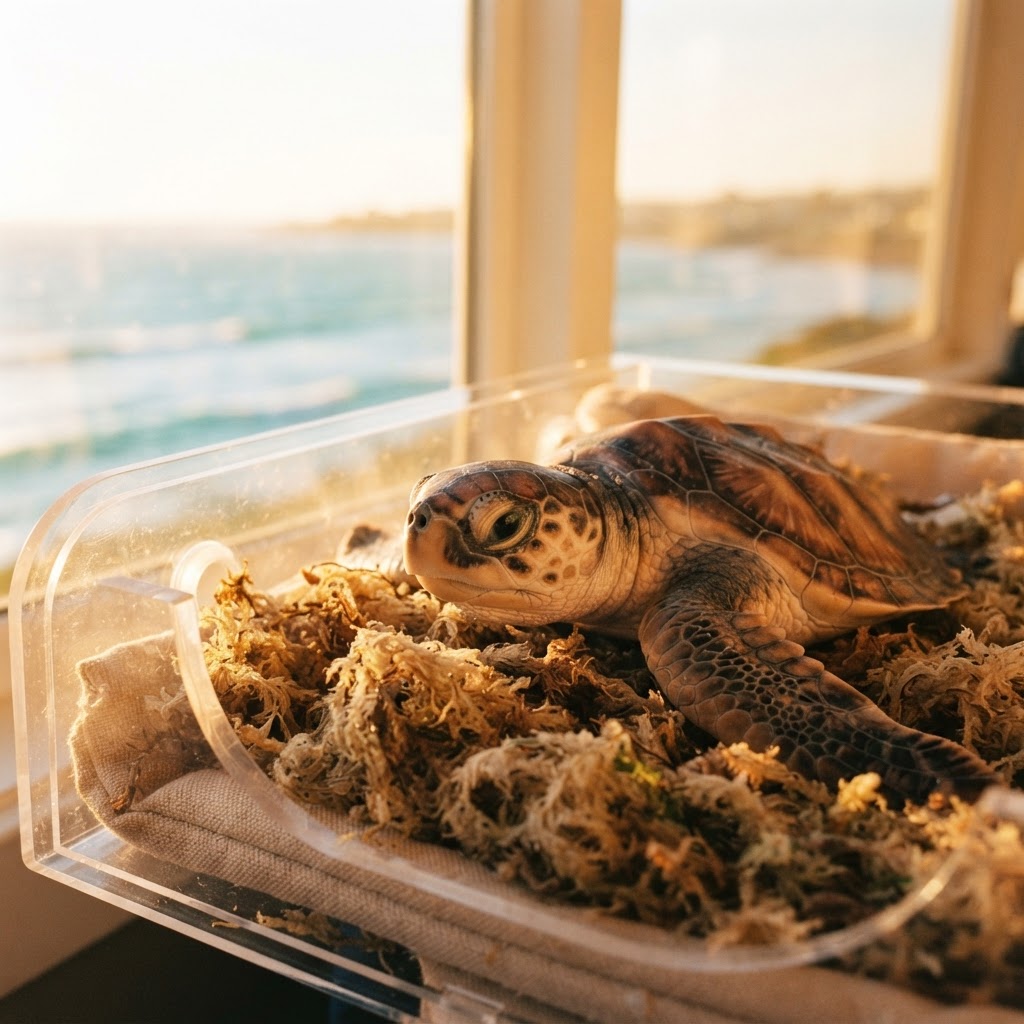
By August 2026, after years of expert care and steady growth, it was clear that Rhossi was ready to return to the wild. However, the release of a sea turtle is not as simple as returning him to the nearest sea. Because the Kemp’s ridley is so critically endangered, his return had to be calculated to ensure he would reach the specific warm currents that form his natural habitat. This meant a 5,000-mile journey across the . The repatriation was far from a solo endeavour; it required a significant collaborative effort between UK marine experts and US-based wildlife conservation agencies. Planning a trans-Atlantic transfer for a sensitive, recovering marine reptile requires logistical perfection. Every measure was taken to ensure the animal remained comfortable and stable during the long flight to the United States. This mission was driven by the knowledge that every surviving Kemp’s ridley is an invaluable asset to the future of the species, particularly given their unique and fascinating life cycle traits, such as their famous arribada nesting behavior, where large groups of females return to the same beaches to lay their eggs simultaneously.
A Global Effort for Biodiversity
The success of the mission in August 2026 resonates far beyond the individual story of one turtle. It stands as a powerful demonstration of what international cooperation can achieve in the field of conservation. With the Kemp’s ridley being the most endangered of all sea turtle species, the survival of any single individual represents a meaningful contribution to the maintenance of marine biodiversity. When agencies across borders work in tandem—from the dog walker in Wales to the zoo staff in Anglesey, and finally the conservation partners in the United States—the reach of environmental protection expands significantly. This collaborative framework ensures that regional incidents are met with global resources. It highlights the reality that marine conservation is an interconnected pursuit, where the health of the population is dependent on the survival of individuals, regardless of where they are found or how far they have strayed from their home. For the team that nurtured Rhossi for those thirty months, the successful release in the Gulf of Mexico was the culmination of thousands of hours of effort, marking a definitive victory for the team and for the species itself.
Looking Ahead to the Future of the Species
As Rhossi finally entered the warm, inviting currents of the Gulf of Mexico in August 2026, he moved from being a patient under the care of human hands to an active participant in his native ecosystem once again. The rehabilitation and subsequent repatriation of this Kemp’s ridley turtle offer a beacon of hope for marine biology and conservation in the United Kingdom and beyond. While the incident that led him to Wales was born of unfortunate currents, his outcome provides crucial insights into how we can better support endangered marine life. The expertise gained during the thirty-month stint at the Anglesey Sea Zoo will undoubtedly inform future efforts to address the challenges faced by sea turtles that may find themselves similarly displaced. With the species facing such significant threats to its existence, the return of a healthy, rehabilitated individual into the breeding populations of the Gulf of Mexico is a tangible, positive outcome. It serves as a reminder that with dedication, scientific rigour, and cross-border partnership, the decline of critically endangered species can be challenged, and at least in this case, triumphantly reversed.
Originally reported by
All rights in the original reporting remain with the publishers below.
Originally reported by 11. "What went right this week: the good news that matters". Our feature is written independently from verified facts — please support the original reporting:
Read the original storyRelated Wins

 Environment
A WINGED TRIUMPH: BRITISH PHOTOGRAPHER CLAIMS TOP GLOBAL HONOUR
A stunning image of a northern gannet breaking through the ocean surface has been crowned the grand prize winner of the 2026 Bird Photographer of the Year competition. Captured by UK-based photographer Henry Spiers, the winning shot highlights the remarkable agility of these seabirds in their natural Scottish habitat.
Scotland · 5 mins ago

 Environment
BECOME AN AUTUMN SPOTTER: NATIONWIDE PROJECT INVITES PUBLIC TO TRACK SEASONAL CHANGES
Forestry England has launched a new citizen science initiative that encourages the public to help document the arrival and progression of autumn across the country’s woodlands. By recording observations of changing leaf colours, participants are contributing to a long-term study that will help experts better understand how seasonal patterns are shifting in response to our changing climate.
London & South · 12 hours ago

 Tech
TechCardiff Takeaway Crowned Regional Champion in National Awards
A popular Cardiff takeaway, Golden BBQ, has been celebrated as the best in its region for the South West and Wales in the prestigious 2026 Just Eat Awards following a massive public vote.
Wales · 12 hours ago
The Sunshine Digest
One bright email each week — verified good news only, unsubscribe in a click.