Anglers and Marine Researchers Join Forces to Safeguard Britain’s Vulnerable Shark Species
A pioneering three-year research initiative in southern England brings together marine scientists and recreational anglers to monitor and safeguard vulnerable sharks inhabiting British waters. Backed by nearly £1 million in conservation funding, the collaborative effort deploys electronic tracking devices to uncover essential migratory corridors and breeding grounds [University of Exeter](https://news.exeter.ac.uk/faculty-of-health-and-life-sciences/university-of-exeter-scientists-awarded-nearly-1-million-to-protect-englands-sharks/).

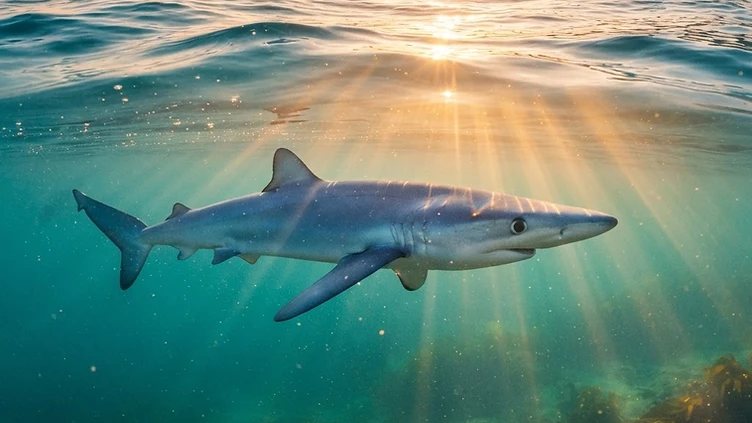
A New Chapter for Britain’s Sharks
There is a remarkable sense of collaboration rippling across the southern coast of England this summer. A pioneering three-year initiative has officially set sail, marking a significant milestone in the ongoing efforts to protect the wild predators that roam our nearby blue horizons. By uniting the sharp insights of the academic world with the hands-on expertise of those who know our coastal waters best, this project aims to rewrite the future for three vulnerable native shark species. From July 2026 until 2029, a dedicated collective will work to ensure that the blue shark, the tope shark, and the porbeagle remain a thriving part of our national marine heritage.
Uniting Scientists and Anglers
At the heart of this endeavour is a bridge being built between the professional scientific community and the vibrant world of recreational sea angling. Led by the University of Exeter’s Faculty of Health and , the project brings together physiological ecologist Dr Lucy Hawkes and marine ecologist to steer the research. They are not working in isolation. By partnering with the , local charter boat skippers, and keen recreational anglers, the study is turning the everyday hobby of fishing into a powerful force for citizen science. These local experts are playing a crucial role by humanely catching, sampling, and tagging sharks before releasing them back into the wild, providing with data that would be almost impossible to capture through traditional laboratory methods alone.
Technology Guiding Conservation
The secret to this project’s ambition lies in the sophisticated technology being deployed beneath the waves. Selected sharks are being fitted with electronic satellite and acoustic telemetry tags, acting as silent observers in the deep. These devices do more than just track movement; they record intricate details about water temperature and depth, effectively mapping out long-range ocean migrations. For species like the porbeagle, which is currently classified as in European assessments, and the tope, which is listed as Vulnerable, this data is worth its weight in gold. By identifying precisely where these animals travel and where they choose to gather for pupping and nursery needs, the team can pinpoint the exact locations that require the most urgent protection. This research is not merely observational; it is designed to create a blueprint for the future of marine life off our southern shores.
Funding a Greener Future
This vital work has received a massive boost, supported by a £939,434 grant awarded through . Such substantial funding reflects a broader commitment to understanding the health of our oceans and taking active steps to reverse species decline. The findings harvested from this three-year study will be used to inform policy frameworks for the . By providing clear scientific evidence, the initiative will help shape future spatial planning and the design of effective offshore protected zones. It is an encouraging sign that the data will also be used to evaluate the survival rates of sharks caught and released during standard recreational practices, ensuring that the angling community can continue their pastime with a deeper understanding of how to minimise harm to these magnificent creatures.
An Optimistic Outlook
As the project progresses through its three-year timeline, there is a tangible sense of hope that a balance can be struck between human activity and marine conservation. By moving away from purely remote observation and embracing a collaborative approach, the team is fostering a community-wide sense of responsibility for the environment. The waters of southern England are vast and often mysterious, but thanks to this union of research and local knowledge, we are finally uncovering the migratory secrets that have kept these species elusive for so long. The goal is simple yet profound: to create a sustainable environment where sharks can recover and thrive once more. It is a heartening reminder of what can be achieved when different groups come together with a shared purpose, proving that the future of Britain’s marine biodiversity is in safe, capable hands.
Originally reported by
All rights in the original reporting remain with the publishers below.
Originally reported by theguardian.com. Our feature is written independently from verified facts — please support the original reporting:
Read the original storyRelated Wins

 Environment
A Scenic Autumn Escape to Alderley Edge
Experience the beauty of the changing seasons with a refreshing walk through the historic woodlands of Alderley Edge, offering breathtaking views across the Cheshire Plain and a perfect conclusion at a charming local tearoom.
North of England · 4 hours ago

 Environment
A NEW HEART FOR COVENTRY: HISTORIC MARKET SET FOR MULTI-MILLION POUND REVITALISATION
Coventry’s iconic Grade II listed indoor market is set for a major transformation as part of a wider city centre regeneration project. The local council has committed £1.25 million to external improvements, aiming to enhance the facility's accessibility and long-term appeal for the community.
Midlands · 5 hours ago

 Culture
A BOLD NEW VISION FOR BEETHOVEN AT THE BARBICAN
London audiences have been treated to a vibrant reimagining of classical tradition as the Barbican hosted the UK premiere of a major new contemporary dance production. This innovative performance breathes fresh life into a symphonic masterpiece through a unique fusion of movement, sound, and visual art.
London & South · 5 hours ago
The Sunshine Digest
One bright email each week — verified good news only, unsubscribe in a click.