Ancient Secrets Unearthed: Welsh Fossil Discovery Rewrites Prehistoric History
A remarkable fossil discovery on a Welsh beach has provided scientists with vital new insights into the marine life that inhabited the region over 200 million years ago, helping researchers understand ancient aquatic ecosystems.
The story in 20 seconds
20The fossil was discovered by a local fossil hunter named Jonathan Bow.
The find occurred on a beach in Wales.
The specimen dates back more than 200 million years.
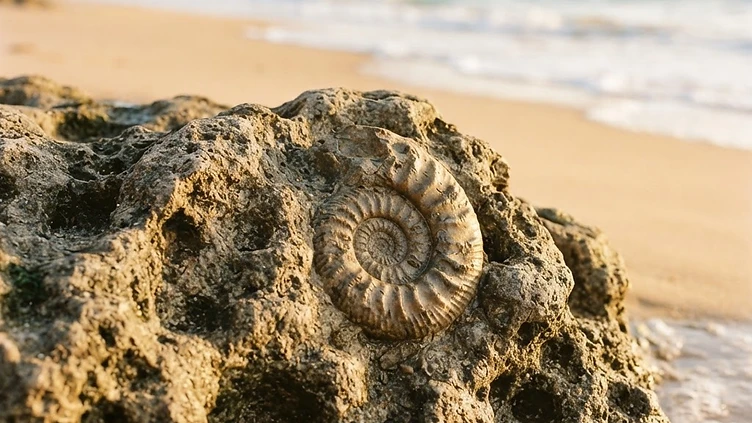
A Welsh Coastal Treasure Unearthed
There is a quiet magic to our coastline, where the waves have spent millennia whispering stories of the past to anyone willing to listen. For , a local fossil hunter with a sharp eye for the extraordinary, a routine walk along a local beach recently turned into a moment that would ripple through the scientific community. Amongst the sand and tide, hidden away from the world for aeons, lay a relic of an age far removed from our own. This was no ordinary stone; it was a prehistoric fish fossil, a snapshot of life trapped in time for over 200 million years. As we look at the rugged beauty of the Welsh shore today, it is humbling to consider that this same landscape was once home to mysterious creatures thriving in the depths of the early period. This remarkable find is now being celebrated as a vital key in unlocking the secrets of our prehistoric heritage. It is a reminder that even in our modern, fast-paced era, the ground beneath our feet still holds the capacity to surprise us, waiting patiently for the right moment and the right person to reveal its long-kept mysteries. The discovery has not only ignited interest among local residents but has also provided researchers with fresh, tangible data that helps to fill the gaps in our understanding of the ancient seas that once surrounded these lands. Every scale and curve preserved in the rock tells a story of an aquatic ecosystem that operated with its own complex, fascinating rhythm millions of years before humanity arrived on the scene.
Unlocking the Early Jurassic Mysteries
The significance of this discovery extends far beyond the beach where Jonathan Bow made his find. By examining this 200-million-year-old specimen, experts are gaining a clearer picture of the biodiversity that once characterized the Welsh coast. For a long time, the exact nature of the marine life roaming these early Jurassic waters remained a puzzle, with many questions left unanswered. Now, thanks to this accidental yet monumental encounter with history, those questions are finally being met with evidence. This fossil adds a crucial piece to the broader jigsaw of evolutionary history, helping scientists refine their understanding of how these ancient creatures interacted with their environment. The research currently being documented will serve as an essential resource for academics and students for years to come, offering a window into the evolution of fish species that populated these waters long ago. The bone beds along the Welsh coast have long hinted at the treasures they might contain, but each new find like this serves to confirm just how rich and untapped this paleontological archive truly is. It helps to clarify the complex web of life that defined the regional natural history of , moving us closer to solving mysteries that have long perplexed historians and naturalists alike. It is, in essence, a direct line to the past, brought into the light by a chance discovery.
The Power of Public Contribution
One of the most heartening aspects of this story is what it says about the relationship between local communities and our scientific institutions. Often, we think of paleontological breakthroughs as the sole domain of university labs or grand expeditions, but this discovery highlights the incredible value of public contribution. When someone like Jonathan Bow walks the shoreline with curiosity and dedication, they are doing more than just looking for shells; they are acting as a guardian of our shared natural heritage. This collaboration between the individual and the scientific world is what fuels progress. By sharing such finds, local hunters play a vital role in ensuring that these specimens are properly studied, documented, and protected. It is an inspiring example of how collective enthusiasm can drive genuine academic advancement. This event underscores the importance of public engagement in environmental and historical science, demonstrating that everyone, regardless of their background, can play a part in unravelling the story of our planet. The recognition of Wales for its rich geological and paleontological heritage is growing, and it is largely due to these persistent, inquisitive spirits who spend their time exploring the coast.
Looking Toward a Future of Discovery
As we look toward the future, the discovery of this prehistoric fish offers a hopeful trajectory for how we treat our history. There is a sense of optimism in the air as researchers prepare to use the new data to advance their academic investigations into ancient ecosystems. This is not just a story about a single fish; it is a story about the continued relevance of our landscape. Each find confirms that Wales is a treasure trove of scientific potential, and it encourages a new generation of explorers to look closely at the world around them. We can expect that as more evidence is gathered from the coastal bone beds, our understanding of the early Jurassic will only grow more vivid and complete. The legacy of this discovery will be found in the future journals, exhibits, and classroom discussions that seek to explain how our world came to be. It is a wonderful thing to know that the mystery of the past is not closed, but rather waiting for the next discovery to bring it into focus. As we move forward, the cooperation between the local community and the experts will remain the cornerstone of our regional heritage. With every fossil retrieved and every study completed, we are stitching together the tapestry of time, one discovery at a time. The Welsh coast continues to yield its secrets, and in doing so, it invites us all to participate in the ongoing adventure of scientific discovery, connecting the distant, mysterious past with a future that feels all the richer for having unearthed it.
Originally reported by
All rights in the original reporting remain with the publishers below.
Originally reported by nation.cymru. Our feature is written independently from verified facts — please support the original reporting:
Read the original storyRelated Wins

 Environment
New Vision for Bristol’s Industrial Heart
A major urban regeneration project in Bristol is set to transform 95 hectares of underutilised industrial land into a vibrant, people-centred neighbourhood. The ambitious masterplan prioritises community wellbeing by introducing a car-free canalside promenade, extensive green spaces, and new local amenities.
London & South · 1 day ago

 Tech
TechYoung Pupils Leave Their Mark on Local History
Primary school children from Ysgol y Garnedd in Bangor were invited by Cyngor Gwynedd to name a new development of 10 affordable homes in the Coed Mawr area, resulting in the selection of the name 'Coed Adda' to honour the local river.
Wales · 1 day ago

 Environment
Kent council uses binned fast fashion items - to plug potholes
Maidstone Borough Council is trialling an innovative, low-carbon method to repair road damage by using repurposed textile waste. This sustainable initiative transforms discarded clothing into a durable material to fill potholes, offering a creative solution to both waste management and infrastructure maintenance.
London & South · 1 day ago
The Sunshine Digest
One bright email each week — verified good news only, unsubscribe in a click.