A PIONEERING LEAP: RECORD-BREAKING STAR DISCOVERY SHEDS LIGHT ON OUR GALAXY’S HEART
Astronomers have identified the fastest-moving star ever recorded in the Milky Way, providing a unique opportunity to study the extreme physics surrounding our galaxy’s central black hole. This discovery offers a new window into the fundamental properties of spacetime and the mysterious nature of the supermassive black hole at the heart of our galaxy.
The story in 20 seconds
20The star S301 travels at a speed of 25,000 kilometres per second
Velocity is equivalent to more than 8% of the speed of light
The star completes an orbit around Sagittarius A* in 8.7 years
A Dazzling New Resident of the Milky Way
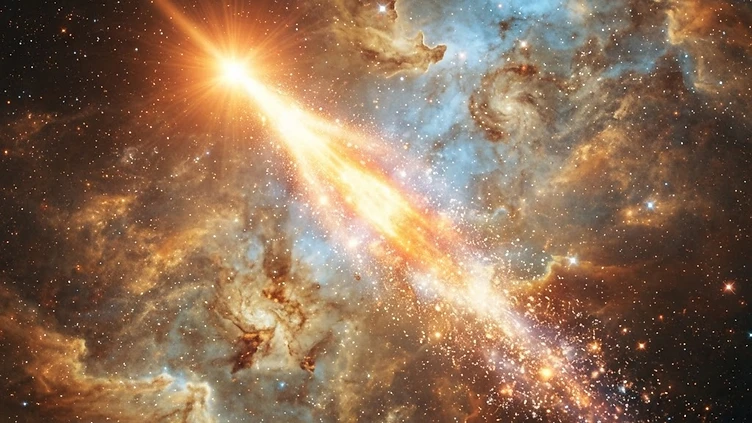
High above the quiet landscapes of the North of England, far beyond our familiar clouds and atmospheric veils, a cosmic marvel has been brought to light that challenges our very understanding of motion and gravity. In a triumph for international cooperation and modern technology, researchers have identified a celestial object that has captured the imagination of scientists and space enthusiasts alike. Known as S301, this remarkable star has been clocked moving at an astonishing speed of 25,000 kilometres per second, a that truly defies conventional expectation. To put such an incredible figure into perspective, this movement represents more than eight percent of the total speed of light, placing S301 in a class of its own among the known inhabitants of our galaxy.
This , which first came to the attention of the global astronomical community in the spring of 2023, is not merely a record-breaking statistic. It represents a profound shift in how we observe the structural heart of the Milky Way. By identifying a star capable of such immense kinetic energy while tethered to the gravitational pull of the centre of our galaxy, we are finally witnessing the raw power of the cosmos in real-time. For those of us looking up from our homes in the North, it is a reminder that even in the deepest, darkest reaches of space, there is a rhythmic, albeit violent, elegance at play.
The Gravity of the Situation
At the very core of this celestial drama lies A*, the supermassive black hole that anchors our entire galactic structure. It is this formidable entity that commands the path of S301, pulling it into a tight, frantic orbit that takes just 8.7 years to complete. Compared to the leisurely, billions-of-years orbit of our own Sun, the pace of S301 is nothing short of breathtaking. This close relationship between the star and the black hole provides a natural laboratory that is far beyond anything we could replicate here on Earth.
The research was spearheaded by an international coalition, including Stefan Gillessen and Felix Mang from the Max Planck Institute for Extraterrestrial Physics. Their collaborative effort demonstrates the beauty of a global approach to scientific inquiry, where expertise from across the world converges to solve the mysteries of the deep cosmos. By focusing their attention on the region surrounding Sagittarius A*, they have effectively opened a new window into the extreme physics that govern the most mysterious objects in the universe.
Tools of Galactic Exploration
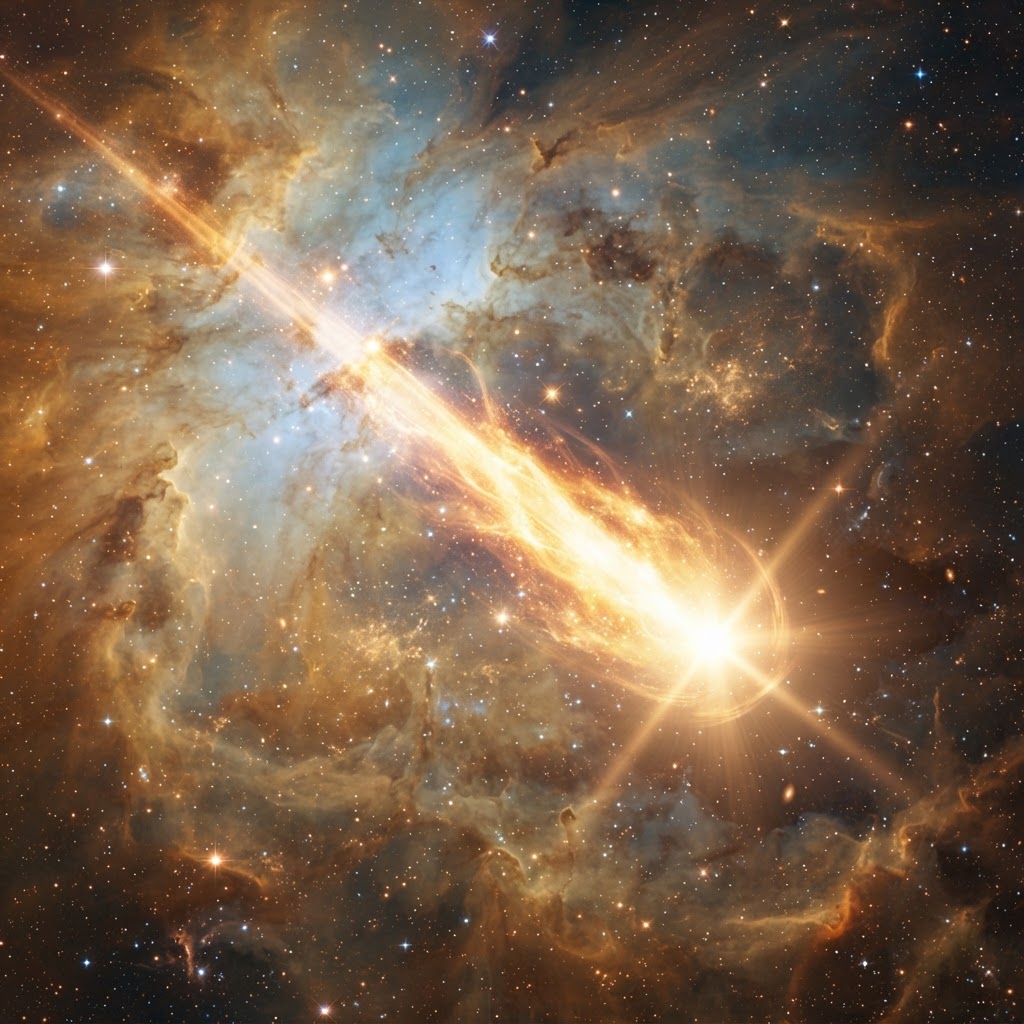
The ability to pinpoint such a fast-moving, relatively small object amidst the dense population of stars near the galactic centre is a testament to technological advancement. The discovery was made using the sophisticated GRAVITY instrument, which operates at the European Southern Observatory’s Very Large Telescope Interferometer in Chile. This facility serves as a vital bridge between our terrestrial observations and the distant events occurring thousands of light-years away.
Because S301 is 50 percent more massive than our own Sun and radiates with five times the brightness, it serves as a brilliant beacon in the darkness of the galactic core. Its luminosity has been essential for researchers to track its movement accurately, allowing them to measure its path with such unprecedented precision. Without this high degree of brightness, the swift passage of S301 against the backdrop of other stars would have likely remained obscured by the intense environment of the supermassive black hole.
Unveiling the Secrets of Spacetime
Why does the discovery of one speeding star matter so much to the scientific community and to the wider public? The answer lies in the fundamental nature of spacetime itself. Near a supermassive black hole like Sagittarius A*, the laws of physics are pushed to their absolute limits. By monitoring the trajectory of S301, astronomers can observe how the fabric of space is distorted by the immense mass of the black hole.
This unique opportunity allows us to study the foundational properties of gravity in an environment that is otherwise impossible to examine. Every pass that S301 makes around the black hole acts like a stress test for our theories of relativity. If we want to understand how our universe was built and how it continues to function on the largest scales, we must continue to observe these extreme interactions. The data gathered from S301 is effectively providing us with a map of the gravitational landscape, helping us comprehend the invisible forces that shape our existence.
A Global Endeavour with Local Impact
While the Very Large Telescope Interferometer sits thousands of miles away in the Chilean mountains, the significance of the work performed by scientists like Stefan Gillessen and Felix Mang is felt right here in the UK. Research institutions in the North of England have long been part of a legacy of scientific curiosity that seeks to understand the world beyond our own. When we learn about the mechanics of the Milky Way, we are adding to a shared human history of discovery.
This connection is essential. It reminds us that our local scientific communities are part of a much larger, interconnected web of intellect. The story of S301 is an optimistic one, showcasing that when humanity focuses its resources and curiosity on a singular objective, we can pierce through the veils of mystery that have guarded the galaxy's secrets for eons. It fosters a sense of wonder that transcends borders and brings us together in our shared desire to understand the great cosmic ocean.
Looking Toward a Clearer Future
The identification of S301 is merely the beginning of a long-term study that promises to yield even more information about the nature of supermassive black holes. As the star continues its rapid, 8.7-year orbit, every subsequent cycle will provide fresh data points, enabling scientists to refine their models of the galactic heart. This is the beauty of modern science: a discovery made in the spring of 2023 acts as a foundation for decades of future research.
We stand on the precipice of a new era of galactic astronomy. The knowledge gained from tracking S301 will likely influence our understanding of how stars and black holes interact in every other galaxy throughout the universe. It is a humble but monumental step forward, proving that we are no longer passive observers of the night sky, but active explorers of the mechanical wonders that keep our galaxy turning. With every orbit of this incredible star, we grow just a little bit wiser about the complex, beautiful, and sometimes violent universe we call home.
Originally reported by
All rights in the original reporting remain with the publishers below.
Originally reported by Astronomers detect fastest known star in Milky Way. Our feature is written independently from verified facts — please support the original reporting:
Read the original storyRelated Wins

 Culture
Local Students Bring Spooky Fun to the Stage
Young performers in Mid Cheshire are preparing to delight audiences this October with a lively production of The Addams Family musical, showcasing the dedication and artistic development of local youth.
North of England · 1 hour ago

 Science
NEW PATHWAYS TO DIAGNOSIS: CAMBRIDGE STUDY SHEDS LIGHT ON AUTOIMMUNE HEALTH
A landmark study from the University of Cambridge is paving the way for more accurate medical care by highlighting critical gender disparities in the diagnosis of autoimmune conditions. By identifying how and why these misdiagnoses occur, researchers are providing the evidence needed to ensure patients receive faster, more effective support for their physical health.
London & South · 2 hours ago

 Culture
Traitors star Joe Lycett funds free pints at Knutsford bar to support struggling pubs
Comedian Joe Lycett has stepped in to support the local hospitality industry by funding free drinks for patrons at a Knutsford bar. This generous gesture aims to boost footfall and provide a helping hand to a local business during challenging economic times.
North of England · 7 hours ago
The Sunshine Digest
One bright email each week — verified good news only, unsubscribe in a click.