‘A mouse can’t tell us what works’: UK scientists to grow miniature human organs for drug testing
A major new project in Cambridge is set to revolutionise drug development by growing miniature human organs to replace animal testing. By using cells from NHS patients, researchers aim to create highly accurate, standardised models that provide a more reliable understanding of how medicines affect the human body.
The story in 20 seconds
20A £20 million research project has been launched in Cambridge to develop standardised human organoids.
The initiative focuses on growing miniature human organs and tissues from patient-donated cells.
This approach aims to move away from animal-based drug testing, which often fails to accurately predict human biological responses.

A New Dawn for British Science In the historic corridors of Cambridge, a remarkable scientific evolution is taking place that promises to reshape the landscape of modern medicine. By August 2026, the city will stand at the epicentre of a monumental £20 million research project, an initiative designed to fundamentally change how we develop life-saving treatments. This is not merely an incremental step; it is a bold leap towards a future where human health is protected by human-centric innovation. At the heart of this transformation is the creation of miniature human organs, or organoids, grown specifically to test the efficacy and safety of new drugs. This represents a significant shift in our approach to biomedical research, moving us closer to a world where our scientific progress is as humane as it is effective. The Cambridge Stem Cell Institute is leading this charge, fostering a deep collaboration that includes various universities, pioneering biotechnology firms, and giants of the pharmaceutical industry. By pooling resources and expertise, this collective effort seeks to replace traditional, often unreliable, animal testing with models that reflect our own biology with unprecedented accuracy. For decades, the reliance on animal subjects has been a standard but deeply flawed necessity in the laboratory. As we look towards this new chapter, the promise of these lab-grown models suggests that we can finally move past the limitations that have long hindered the speed and precision of medical discovery.
The Logic of Human Models The primary challenge with historical drug development has always been the biological gap between species. Researchers have long acknowledged that a mouse simply cannot tell us the full story of how a medicine will interact with the complex, intricate systems of a human being. This fundamental disconnect often leads to failures in clinical trials, where substances that seemed promising in non-human models prove ineffective or unsafe when they finally reach patients. The new Cambridge project intends to bridge this chasm by using cells donated by NHS patients to grow standardized human tissues. By studying health and disease directly within these laboratory-grown human biological systems, scientists can observe reactions that are far more representative of the real-world experience. These models are not just small clusters of cells; they are engineered tools designed to provide a high level of consistency and reproducibility that has previously been difficult to achieve. This consistency is essential, as it allows for a more reliable understanding of how various medicines affect the human body, providing a much higher degree of confidence before any new treatment ever reaches a human volunteer. By focusing on human-centric methodologies, the UK is positioning itself at the forefront of a global move toward what is known as New Approach Methodologies, or NAMs. This is a deliberate, strategic shift, reflecting a deep commitment to modernising scientific practice while simultaneously improving patient outcomes. The investment of £20 million is a testament to the belief that by refining our tools, we can accelerate the pace of medical breakthroughs in ways that were previously unimaginable.

A Collaboration of Minds The scale of this initiative is vast, requiring the integration of diverse perspectives from across the academic, commercial, and clinical spectrums. The collaboration between the Cambridge Stem Cell Institute and its partners is built on the premise that no single entity can solve the complexities of modern drug development alone. Universities are providing the foundational research and expertise needed to nurture these miniature organs, while biotechnology firms are scaling these technologies for practical application. Meanwhile, the involvement of the pharmaceutical industry ensures that these innovations can be translated into actual therapies as swiftly as possible. This multidisciplinary approach ensures that the data generated is robust, peer-reviewed, and rigorously validated. A key component of this process involves comparing the data collected from these organoids with real human tissue samples. This benchmarking ensures that the miniature models perform with a high level of accuracy, creating a feedback loop that continues to refine the science. By fostering such a collaborative ecosystem, the UK is ensuring that the transition to these new models is supported by a solid foundation of scientific integrity. This collaborative spirit is essential for the long-term success of the project, as it bridges the divide between theoretical science and practical application in the pharmacy. It creates a seamless pipeline where cells donated today could, in the very near future, contribute to a new medicine that changes the quality of life for countless individuals. The spirit of the project is one of unity and shared ambition, with every partner playing a crucial role in the pursuit of more consistent, safe, and effective healthcare.
Replacing Old Ways The decision to step away from animal-based testing is a significant milestone for medical research. Historically, the use of animals in the lab has been a point of contention, not only due to ethical considerations but also because of the inherent scientific limitations involved. Often, the physiological responses of non-human subjects do not accurately predict how a human will react to a new compound, leading to wasted time, resources, and, most importantly, missed opportunities to save lives. By moving towards organoids, researchers are embracing a more precise, human-centric philosophy. This transition represents a maturation of our scientific understanding, acknowledging that the most accurate way to study a human response is to work with human biological models. The focus here is on the development of standardised organoids that can be reproduced time and again, providing a consistent baseline for tests. This is a massive improvement over traditional methods, which can suffer from variability and inconsistent results. As the UK continues to champion this transition, it is setting a benchmark for the rest of the world. The shift to human-centric methodologies is not just about changing how we work; it is about changing what we can achieve. With more reliable data at their fingertips, researchers can filter out ineffective candidates much earlier in the pipeline, allowing them to focus their attention and funding on the treatments that truly show promise. This creates a more streamlined path from the laboratory bench to the bedside, ensuring that patients receive the benefits of modern science as quickly as possible.
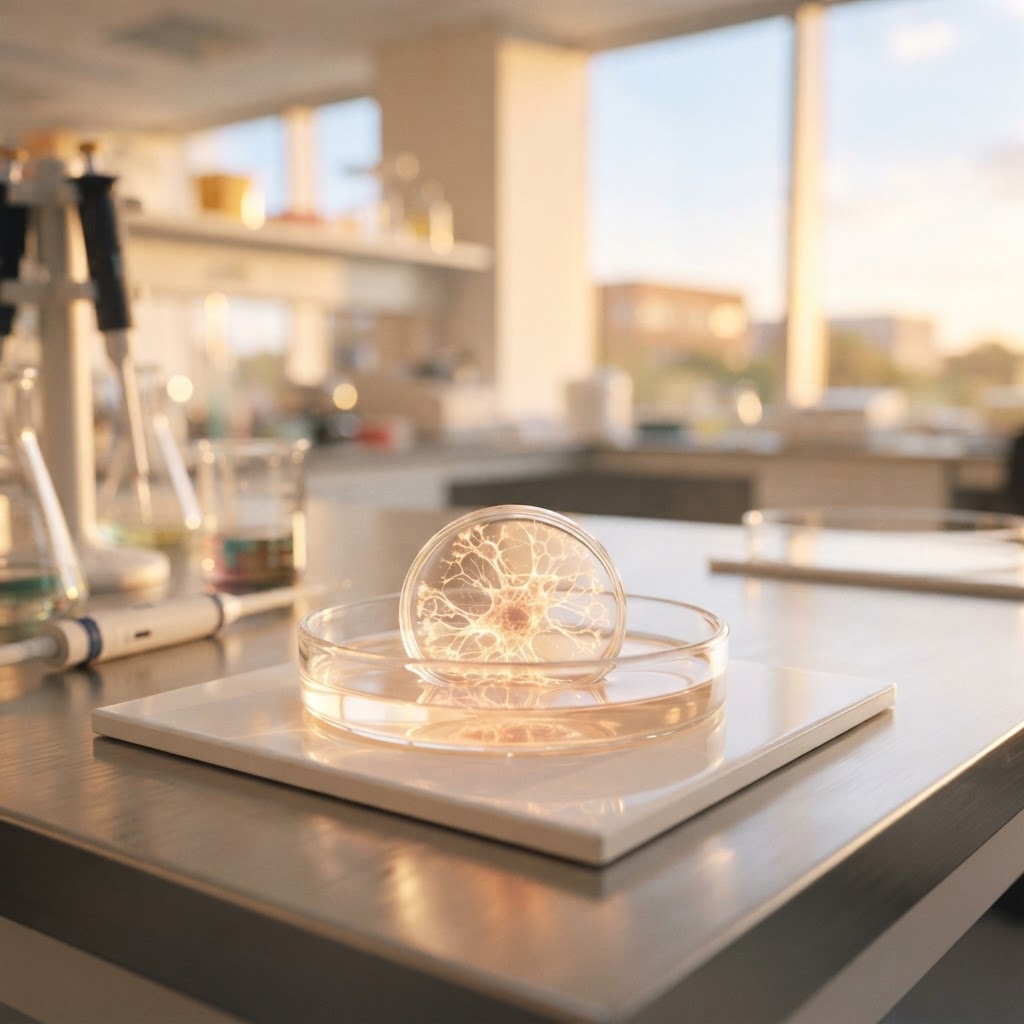
Future Gains and Patient Safety At the heart of this £20 million endeavour is a single, overriding goal: the improvement of patient safety. When we develop new medicines, the stakes are incredibly high, and the traditional reliance on animal models has often left a margin of uncertainty that we can no longer accept. By utilising lab-grown human tissues, scientists can observe the safety profiles of new compounds with a far greater degree of nuance. This allows for the early identification of potential side effects and toxicities that might not have appeared in animal subjects. The ability to test drugs on human-relevant models before they are ever given to a person in a clinical trial represents a massive advancement in our protective capabilities. Moreover, this approach will lead to the discovery of more effective medicines, as the research will be based on the actual biology of human disease. This is particularly exciting for the development of treatments for complex conditions where previous models have failed to offer adequate insights. As the project gains momentum, we can expect to see a ripple effect across the entire medical sector, with these new methodologies becoming the gold standard for clinical trials. The promise of this technology is immense, suggesting a future where treatments are more targeted, more predictable, and safer for all patients. It is a future that is being built right now in Cambridge, through a fusion of human ingenuity and biological sophistication that serves as a beacon of hope for the future of medical care in the UK.
Towards a Healthier Tomorrow The vision for this project is one of long-term transformation. While the immediate goal is to develop standardized organoids for drug testing, the long-term potential of this technology is almost limitless. By investing in this capability now, the UK is building an infrastructure that will support medical discovery for generations to come. This is a profound investment in the future of human-centric medical science. As we move closer to the launch date in August 2026, the excitement within the scientific community continues to grow. We are witnessing the birth of a new way of doing science—a method that is more ethical, more precise, and inherently more attuned to the needs of the human body. The commitment shown by the Cambridge Stem Cell Institute and its partners is a reflection of the UK's global leadership in this vital field. This project is more than just a series of laboratory experiments; it is a movement towards a smarter, more compassionate future for all. As these organoids begin to yield results, we can expect to see a acceleration in the translation of life-saving treatments from the lab to the clinic. This will not only improve the efficacy of new medicines but will also provide a more stable and reliable process for the pharmaceutical industry to follow. The progress being made in Cambridge is a powerful reminder of what can be achieved when we align our scientific ambitions with the potential of human innovation. We are entering an era where the limitations of the past are being replaced by the possibilities of the present, ensuring a healthier and more secure tomorrow for everyone. This shift in methodology is a testament to the fact that when we prioritise accuracy and humanity, the results are nothing short of transformative.
Originally reported by
All rights in the original reporting remain with the publishers below.
Originally reported by theguardian.com. Our feature is written independently from verified facts — please support the original reporting:
Read the original storyRelated Wins

 Sport
SportCHESS PRODIGIES BREAK BARRIERS IN NATIONAL LEAGUE DEBUT
The 'She Plays to Win' Lionesses have made history by competing in the top division of the Four Nations Chess League, marking the culmination of three consecutive promotions. Despite facing unique regulatory challenges regarding team composition, the squad continues to demonstrate exceptional skill and camaraderie at the highest level of British chess.
London & South · 1 hour ago

 Science
NEW PATHWAYS TO DIAGNOSIS: CAMBRIDGE STUDY SHEDS LIGHT ON AUTOIMMUNE HEALTH
A landmark study from the University of Cambridge is paving the way for more accurate medical care by highlighting critical gender disparities in the diagnosis of autoimmune conditions. By identifying how and why these misdiagnoses occur, researchers are providing the evidence needed to ensure patients receive faster, more effective support for their physical health.
London & South · 2 hours ago

 Environment
A NATURAL REVIVAL FOR BARNES GREEN
A major river restoration project has successfully transformed the Beverley Brook at Barnes Green into a thriving, natural habitat. This initiative has introduced a meandering river channel and a new island, significantly boosting local flood resilience and biodiversity.
London & South · 8 hours ago
The Sunshine Digest
One bright email each week — verified good news only, unsubscribe in a click.